"Long-term Investment Strategy, Not Short-term Tariff Evasion"
As the US-China trade conflict prolongs, American companies are eyeing India as a new global supply chain to replace China, the 'world's factory.'
On the 24th (local time), CNBC reported this citing a survey by the UK market research firm OnePoll.
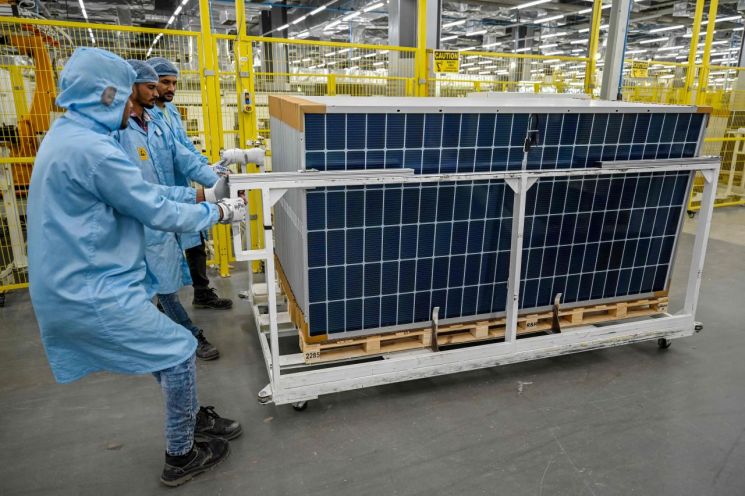
According to OnePoll's survey of 500 senior executives from US companies, 61% said they would choose India if China and India had the same production capacity. 56% of respondents stated that India would provide the necessary supply chain services better than China within the next five years.
Concerns about the Chinese supply chain were also higher than those about India. 59% of respondents said sourcing products from China was 'somewhat risky' or 'very risky.' In contrast, only 39% considered the Indian supply chain risky.
Samir Kapadia, CEO of India Index and Managing Director of the Bongel Group, told CNBC, "US companies view India not as a short-term means to avoid tariffs but as a long-term investment strategy. While the atmosphere between the US and China remains somewhat chilly, the US and India are in constant dialogue."
However, some US companies remain cautious about India's supply chain capabilities. 55% of respondents said there could be quality assurance issues if factories were located in India. In September last year, Pegatron, an Apple supplier, halted operations after a fire broke out at its iPhone assembly plant near Chennai, India. Delivery issues (48%) and intellectual property (IP) theft (48%) were also cited as concerns for US companies considering moving to India.
Experts believe it is difficult for US companies to completely shift their supply chains from China to India. CEO Kapadia said, "I don't think China will be completely excluded. Realistically, China has always been a cornerstone of US supply chain strategy." Raymond Chao, PwC Asia-Pacific and China leader, stated, "Investment in China remains strong and is the second choice after the US."
Meanwhile, besides India, Vietnam is also considered a key option for supply chain diversification. Foreign direct investment in Vietnam surged 14% compared to 2022. However, CEO Kapadia said, "India, the world's most populous country, offers a huge domestic market that Vietnam does not. Companies make decisions based on cost reduction and market access when changing supply chains."
© The Asia Business Daily(www.asiae.co.kr). All rights reserved.

















