KDCA to Add One More Atopy and Asthma Education Information Center, Totaling 11 Centers
The Korea Disease Control and Prevention Agency (KDCA) has decided to expand the number of 'Atopy and Asthma Education Information Centers' it operates nationwide from 10 to a total of 11. This move aims to strengthen infrastructure to help improve understanding of allergic diseases and promote preventive management.
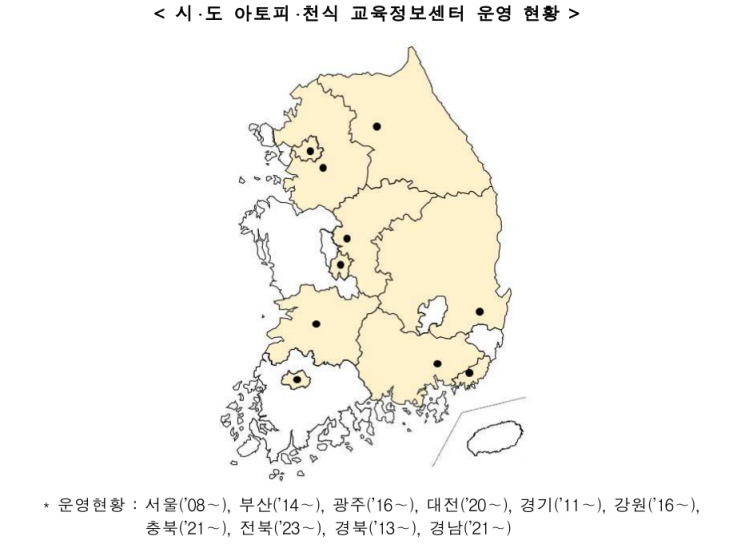
On the 26th, the KDCA announced that it will open a public contest until the 15th of next month to select one city or province to operate an additional Atopy and Asthma Education Information Center.
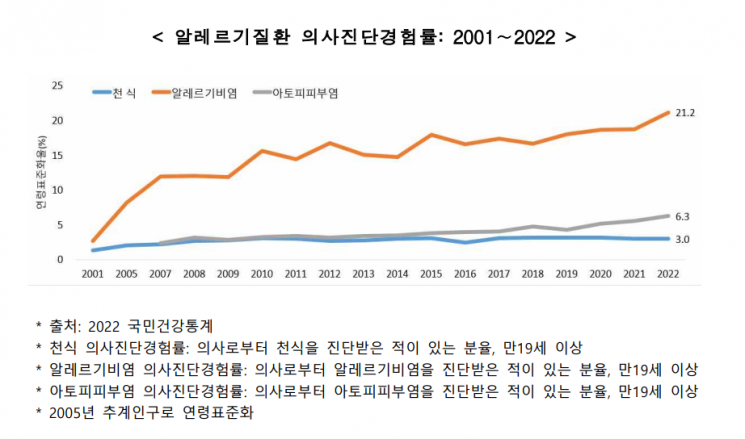
According to the KDCA, allergic diseases have been steadily increasing due to changes in living environments and immune system alterations. Reviewing the National Health Statistics results, the physician-diagnosed prevalence rate of allergic rhinitis increased by 4.4 percentage points from 16.8% in 2012 to 21.2% in 2022, and the physician-diagnosed prevalence rate of atopic dermatitis nearly doubled over 10 years, rising from 3.2% to 6.3%.
The hospitalization rate due to asthma (OECD Health Statistics 2021) reaches 65 per 100,000 people, which is 1.8 times the OECD average of 36.3 per 100,000.
Allergic diseases are highly likely to progress into adult diseases if appropriate treatment is delayed or treatment opportunities are missed during childhood. Additionally, frequent relapses and symptom aggravation can lead to repeated emergency room visits and hospitalizations, increased school absences and work leave, and increased medical expenses.
The KDCA plans to operate an additional Atopy and Asthma Education Information Center to provide information related to allergic diseases and share preventive guidelines.
The Atopy and Asthma Education Information Centers aim to improve the management level of allergic diseases in local communities and establish a prevention management system based on scientific evidence. Their tasks include supporting the operation of Atopy and Asthma Safe Schools (kindergartens, daycare centers, and elementary, middle, and high schools), providing allergy disease prevention management education for community health workers, producing and distributing educational and promotional content, and establishing community counseling services and local networks.
Ji Young-mi, Director of the KDCA, stated, "Since allergy symptoms vary for each patient and causes differ, it is important to identify the substances to avoid through a specialist's diagnosis and to consistently treat with methods proven to be effective and safe." She added, "We will strive to implement policies that are tangible to local communities by continuously expanding infrastructure for allergic disease prevention management and strengthening community participation and capacity."
© The Asia Business Daily(www.asiae.co.kr). All rights reserved.
![Clutching a Stolen Dior Bag, Saying "I Hate Being Poor but Real"... The Grotesque Con of a "Human Knockoff" [Slate]](https://cwcontent.asiae.co.kr/asiaresize/183/2026021902243444107_1771435474.jpg)











