Bank of Korea Announces January Business Survey Index (BSI)
Manufacturing Rises but Non-Manufacturing Hits 40-Month Low
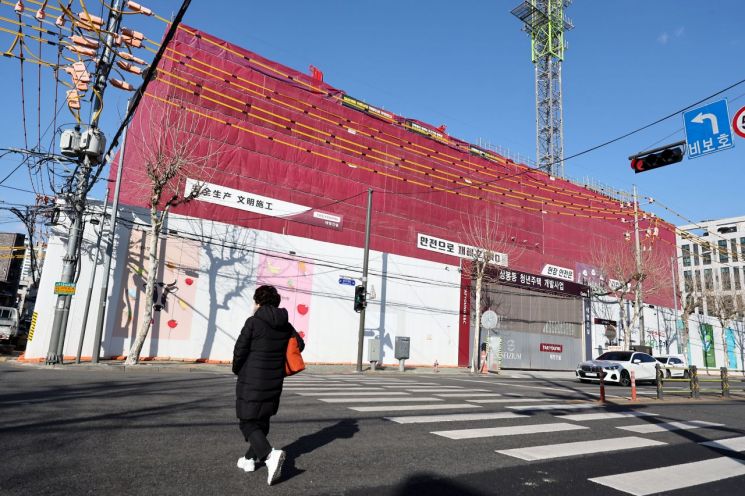
Despite a recovery in the manufacturing sector, the real estate project financing (PF) crisis negatively impacted the non-manufacturing sector, causing a slight decline in business sentiment among companies this month.
According to the 'January Business Survey Index (BSI) and Economic Sentiment Index (ESI) results' released by the Bank of Korea on the 25th, the overall industry BSI for this month fell by 1 point from the previous month to 69. The index recorded 69 in January and February last year, maintained the 70s from March onwards, but has now dropped back to the 60s.
The BSI is a statistic calculated based on business owners' judgments and outlooks on current management conditions. If negative responses outnumber positive ones, the index falls below 100.
The manufacturing sector's January BSI rose by 1 point to 71 compared to the previous month. This increase was driven by a 14-point rise in rubber and plastics due to increased sales of plastic processed goods, an 8-point increase in primary metals due to rising prices of major products and falling raw material prices, and a 5-point rise in chemicals and chemical products due to profitability recovery from a slowdown in inventory growth of Chinese chemical products and an increase in ethylene spread.
By company size and type, large enterprises, small and medium enterprises, export companies, and domestic companies all saw a 1-point increase.
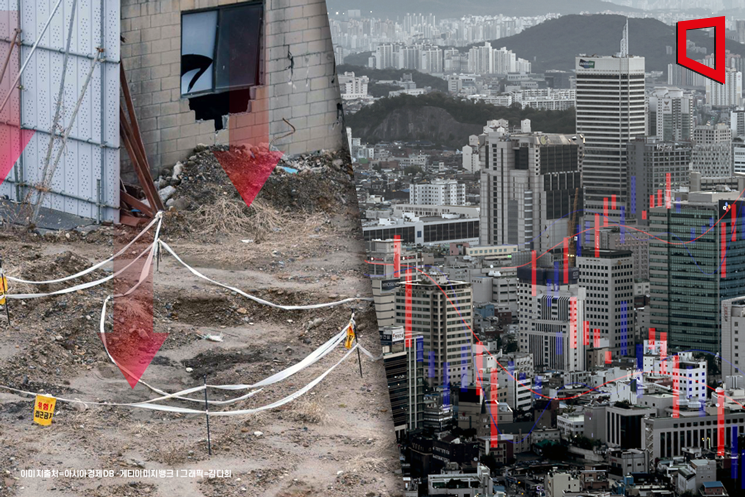
On the other hand, the non-manufacturing sector's performance BSI for this month dropped by 3 points from the previous month to 67. It had recorded 69 in November last year, the lowest level in 2 years and 11 months, slightly rose to 70 in December due to year-end seasonal factors, but fell again this month, marking the lowest level since September 2020.
This decline is attributed to a 5-point drop in the construction industry due to increased financing costs caused by the real estate PF crisis and deteriorating profitability from rising raw material prices, and a 7-point fall in professional, scientific, and technical services due to decreased orders for construction design services. Additionally, the information and communication sector fell by 8 points, largely influenced by a decrease in early-year performance following the exhaustion of IT consulting orders aimed at year-end budget spending.
Regarding the BSI outlook for next month, the manufacturing sector is expected to rise, while the non-manufacturing sector remains unchanged from the previous month.
The manufacturing sector's outlook BSI rose by 2 points from the previous month to 71, driven by increases in petroleum refining and coke (+20 points) and primary metals (+6 points).
The non-manufacturing sector's performance BSI, which fell this month, saw declines in transportation and warehousing (-7 points) and construction (-4 points), but rises in information and communication (+5 points), resulting in no change from the previous month at 68. Hwang Hee-jin, head of the Bank of Korea's statistical survey team, explained, "In the construction industry, due to the same reasons as this month?decreased orders, increased market financing costs from the PF crisis, and rising raw material prices?companies' cost burdens have increased, leading to a poor outlook for business performance."
The January ESI, which incorporates the Consumer Sentiment Index (CSI) into the BSI, recorded 91.5, up 0.1 points from the previous month. The seasonally adjusted ESI cyclical component rose by 0.1 points to 93.4.
This month's survey was conducted from the 9th to the 16th, targeting 3,524 corporate entities. Among them, 3,349 companies (1,851 manufacturing and 1,498 non-manufacturing) responded to the survey.
© The Asia Business Daily(www.asiae.co.kr). All rights reserved.


















