Additional Establishment in Gunsan and Jindo by Year-End
Production of 5,000 Queen Bees Annually Starting 2025
Three bee breeding centers capable of mass-producing bee breeds with excellent honey collection abilities will be completed within this year.
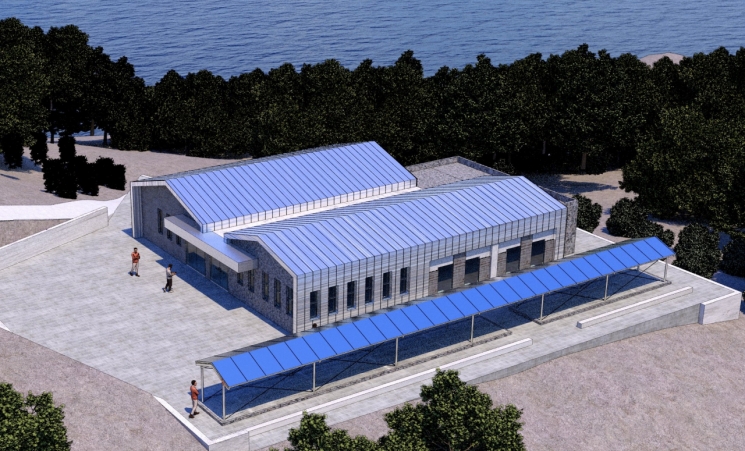
The Rural Development Administration announced on the 23rd that it will establish 'Bee Resource Breeding Centers' in Yeonggwang, Jeollanam-do, Tongyeong, Gyeongsangnam-do, and Boryeong, Chungcheongnam-do to build a national-level system for distributing superior bee breeds.
The breeding centers will begin construction in March and are scheduled to be completed sequentially starting in June. By the end of this year, additional bee breeding centers will be established in Gunsan, Jeollabuk-do, and Jindo, Jeollanam-do. Accordingly, from 2025, a total of more than 5,000 excellent queen bees will be produced annually at five bee breeding centers nationwide and supplied to beekeeping sites.
The locations for the bee breeding centers meet site requirements as they have no bee colonies raised for maintaining and managing bee breeds, and are rich in nectar plants necessary for honey collection.
This is the first time the government is leading the establishment of bee breeding centers and supplying high-quality queen bees. Currently, beekeepers produce queen bees through self-breeding and distribute them to nearby farms. However, this distribution method makes it difficult to maintain the purity of bee breeds and results in inconsistent quality. Additionally, there are limitations in responding to factors that hinder sustainable beekeeping industries, such as increased abnormal weather phenomena like winter warming, disease infections caused by bee parasites like Varroa mites, and the increase in hornet populations.
At the bee breeding centers, basic queen bees are first bred into 'original queen bees,' then progressively bred into 'primary queen bees - distribution queen bees,' which are supplied to beekeepers through city and county agricultural technology centers.
This year, the bee breeding centers will breed the superior bee breed 'Jelly King.' Developed by the Rural Development Administration in 2019, this Western honeybee breed produces royal jelly at least 11% more efficiently than existing bees and also excels in producing nectar honey. Furthermore, the content of '10-HDA,' an indicator substance related to the functionality of royal jelly, is at least 40% higher than that of existing bees.
Kim Ji-seong, head of the Technology Distribution Division at the Rural Development Administration, said, "The bee breeding centers will serve as forward bases to stably supply bees with excellent traits throughout the year. We will strive to resolve difficulties in the beekeeping field through the expansion of superior bee production and distribution and the rapid dissemination of new beekeeping technologies, and provide technical support for the stable development of the beekeeping industry."
© The Asia Business Daily(www.asiae.co.kr). All rights reserved.

















