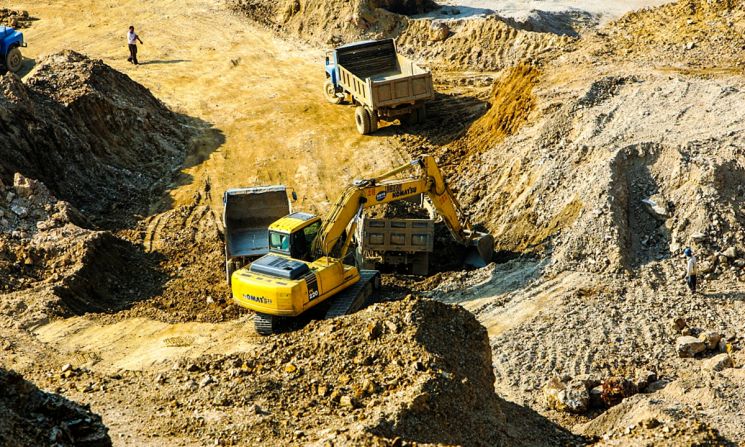
China has strengthened its rare earth value chain by banning the export of rare earth permanent magnet manufacturing technology in response to the West's supply chain "de-China" efforts, the Hong Kong South China Morning Post (SCMP) reported on the 22nd.
The media outlet analyzed that following China's 2020 ban on the export of rare earth extraction and separation technologies, it imposed an export ban on rare earth permanent magnet manufacturing technology in December last year, aiming to shift its dominance in the global rare earth value chain from the upstream to the downstream sectors.
China's new export ban targets include three types of rare earth permanent magnet manufacturing technologies: samarium-cobalt, cerium, and neodymium. Permanent magnets are key materials for electric vehicle drive motors and generate the highest added value in the rare earth supply chain. Neodymium magnets are the strongest and most in-demand among rare earth permanent magnets and are essential components of electric vehicles. Over 80% of electric vehicles use rare earth permanent magnets centered on neodymium in their motors. China surpassed Japan in neodymium magnet production in 2001, becoming the world's largest producer and exporter.
Rare earth elements are core materials used in cutting-edge industries such as smartphones, electric vehicle batteries, and stealth fighter jets, earning them the nickname "vitamins of industry."
Due to environmental pollution and deteriorating profitability, advanced countries like the United States have ceased rare earth production, resulting in China reportedly controlling over 70% of the world's rare earth supply.
For a long time, China has dominated the upstream sector of the rare earth supply chain, processing rare earth raw materials into rare earth oxides and metals. Subsequently, it also gained control over the downstream sector of the supply chain, manufacturing final products such as permanent magnets from these processed rare earths.
According to Chinese customs data, China's rare earth magnet exports increased from about 27,000 tons in 2016 to more than double over the past two years, making it the most exported rare earth product from China.
Conversely, China's imports of rare earth oxides increased more than tenfold from 2,759 tons in 2016 to the first half of last year. As downstream production in the rare earth supply chain increased, imports of upstream products necessary for this production also rose.
© The Asia Business Daily(www.asiae.co.kr). All rights reserved.
![Clutching a Stolen Dior Bag, Saying "I Hate Being Poor but Real"... The Grotesque Con of a "Human Knockoff" [Slate]](https://cwcontent.asiae.co.kr/asiaresize/183/2026021902243444107_1771435474.jpg)
















