Mayor Kang Gijeong Focuses on 'Connection'... Plans 15-Minute City with Old Frontline Site and Terminal Development
Gwangju Metropolitan City has begun establishing the ‘LPW (Living·Playing·Working) strategy’ for urban complex development projects such as the former Jeonbang and Ilsin Textile sites, the expansion of Gwangju Shinsegae, and the integrated complex project of the comprehensive bus terminal.
The plan is to create a ‘compact city within the city’ that concentrates the ‘Jikjurok (職住樂) = LPW’ functions?where citizens work, enjoy, and live together?within a 15-minute distance, going beyond a simple shopping mall.
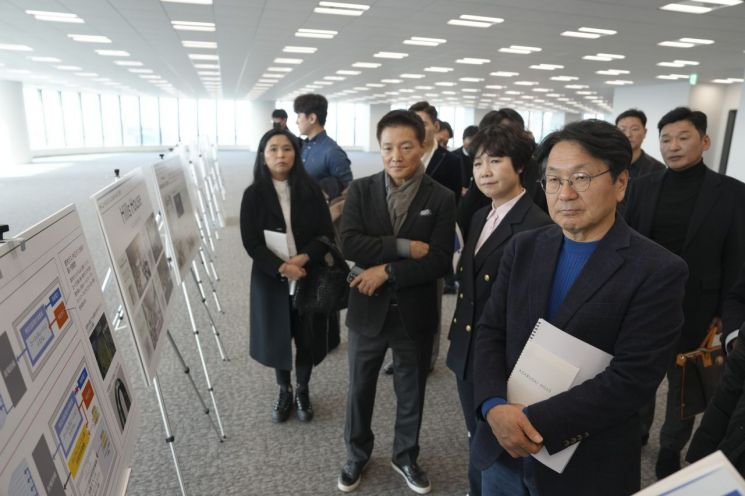
Mayor Kang Gi-jung of Gwangju is focusing on ‘connection’ as the core of this plan. By connecting work and residence, transportation and mobility, space and buildings, he aims to design a ‘15-minute city’ that comprehensively considers ▲a city centered on public transportation and pedestrians ▲optimization (aggregation) of local energy and environment ▲revitalization of the local economy, thereby presenting a blueprint for ‘Future Gwangju’ and transforming it into a future-oriented city.
From the 18th to the 21st, Mayor Kang Gi-jung and the Gwangju Metropolitan City urban policy inspection team visited Tokyo and Yokohama, Japan, for a 3-night, 4-day trip to observe advanced complex buildings (complexes), urban regeneration, and redevelopment sites. Notably, businesspeople such as Park Joo-hyung, CEO of Shinsegae Department Store, and Park Se-jin, Executive Director of Kumho Express, accompanied the inspection team to exchange opinions on integrating urban complex development plans.
During the two days from the 18th to the 19th, the inspection team toured ‘Roppongi Hills,’ an advanced complex building considered the starting point of Tokyo’s urban transformation; ‘Ariake Garden,’ built to foster the MICE industry and establish an international tourism hub; ‘Midtown Yaesu,’ which maximizes transportation convenience by linking Tokyo Station and the terminal; the urban complex shopping and cultural facilities ‘Azabudai Hills’ and ‘Toranomon Hills’; and the urban redevelopment area ‘Takashimadaira.’
These areas were once declining urban centers with low foot traffic and stagnant economic activity before development, but now have transformed into ‘compact cities within the city’ centered on large-scale complex shopping and cultural facilities where shopping, relaxation, cultural activities, work, and residence are all possible in one place from morning to night.
Mayor Kang and the inspection team walked more than 15,000 steps daily, closely examining the integration of Tokyo Station and the bus terminal built according to comprehensive urban planning, spatial design and cityscape, public transportation connections such as trains and buses, and green spaces. They also resolved questions through meetings with Japanese urban regeneration experts.
Additionally, they met with representatives of Mori Building Co., Ltd., a leading comprehensive real estate development company in Japan that has led Tokyo’s urban redevelopment for over 20 years, discussing a public-private partnership development model that allows proactive private sector participation and touring the residences and commercial facilities of Azabudai Hills together.
In particular, they visited all three complex districts of Mori Building located in Minato Ward, Tokyo?Azabudai Hills, which opened last year as Japan’s tallest building, Roppongi Hills, and Toranomon Hills?focusing on the strength of ‘connectivity.’ Mori Building advocates a compact city within the city, gathering urban functions centered on transportation convenience to create a small urban area where people can work, learn, rest, eat, and enjoy within a 10-minute walk.
Although it took 35 years from the start of development to opening to obtain consent from 90% of landowners, the shift from public to private-led development, bold corporate investment, local government support, and long-term communication with the local community to reach agreements were also notable aspects.
Mayor Kang Gi-jung of Gwangju said, “I visited the site where Japan, which collapsed 30 years ago due to a real estate bubble, is rising again through complex development,” and introduced, “The beginning was Roppongi Hills, and the current peak is Azabudai Hills.”
He added, “Gwangju’s urban complex development must also be reborn as a space that connects work and residence, transportation and mobility, space and buildings, ultimately connecting people to people,” and stated, “Since complex development can provide new opportunities for compact cities centered on transportation, lifestyle, and culture, we will establish a concrete strategy focused on ‘LPW’ spaces where people work, enjoy, and live together.”
© The Asia Business Daily(www.asiae.co.kr). All rights reserved.

















