Ultimately Surrendering to EU Monopoly Regulation Pressure
“10% Fine on Sales if Not Complied”
Apple has taken a step back from the European Union's (EU) pressure to curb so-called 'big tech bullying.' The company has agreed to allow other companies' similar payment services in addition to its own payment system, 'Apple Pay,' on the iPhone.
The EU Commission announced on the 19th (local time) that "Apple has agreed to allow third-party mobile payment services on iOS devices such as the iPhone to address competition concerns."
As a result, iPhone users will be able to install and use other near-field communication (NFC) contactless payment service apps instead of Apple Pay if they wish.
The Commission had previously demanded corrective action in 2022, stating that Apple was unfairly restricting competitors' access to this technology.
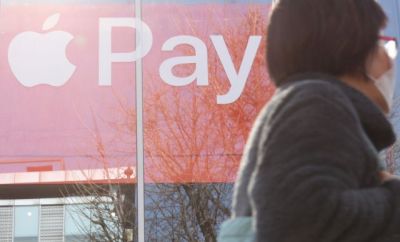 Apple Pay promotional material installed in the Hyundai Card Library building in Yongsan-gu, Seoul [Image source=Yonhap News]
The Commission stated, "This proposal will be valid for the next 10 years, and compliance will be regularly monitored." If Apple fails to properly implement this, it will face fines amounting to 10% of its global revenue from the EU.
The EU continues to pressure big tech companies based outside Europe, including Apple, MS, and Meta, to prevent monopolies. This is to create a fair competitive environment and protect European companies.
Last year, the EU finalized the list of companies subject to the Digital Markets Act (DMA) regulations and began a grace period of about six months. The DMA is a strong law that designates certain large platform operators as 'gatekeepers' to prevent abuse of market dominance.
The DMA applies to companies meeting criteria such as annual revenue of over 7.5 billion euros within the EU, a market capitalization or market value of over 75 billion euros, more than 45 million monthly users, services provided in at least three member states, and having over 10,000 business users (merchants) annually. Six companies fall under this, including Alphabet (Google's parent company), Apple, Meta, Amazon, Microsoft (MS), and ByteDance, the operator of TikTok.
Companies designated as gatekeepers must allow interoperability with third-party services, permit merchants to promote their own businesses or make contracts outside their platforms, and allow merchants access to data generated when using the platform.
© The Asia Business Daily(www.asiae.co.kr). All rights reserved.

















