A Master Who Created Amazing Works Across Genres
First Korean Film to Enter the Cannes International Film Festival
Director Lee Doo-yong, who laid the foundation for the global advancement of Korean cinema, passed away on the 19th at the age of 82. According to the film industry, he had been battling lung cancer since last year and died around 3 a.m. at a hospital in Seoul.
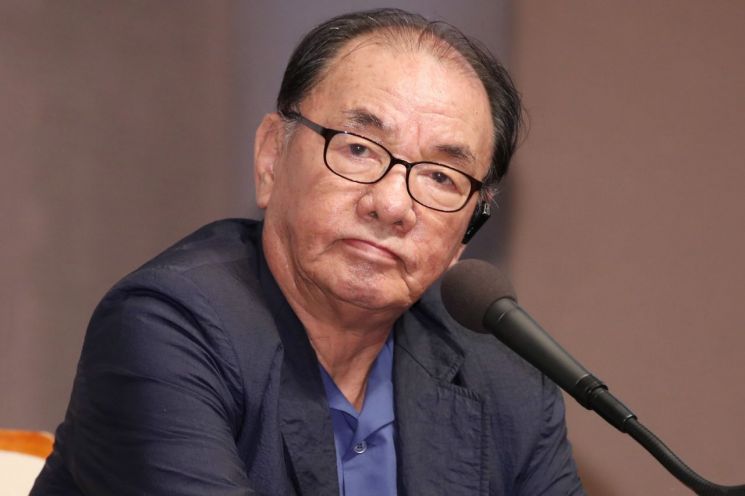
He was a master who created remarkable works regardless of genre. In the 1980s, when Korean films were hardly noticed, he broke through the barriers of prestigious international film festivals. He received a special award at the 1981 Venice International Film Festival for "Pimak (1980)" and was invited to the Un Certain Regard section at the 1984 Cannes Film Festival for "Yeoin Janoksa Mulreya Mulreya (1983)." This was the first time a Korean film entered the Cannes Film Festival. "Pimak," starring Yoo Ji-in and Namgung-won, centers on a remote house where people are temporarily laid to rest just before death, simultaneously depicting indigenous shamanism and eroticism. "Yeoin Janoksa Mulreya Mulreya," starring Won Mi-kyung, portrays the suffering of women under the patriarchal system during the Joseon Dynasty.
Born in Seoul in 1942, he studied economics at Dongguk University and built his film career as an assistant director for ten years starting in the 1960s. He debuted with the melodrama "Lost Veil (1970)" and mainly directed action films such as "Yongho Daeryeon (1974)," "Jugeom's Bridge (1974)," "The Returned One-Legged Man (1974)," "Left Foot of Fury (1974)," "The Returned One-Legged Man 2 (1974)," and "The Traitor (1974)." Most of these were box office successes, earning him the title of "Action Master." He did not rest on his laurels and expanded his worldview through indigenous-themed films. He showcased his unique Eastern worldview with works like "Chobun (1977)," "Muldoridong (1979)," "Naeshi (1986)," and "Up (1988)." Through the "Ppong" series, "The Road to Cheongsong (1990)," "Up (1988)," "Heukseol (1990)," and "Ae (1999)," he also presented Korean aesthetics.
The funeral is being held at Seoul National University Hospital Funeral Hall No. 5 in Jongno-gu, Seoul. The funeral procession will take place on the 21st at 1:30 p.m., and the burial site is Seoul Memorial Park in Seocho-gu.
© The Asia Business Daily(www.asiae.co.kr). All rights reserved.
![Clutching a Stolen Dior Bag, Saying "I Hate Being Poor but Real"... The Grotesque Con of a "Human Knockoff" [Slate]](https://cwcontent.asiae.co.kr/asiaresize/183/2026021902243444107_1771435474.jpg)
















