President Yoon Mentions Easing Heavy Taxation on Multiple Homes Through Four Public Discussions
Director Sung Tae-yoon Says "Not Immediate... Public Consensus Needed" on Inheritance Tax Relief
Democratic Party Criticizes "Tax Cuts Proposed Everywhere... Recklessly Like People Who Don't Understand the Economy"
The Presidential Office stated on the 18th that President Yoon Seok-yeol's recent tax reduction policy stance presented at the livelihood discussion forum focuses on "improving areas where large-scale revenue reductions do not occur." This refers to the easing of heavy taxation on multiple home ownership and the abolition of financial investment income tax mentioned in the previous four forums, arguing that reducing regulatory costs is also effective in responding to the economy.
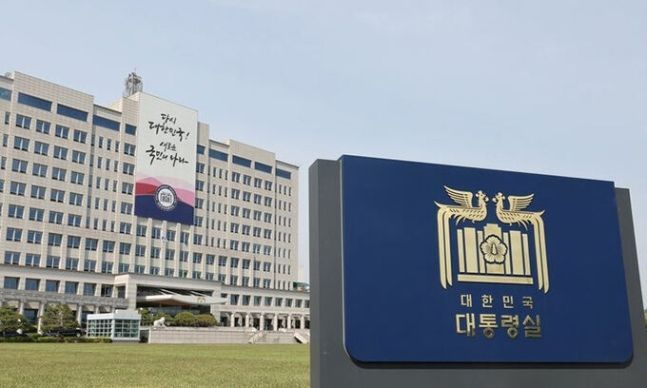
Seong Tae-yoon, Director of Policy at the Presidential Office, held a briefing at the Yongsan Presidential Office in the afternoon and said, "We are identifying tax bases among various taxes that cause severe economic distortions but do not significantly reduce tax revenue," emphasizing this point.
Since early this month, President Yoon has chaired livelihood discussion forums in the housing, semiconductor, and financial sectors, hinting at the possibility of easing heavy taxation on multiple home ownership, lowering inheritance tax, reducing securities transaction tax, and abolishing financial investment income tax. However, opposition parties such as the Democratic Party and some civic groups criticized these policies as "measures that further reduce this year's already decreased tax revenue." While the intention is to revise unreasonable systems to reduce the tax burden on citizens and stimulate the market, concerns were raised about the feasibility of these proposals.
In particular, Yoo Dong-soo, the Democratic Party's Deputy Floor Policy Chief, strongly criticized at the National Assembly on the same day, saying, "President Yoon is presenting tax laws and tax reduction plans wherever he goes. It seems as if he is recklessly issuing policies without any knowledge of tax laws or the economy." He added, "It has been less than a month since the tax law determining this year's revenue was passed. If you are going to reduce this year's tax law, it should have been included in last year's tax amendment bill. If you are going to discuss election-oriented tax cuts right now, you should also bring a supplementary budget proposal for this year's tax reduction."
However, the Presidential Office rebutted, stating, "The focus is on improving areas where large-scale revenue reductions do not occur." Director Seong explained, "We are also making efforts to improve unreasonable elements that existed during the economic growth process as much as possible," adding, "It is not that all regulations are being removed unconditionally, but the approach focuses on minimizing parts that cause inconvenience to citizens or require high costs."
Regarding the part where President Yoon hinted at easing inheritance tax at the livelihood discussion forum the day before, the office cautioned against overinterpretation, saying, "It can be discussed in the form of reforming the multiple taxation system, but it is not something to be done immediately." They continued, "Inheritance tax can only be discussed at a level that the public can agree upon," emphasizing, "There can be no unilateral abolition or strengthening of inheritance tax." However, they explained, "In the early stages of economic development, it was very difficult to secure tax bases, so inheritance tax was used as a major source of revenue. However, now that digitalization has progressed, many tax bases are captured, and after income tax and others are already paid, the multiple forms of taxation can be considered."
Additionally, regarding President Yoon's statement that "excessive tax systems must be reformed to solve the Korea discount (the undervaluation of the Korean stock market)," the office explained that "issues related to corporate governance and tax matters in our country" are important factors and that "the intention is to try to resolve these through institutional improvements."
© The Asia Business Daily(www.asiae.co.kr). All rights reserved.

















