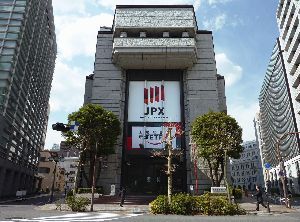
Is the hidden driving force behind the Japanese stock market's soaring performance this year, reaching its highest level in 34 years, foreign investors?
Last week (August 8-12), foreign capital inflows into the Japanese stock market were confirmed to be the largest since October of last year, Bloomberg reported on the 18th (local time), citing data from the Japanese Ministry of Finance.
It is analyzed that the international demand for the Japanese stock market has played a key role in outperforming other countries' stock markets.
Japan's Nikkei 225 index, composed of blue-chip companies, rose 6.6% just last week. This is the largest weekly gain since March 2022. The annual increase rate exceeded 25%. The Nikkei 225 index surpassed the 35,000 mark this year, achieving its highest level in 34 years since February 1990, during the bubble economy period.
With factors such as a weak yen, negative interest rates, and improved earnings of Japanese companies stacking up as positive drivers for stock prices, a sustained bull market is being created. As investment funds flood into the Japanese stock market, the Tokyo Stock Exchange's market capitalization overtook that of the Shanghai Stock Exchange for the first time in three and a half years, reclaiming the top spot in Asia.
Japanese investment experts have diagnosed that the Japanese stock market still has about 12-13% upside potential until the first half of the year.
Hikaru Yasuda, Chief Equity Strategist at SMBC Nikko Securities, stated in a memo, "The Nikkei 225 index could reach 40,000 by mid-year, setting an all-time high." He added, "The recent rally is similar to the April-June 2023 rally, but the momentum is stronger, suggesting that overseas pension funds and sovereign wealth funds are playing a long-term game (investment) in the Japanese stock market."
Meanwhile, unlike the thriving Japanese stock market, the Korean and Chinese stock markets have not been able to avoid sluggishness. Last week, South Korea's KOSPI index fell by 2.0%, and China's Shenzhen Composite Index dropped by 1.4%. These markets have further widened their losses since the beginning of this week.
© The Asia Business Daily(www.asiae.co.kr). All rights reserved.
![User Who Sold Erroneously Deposited Bitcoins to Repay Debt and Fund Entertainment... What Did the Supreme Court Decide in 2021? [Legal Issue Check]](https://cwcontent.asiae.co.kr/asiaresize/183/2026020910431234020_1770601391.png)















