Wind Power Leads West Coast & Solar Land Energy Path Creates Basic Income
Need to Open Path for Renewable Energy Technology Development, Business Attraction, and Talent Cultivation
"In the global trend of enforcing carbon neutrality and RE100 practices to reduce greenhouse gas emissions by 40% by 2030 and achieve an average temperature rise within 1.5℃ by 2050, the Energy Expressway proposed by Lee Jae-myung, leader of the Democratic Party of Korea, is the best solution."
Choi Chi-hyun, a Democratic Party preliminary candidate for the Gwangsan-gu (Eul) electoral district in Gwangju Metropolitan City, argued that climate response policies, along with economic policies, should be utilized as opportunities to secure future growth engines for the development of Gwangsan-gu. He also proposed realizing Lee Jae-myung’s Energy Expressway concept first in Honam.
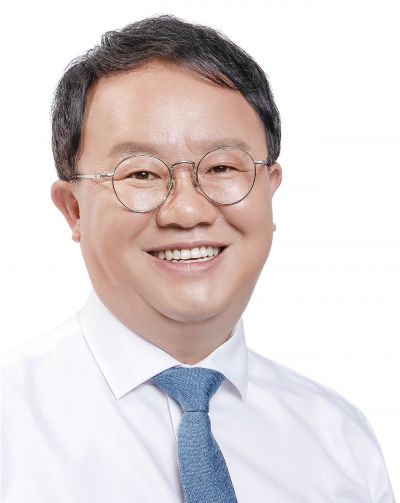
Candidate Choi predicted, "If Honam creates the Energy Expressway first and raises RE100 to RE300 through ESG management of each company, Gwangsan-gu will become a representative city of the renewable energy industry and a leading city that turns the climate crisis into an opportunity for securing future growth."
He continued, "When I heard Lee Jae-myung’s Energy Expressway concept during the last presidential election, I thought it was an excellent policy that could lead to economic prosperity by escaping the climate crisis. Let’s make Honam the first to build the Energy Expressway and lead the era of climate transformation."
He stated that Honam is also suitable due to environmental and geographical conditions. According to analyses by experts in related fields, the West Sea surrounding Honam, from Yeosu to Seonyudo, has the best wind quality and optimal depth for installing facilities, making it the best location for wind power generation, a renewable energy source.
He also cited Shinan, where all residents receive basic energy income through solar power projects, as an example, saying, "If we create a wind path using the sea and a land energy path using solar power, Honam will become the mecca of South Korea’s renewable energy industry. It will attract companies that need energy and become a treasure trove of energy capable of achieving RE300 beyond RE100."
Along with this, he expressed expectations that various renewable energy industries leading carbon neutrality are developing technologies such as perovskite solar cells with low resistance and high efficiency, hydrogen fuel noted for being carbon-free and having high thermal efficiency, and zero-energy building materials. If companies researching and producing these are attracted or supported policy-wise in Gwangsan-gu, it will play a tremendous role in establishing a renewable energy cluster.
In particular, he introduced Luxium Energy Co., Ltd. in Gwangsan-gu as the leading company in realizing zero-energy buildings through developments such as a 20KW-class standalone power generation system based on power semiconductors PV+ESS, convergence and demonstration research of zero-energy building element technology packages, a 300W-class solar power generation system for apartment complexes, and an intelligent ventilation window system based on indoor environment.
Candidate Choi promised, "Since climate response policies can be opportunities to save both the environment and the economy, if I enter the National Assembly, I will actively support the promotion of international joint research in the energy industry and devote myself to providing opportunities to demonstrate new products developed by Gwangju companies."
He added that global climate experts emphasize that in the era of energy transformation where climate is everything, an annual flow of $653 billion in global climate finance occurs, and that efforts must be made to develop energy-related technologies and policies for both crisis and opportunity. Above all, nurturing energy convergence talents is urgent.
Furthermore, he expressed confidence that by fostering talents linked to future industries such as electrical and electronic engineering, creating youth jobs, and establishing various policies to improve quality of life such as providing housing for local company employees, Gwangsan-gu will not only become a sustainable young city model but also sufficiently open future livelihoods.
He concluded, "With abundant and stable energy supply possible in the Gwangsan-gu industrial complex, not only will companies’ competitiveness increase, but once the Energy Valley development project is completed, Gwangju will become a ‘renewable energy industry city’ with global competitiveness, and Gwangsan-gu will play a key role as the forward base of the renewable energy industry. We will realize this through climate response policies."
© The Asia Business Daily(www.asiae.co.kr). All rights reserved.
![Clutching a Stolen Dior Bag, Saying "I Hate Being Poor but Real"... The Grotesque Con of a "Human Knockoff" [Slate]](https://cwcontent.asiae.co.kr/asiaresize/183/2026021902243444107_1771435474.jpg)










