Sticky Inflation Continues
Decline in Expectations for Early Base Rate Cut
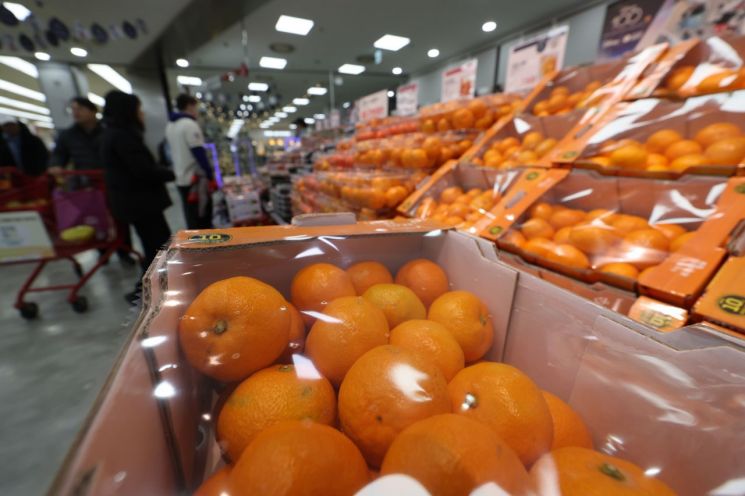
Sticky inflation continues globally. As the fight against high inflation is expected to last longer, expectations for an early interest rate cut have diminished, causing volatility in financial markets.
According to the UK Office for National Statistics on the 18th, the UK's consumer price index (CPI) rose 4.0% year-on-year last month, exceeding the market expectation of 3.8%. The UK Office for National Statistics cited the tobacco tax increase implemented at the end of November last year as a major cause of the price rise.
With inflation surpassing expectations, expectations for a Bank of England interest rate cut in May have decreased. The market had anticipated UK inflation to stabilize around April to May, but the timing seems to be delayed. UK Chancellor of the Exchequer Jeremy Hunt emphasized, "As seen in the US, France, and Germany, inflation does not fall in a straight line."
Sticky Inflation Persists Worldwide
Higher-than-expected inflation is also appearing in other countries. The US consumer price inflation rate last month was 3.4% year-on-year, exceeding the market expectation of 3.2%. Rising energy and automobile prices are evaluated as factors pushing up inflation.
Goldman Sachs stated, "US inflation is clearly easing, but December's inflation was somewhat stronger compared to recent months and may continue into January," adding, "Confidence in an early rate cut by the Federal Reserve (Fed) has diminished." Bloomberg also explained, "This inflation report suggests that the Fed's path to easing inflation will not be smooth," and "Fed officials and Wall Street economists have begun to question the sustainability of the recent inflation easing trend, mainly driven by supply chain improvements."
Strong US consumer spending has also dampened expectations for rate cuts. The US Department of Commerce announced that retail sales in December increased by 0.6% month-on-month, exceeding the market expectation of 0.4%. Strong US consumption indicates a robust economy, which reduces expectations for a rapid interest rate cut. The International Finance Center analyzed, "With strong retail sales data, there are assessments that US growth in Q4 last year may be better than expected," adding, "This reduces expectations for a rate cut in March."
The Eurozone (EU) also saw consumer prices rise 2.9% year-on-year in December last year, surpassing the previous month's 2.4% increase. Christine Lagarde, President of the European Central Bank (ECB), blocked early interest rate cut expectations by stating, "Interest rates can only be cut once inflation is certainly down to the target level of 2%."
South Korea is still battling high inflation. Lee Chang-yong, Governor of the Bank of Korea, recently emphasized several times that the "last mile" to bring inflation back to the target level of 2% may be more difficult than before. Governor Lee explained, "Global inflation is continuing to slow, and our inflation rate will gradually approach 2%, but the timing of settling at the target level is uncertain," adding, "The last mile in a marathon is the hardest."
 Lee Chang-yong, Governor of the Bank of Korea, is attending the first Monetary Policy Committee plenary meeting of the new year held at the Bank of Korea in Jung-gu, Seoul, on the morning of the 11th, tapping the gavel. Photo by Joint Press Corps
Expectations for Interest Rate Cuts Decline Amid Persistent Inflation, Leading to Stock Market Declines Since Early Year
With inflation higher than expected, the dollar is strengthening and global financial markets are volatile. The won-dollar exchange rate surpassed 1,340 won, marking the highest level in two and a half months. The dollar index, which measures the dollar's value against six major currencies, stood at 103.50 as of the previous afternoon, the highest in a month.
As expectations for an early interest rate cut diminish, emerging market stock markets including South Korea, China, Mexico, and Brazil have significantly declined since the beginning of the year. In particular, the KOSPI index has fallen more than 7% this year, making it the largest decline among major countries worldwide.
There are also predictions that a delay in US interest rate cuts could increase the possibility of a real economy recession. Lee Hyung-seok, a research fellow at Hyundai Research Institute, said, "Housing prices, which rebounded from the second half of last year, may affect rent prices with about a one-year lag, potentially slowing the pace of inflation easing more than expected," adding, "With sticky inflation, if the US interest rate cut is delayed or rates are raised contrary to market expectations, there is a possibility that the real economy will enter a recession phase."
© The Asia Business Daily(www.asiae.co.kr). All rights reserved.


















