Shinhan Card Strengthens Measures Including Consumer Warning Alerts
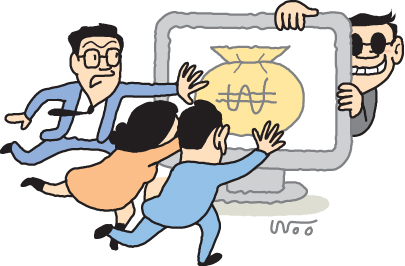
Office worker Mr. A, who needed a car for work, found brokerage firm B through an internet search, which offered relatively low lease fees. Firm B told Mr. A that if he paid a deposit, they would support part of the monthly payments and return the deposit at the end of the term. Mr. A believed there would be no problem after seeing the partnership contract between firm B and financial company C, as well as online reviews. Firm B supported part of the payments for several months but eventually absconded after embezzling the deposit. Mr. A was unable to recover the deposit and remained responsible for the lease payments contracted with financial company C.
According to Shinhan Card on the 18th, financial fraud involving inducement of separate side contracts continues to occur when using automobile financial products, requiring special caution. The main industries inducing such fraud include brokerage, car rental, and other financial support services. Companies that induce side contracts are non-financial private firms, so extra caution is necessary as they are not financial institutions.
The counterparty in automobile financial product contracts is the financial company, and rights or compensation cannot be claimed from the financial company based on side contracts made with non-financial parties. Since side contracts are agreements between the customer and the side contract company separate from the automobile finance contract, the financial company has no way to recognize the side contract unless it is disclosed. A Shinhan Card official explained, "We provide guidance on side contract cases and precautions for all automobile financial product contracts and have strengthened damage prevention activities by applying our own abnormal transaction detection system. However, due to the closed nature of the contract structure, it is difficult to detect externally and thus has not been eradicated."
There are also cases of name lending where monthly payments are made on behalf of the borrower or profits are provided. Recently, Mr. A, who needed income due to poor business, was approached by Mr. B, who operates a rental car company, with a proposal to lend his name for a vehicle loan in exchange for sharing profits. Mr. A accepted the offer and took out a loan in his name from financial company C. Mr. B made payments on behalf of Mr. A and sent profits for several months but then sold the vehicle arbitrarily and disappeared. Ultimately, Mr. A had to bear the full debt for a vehicle he had never owned.
Cases of name lending through investment mediation such as vehicle exports also require caution. Self-employed Mr. A learned through an acquaintance about firm B, which was recruiting investors by claiming that exporting vehicles overseas amid semiconductor shortages and vehicle scarcity could be profitable. Mr. A proceeded with a lease in his name through financial company C and handed over the vehicle to firm B. Firm B reassured Mr. A by sending initial profits and several months of payment support, promising the remaining profits after vehicle export. However, firm B arbitrarily lent the vehicle to others and disappeared. As a result, Mr. A bore the debt for the lease contract with financial company C and faced issues related to unauthorized vehicle lending and legal disputes.
To prevent side contract damage, deposits for financial contracts should only be paid to the financial company that signed the automobile finance contract. Additionally, brokerage firms that demand deposit payments under the pretext of separate support funds or promise profit payments while requesting name lending should be reported to the call center or customer protection department of the financial company that signed the automobile finance contract.
A Shinhan Card official stated, "Due to the ongoing occurrence of financial fraud, we have issued consumer warnings and strengthened related measures. To respond swiftly to financial accidents and changes in the internal and external financial environment, we operate a customer advisory group of about 300 members, including financially marginalized customers, and are enhancing prevention activities through pre-inspections starting from the customer's perspective."
© The Asia Business Daily(www.asiae.co.kr). All rights reserved.

















