No Change in Employment Markets in 7 Regions
4 Areas Show Moderate and Gradual Job Growth
2 Areas Remain Tight Employment Situations
The Federal Reserve (Fed) has diagnosed that the labor market overheating, which has fueled inflation in the United States, is showing signs of cooling in most regions.
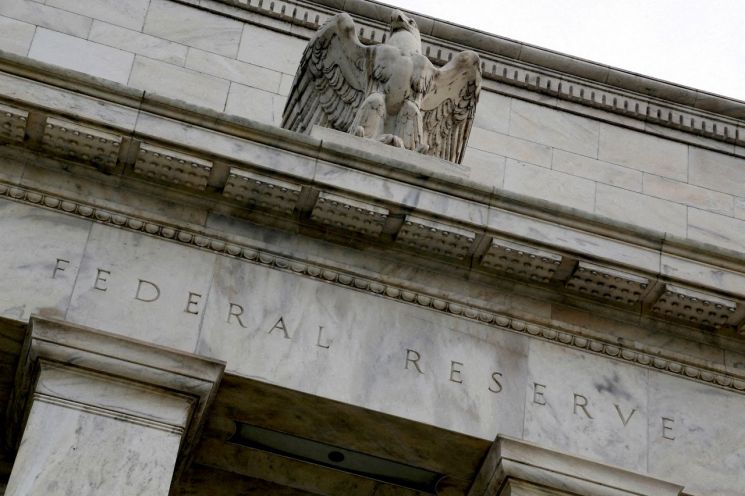
On the 17th (local time), the Fed stated in its economic trend report, the Beige Book, "In almost all regions, there was at least one signal indicating labor market cooling, such as an increase in job seekers waiting, a decrease in turnover rates, selective hiring by companies, and easing wage pressure." The Beige Book is a report evaluating the economic flow of the 12 Federal Reserve Banks' jurisdictions and is used as basic material for the Federal Open Market Committee (FOMC) regular meeting held on the 30th-31st of this month.
The report diagnosed that seven regions saw almost no overall change in the employment market. Four regions were evaluated as having moderate or mild job growth. However, in two regions, the labor market remained tight. The Fed considers this labor market overheating a part that must be cooled to achieve the 2% inflation target and has been closely monitoring it. Additionally, wage growth rates in Boston, Richmond, Chicago, and Dallas were found to be moderate. Many companies in various regions expect wage increase pressures to ease further next year and wage growth rates to slow down.
Overall economic activity showed little or no change in the 12 jurisdictions. During the year-end shopping season, strong consumer spending was confirmed in three regions, including New York, focusing on healthcare, toys, and sporting goods. Air cargo also increased due to seasonal demand. However, manufacturing activity declined nationwide. The report diagnosed that "high interest rates are hindering automobile sales and real estate transactions."
Amid this, the outlook that the Fed will begin a full-scale rate cut this year has strengthened optimistic views. Corporate outlooks have also become more optimistic. The report stated, "Overall, in most regions, corporate expectations for future growth were positive, improved, or both." Other factors contributing to economic uncertainty included concerns surrounding the commercial real estate market, overall demand weakening, and the U.S. presidential election.
The Beige Book released on this day drew more attention as it came amid somewhat retreating expectations for an early rate cut by the Fed. The December retail sales released that morning exceeded expectations, supporting the view that the Fed may maintain high interest rates for some time. According to the U.S. Department of Commerce, December retail sales increased by 0.6% compared to the previous month, surpassing Wall Street's forecast of 0.4%. The retail sales indicator is considered a pillar accounting for two-thirds of the U.S. real economy and a measure for evaluating overall economic health.
The day before, Christopher Waller, a Fed governor known as a representative hawk within the Fed, also poured cold water on market expectations for an early rate cut at a Brookings Institution event, saying, "There is no reason to lower rates quickly in this cycle." David Solomon, CEO of Goldman Sachs, appeared on CNBC that day and expressed caution, saying, "The market is moving too far ahead." Chris Lakin, Managing Director at Morgan Stanley, evaluated, "The Fed has consistently emphasized the message that there is no need to rush rate cuts," adding, "Since retail sales were stronger than expected, there is no need to change the policy stance of not rushing rate cuts."
© The Asia Business Daily(www.asiae.co.kr). All rights reserved.

















