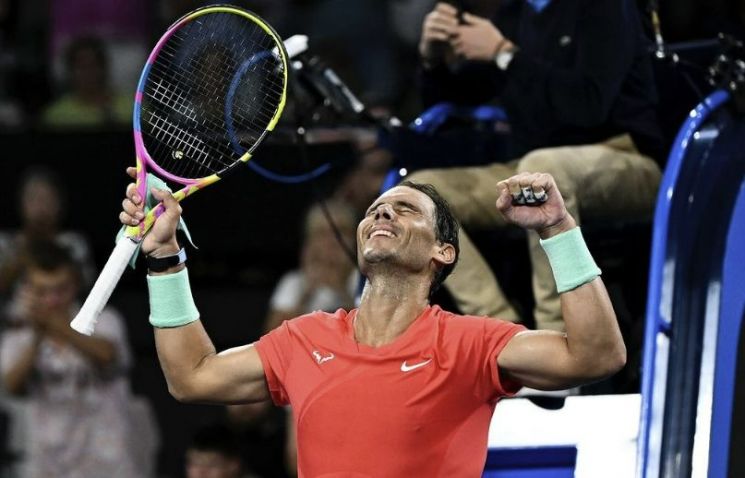
Clay court specialist and 22-time Grand Slam champion, the "흙신" Rafael Nadal, suffered a 'Grade 2 tear of the left iliopsoas muscle' during the recent Australian Open and even underwent surgery. Overcoming the injury, he advanced to the singles quarterfinals at the Brisbane tournament. However, during the quarterfinal match, he called for a medical timeout due to pain at the surgical site and ultimately lost the match, subsequently announcing his withdrawal from the upcoming Australian Open.
According to Dr. Lee Jun-seok of Jaseng Korean Medicine Hospital, the iliopsoas refers collectively to the psoas major and iliacus muscles, which connect the spine and pelvis to the lower body. They are responsible for movements such as lifting the leg and bending the waist, playing a crucial role in maintaining body balance. There is even overseas research showing that relaxing the iliopsoas can reduce lower back pain by about three times, highlighting its close relationship with the spine. The iliopsoas also helps stabilize the pelvis and waist, but excessive tension and contraction of this muscle can cause spinal deformities such as curvature, leading to lower back pain. These symptoms can further exacerbate spinal conditions like herniated discs and scoliosis.
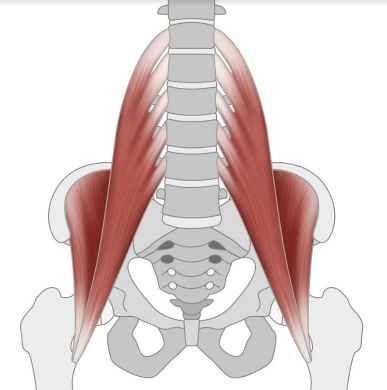
In sports like tennis, which involve intense rotation of the upper and lower body or sudden changes in movement direction such as pivots, the iliopsoas can easily become overburdened. Last year, Ramin Yamaldo, a promising player from the Spanish professional soccer team FC Barcelona, suffered a left iliopsoas injury, and Guillermo Heredia, the cleanup hitter for the Korean professional baseball team SSG, was sidelined for over three weeks due to the same injury. Office workers who spend long hours sitting also frequently experience excessive tension in the iliopsoas, resulting in lower back pain.
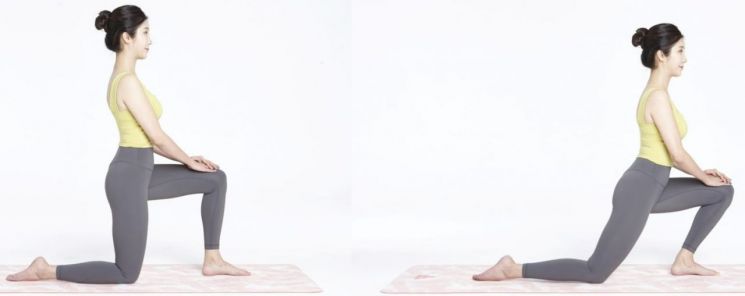
When lower back pain occurs due to contraction of the iliopsoas, Korean medicine treatments focus on relaxing the iliopsoas and restoring spinal function through integrative therapies such as Chuna manual therapy, acupuncture and pharmacopuncture, and herbal medicine prescriptions. Besides treatment, regularly stretching the iliopsoas is a good habit. One stretch involves kneeling with the back straight and stepping one leg forward. Then, push the knee of the forward leg forward to relax the iliopsoas. During this, keep the upper body as straight as possible. Hold the position for 15 seconds and perform 3 sets of 3 repetitions for each leg.
Dr. Lee Jun-seok said, "Both athletes who move their upper and lower bodies excessively and office workers who sit for long periods should pay attention to excessive tension in the iliopsoas and related conditions such as herniated discs. If you feel pain around the hips or lower back, I recommend paying attention to the health of your iliopsoas."
© The Asia Business Daily(www.asiae.co.kr). All rights reserved.
![Clutching a Stolen Dior Bag, Saying "I Hate Being Poor but Real"... The Grotesque Con of a "Human Knockoff" [Slate]](https://cwcontent.asiae.co.kr/asiaresize/183/2026021902243444107_1771435474.jpg)


















