Separate Disposal of Meat Bones and Fallen Leaves Besides Korean-Style Classification
France has made the separate disposal of food waste mandatory starting this year, highlighting 'Korea's waste separation case.'
France mandates separate disposal of food waste from this year... Full implementation of separation expected to take time
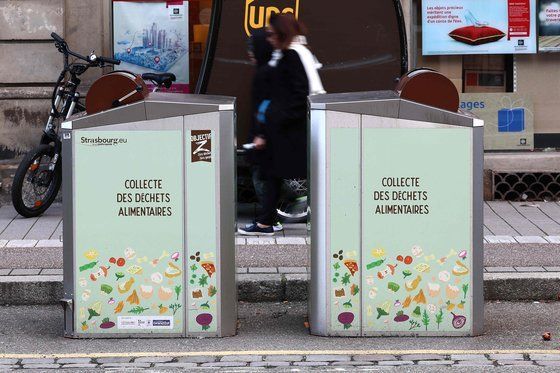
On the 16th (local time), the French government announced that from January 1st this year, under the European 'Waste Framework Directive' and its own 'Anti-Waste Law for a Circular Economy' (AGEC), households and all types of businesses are required to separate food waste from general waste.
Until now, food waste in France was disposed of together with general household waste. Food waste accounts for one-third of general waste, with an estimated average of 83 kg per person per year. This means approximately 5.4 million tons of waste were incinerated or landfilled annually. The French government judged that incinerating food waste, which is 80% moisture, is an unnecessary waste of energy.
When food waste is landfilled, methane gas, which has about 25 times the greenhouse effect potential of carbon dioxide, is generated during decomposition. Therefore, the French government estimates that separating and recycling food waste could prevent over 800,000 tons of greenhouse gases.
Food waste that must be separated from general household waste includes, besides the types classified under the 'Korean-style classification method,' meat bones, fish bones, eggshells, and 'green waste' such as fallen leaves and grass clippings. The French government plans to recycle such bio-waste to produce compost or biogas. However, as of mid-January, local authorities responsible for collecting food waste have not yet completed the installation of separate collection bins, indicating that full-scale separate disposal will require more time.
French media introduce 'Korean cases' amid news of separate disposal
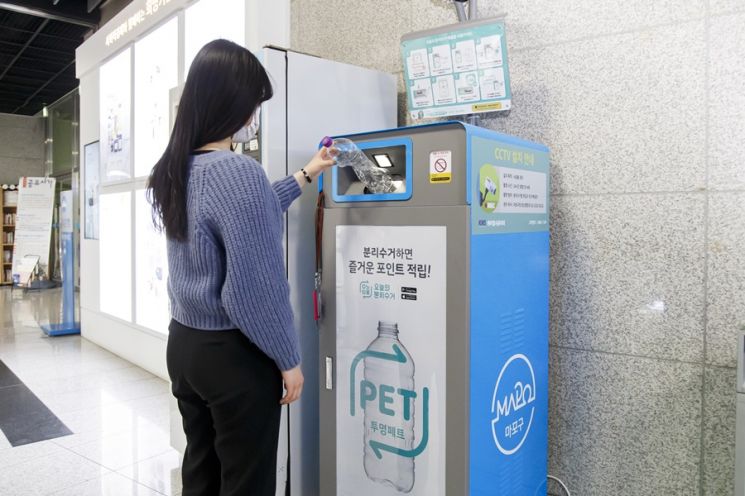 Transparent PET bottle recycling bin installed in the lobby of Mapo-gu Office
 Photo by Mapo-gu Office
Amid this new policy trend, Korea's waste separation cases are receiving focused attention in France. Juliette Francke, head of the 'Zero Waste' environmental organization, told local foreign media, "This is unacceptable, and local authorities have long known that bio-waste must be separated at the source," adding, "Now is not the time to delay; the government and local authorities must strengthen efforts and accelerate the pace."
Radio France Inter explained, "Korea has been a leader in food waste separation for over 20 years," stating, "In 1995, only 2% of bio-waste was recycled, but now almost all waste is sorted." It also introduced, "To achieve this, Korea came up with ingenious ideas like smart trash bins."
France24 also reported, "Korea has been separating food waste for 20 years," and said, "Currently, the country is becoming a model for recycling almost all bio-waste."
© The Asia Business Daily(www.asiae.co.kr). All rights reserved.


















