Democrats Leaning Toward Maintaining Mixed-Member Proportional System... "Considering Platform Party"
Minor Opposition Parties Propose Proportional Alliance to Democratic Party
Effectively Satellite Parties Revived... Ruling Party Says "Stop Collusive Tricks"
With less than three months remaining until the April 10 general election, the election system reform is still at a standstill. As the Democratic Party of Korea, which holds the decisive power with its large number of seats, leans toward maintaining the mixed-member proportional representation system, concerns are rising that the proliferation of 'trick' satellite parties may recur.
According to political circles on the 16th, the ruling and opposition parties are negotiating through the National Assembly's Special Committee on Political Reform with the goal of finalizing the election system by the end of this month. The People Power Party had already agreed on a party line to return to the parallel voting system, but the Democratic Party is still deliberating various calculations. Although some analyses suggest that the parallel system is advantageous due to the overwhelming number of constituency seats, the Democratic Party, which led the introduction of the proportional representation system, feels a significant burden in abolishing it.
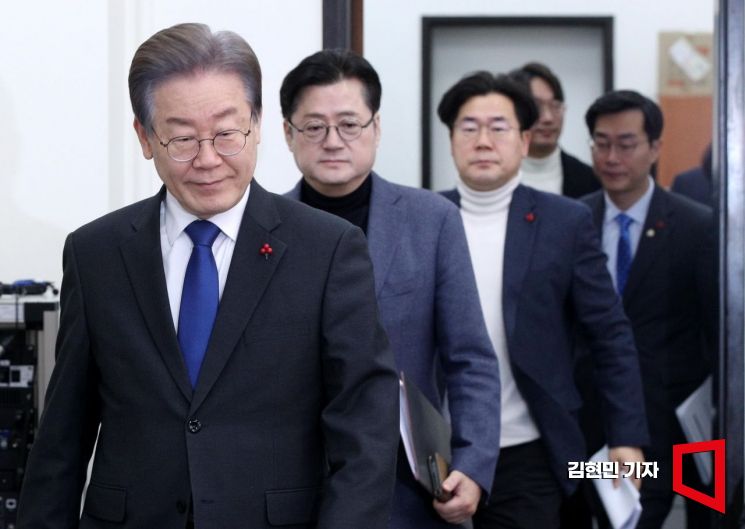 Lee Jae-myung, leader of the Democratic Party of Korea, is attending the Supreme Council meeting held at the National Assembly on the 22nd. Photo by Kim Hyun-min kimhyun81@
The parallel voting system allocates proportional seats according to the party vote share and was applied until the 20th general election. The semi-proportional system, introduced for the first time in the last general election, fills half of the shortfall in seats with proportional representatives when the number of constituency seats is less than the party vote share. The original intent of the proportional system was to help smaller parties enter the National Assembly, but its meaning has been diminished as the two major parties have created satellite parties through tricks.
The Democratic Party appears to have tentatively decided to maintain the proportional system. A senior official from the party leadership told Asia Economy in a phone interview, "We are focusing on maintaining the proportional system while promoting platform parties." He added, "Many lawmakers agree that returning to the parallel system would help check the new third-party forces and be advantageous for winning the general election, but it is a significant burden for our party to abolish the proportional system that we introduced ourselves."
In the opposition camp, proposals have begun to form a 'proportional alliance party' centered around the Democratic Party. On the previous day, Yong Hye-in, a lawmaker from the Basic Income Party, held a press conference and proposed to the Democratic Party that progressive parties such as the Basic Income Party, Open Democratic Party, and Social Democratic Party (preparatory) form a joint proportional alliance party. This is effectively a self-proclaimed satellite party role. Yong entered the National Assembly as a proportional representative from the Democratic Party’s satellite party, the Together Citizens' Party, in the last general election.
The Justice Party has also decided to pursue an 'electoral alliance party' with the Green Party, increasing the possibility of a broad opposition coalition. Ryu Ho-jeong, a Justice Party lawmaker who joined the third-party camp, strongly criticized the Justice Party’s move by announcing her resignation the day before. She pointed out, "(The Justice Party) declared a minimum coalition of activists, but soon will participate in a proportional satellite party led by the Democratic Party along with the new parties of Cho Kuk, the Reform Alliance Party, and the Progressive Party."
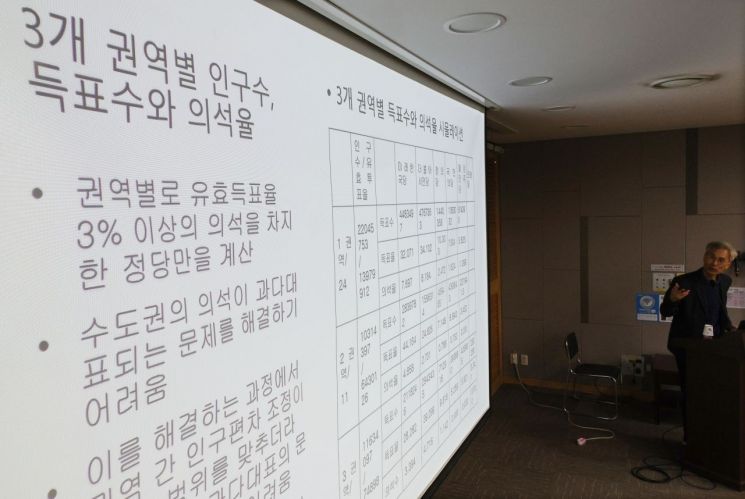
The ruling party immediately criticized this trend. Yoon Jae-ok, floor leader of the People Power Party, said at a floor meeting held at the National Assembly on the same day, "There are only 85 days left until the general election, but the election system discussion is still at a standstill," and criticized, "It is because the Democratic Party is mired in vested interests and has not decided its position." He continued, "The proportional alliance party is destined to split after the election and is nothing but a trick to increase the number of seats through collusion."
A Democratic Party official predicted, "There is only one plenary session scheduled on the 25th of January, but since the re-vote on the 'double special prosecutor law' is pending, it will be difficult to reach an agreement on the election system this month." He added, "We expect a conclusion to be reached as early as late February to early March."
© The Asia Business Daily(www.asiae.co.kr). All rights reserved.


















