Ongoing Conflict Between Jung-gu Office and Jung-gu Council Over 2024 Budget Cuts Likely to Harm Residents, Urgent Need for Resolution Raised
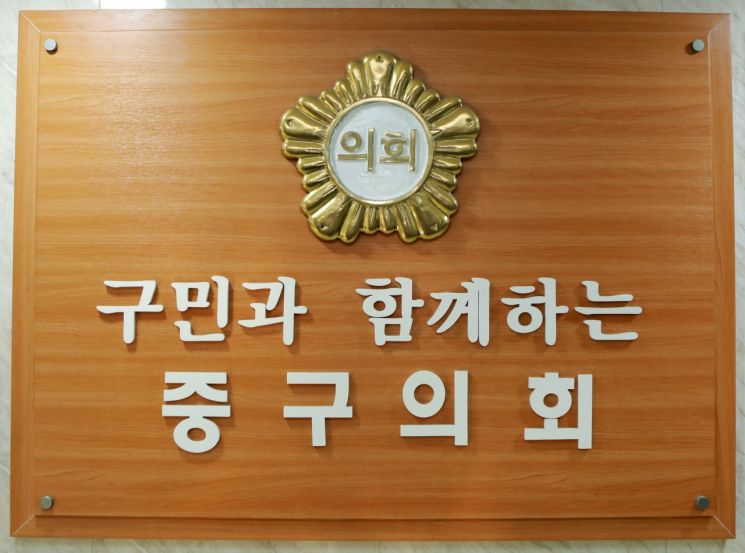
Jung-gu District Office in Seoul (District Mayor Kim Gilsung) and the Jung-gu Council (Chairman Gil Kiyoung) have been repeatedly exchanging ping-pong style criticisms regarding the '2024 Jung-gu Budget Reduction,' drawing attention.
On the 15th, the Jung-gu Council issued a press release criticizing the Jung-gu District Office, stating, "They deceived the residents and misled public opinion by blaming the council in front, but quietly withdrew the re-request for reconsideration and requested a supplementary budget behind the scenes."
The claims of the Jung-gu Council are as follows.
On December 12 last year, the Jung-gu Council approved the 2024 project budget submitted by the Jung-gu District Office, which was originally 576.4 billion KRW, at 568.4 billion KRW. The general account was reduced by 6.58416 billion KRW, and the special account by 1.424 billion KRW, with the final cut amounting to 8 billion KRW, equivalent to 1.39% of the total budget.
In response, the Jung-gu District Office expressed dissatisfaction with the budget cuts, mobilized about 300 residents, and held rallies criticizing the council for cutting all budgets closely related to residents' lives, thereby tying the hands and feet of the administration, demanding that all cut budgets be restored.
At a press conference on December 12, the Jung-gu District Office condemned the council by listing about 30 projects (including ▲ daycare center construction and repair costs ▲ architectural consulting support costs due to the relaxation of Namsan height restrictions ▲ support costs for eco-friendly agricultural products for pregnant women ▲ emergency small-scale facility repair support projects such as senior citizen welfare facilities), claiming that "budgets essential to residents were cut." However, on December 28, it was rebutted that the projects for which the district office actually requested reconsideration were only five, mainly related to the Facilities Management Corporation and the Cultural Foundation.
The Jung-gu District Office's re-request for reconsideration, which misled public opinion and concealed the truth by mobilizing about 300 residents to hold a resolution rally, is said to be facing an utterly futile outcome.
Due to immaturity in properly understanding administrative procedures, the district office attached unreasonable reasons and made a 're-request for reconsideration' even though it was not applicable, resulting in a situation where the total 21 billion KRW for the five projects requested for reconsideration by the Jung-gu District Office cannot be used at all.
According to Article 120 of the Local Autonomy Act, if the head of a local government requests reconsideration, the council can confirm the budget as is if a majority of the total members are present and two-thirds of those present approve the same resolution as before.
In other words, if six or more of the nine Jung-gu council members approve the reconsideration request as before, the final approved budget of 568.4 billion KRW (with an 8 billion KRW cut) on December 12 will be reconfirmed, allowing most of the budget to be executed. However, if it fails to get the approval of six or more members and is rejected, the situation changes drastically.
The agenda will be discarded due to lack of quorum, and the 21 billion KRW for the five projects requested for reconsideration by the district office will become a non-existent budget from the start.
The Jung-gu Council consists of nine members: four from the People Power Party, four from the Democratic Party of Korea, and one independent member. The quorum for the reconsideration request is two-thirds, i.e., six members.
Therefore, in such a situation, the Jung-gu District Office will have to go through unnecessary administrative procedures by preparing a supplementary budget for the lost 21 billion KRW and requesting approval from the council again.
The council claims that the district office misjudged that the Jung-gu Council would not be able to process the reconsideration request and used it as a means to pressure the council.
Supporting this claim are the following facts.
Contrary to the district office's expectations, Democratic Party members of the Jung-gu Council requested the convening of a special session on January 10 to process the 'reconsideration request' submitted by the district office, and within just two days, the district office abruptly shifted its stance to 'withdraw the reconsideration request.'
The district office realized late that the reconsideration request might be rejected in the plenary session, which would result in the inability to use the budget for the relevant projects, and urgently requested withdrawal of the reconsideration request on January 12, submitting the first supplementary budget for 2024.
The Jung-gu Council stated that it cannot overlook the district office's deceptive behavior and intends to inform all residents of the substantive truth by rejecting the district office's withdrawal request and holding a special session to forcibly process the 'reconsideration request.'
According to Article 15 of the Rules of Procedure of the Jung-gu Council of Seoul Metropolitan City, the chairman has the authority to decide on the agenda, and since there is no necessity to necessarily place the district office's withdrawal request on the agenda, the council will accept and process the special session convening request (to process the reconsideration request) submitted earlier by Councilor Lee Jungmi and four others.
On December 27, the Jung-gu Council held a press conference titled 'The Truth about the Jung-gu Budget Resolution,' urging, "Now in the third year of the 8th elected term, it is time to stop actions that infringe on the council's inherent authority, such as mobilizing residents to pressure the council or making 'reconsideration requests' against council resolutions, and to show the residents of Jung-gu a mutually respectful, cooperative, and symbiotic relationship between the legislative council and the administrative district office." They repeatedly called for sincere communication for the residents.
They expected political determination and reasonable, common-sense actions to persuade the council, but due to the district office's continuous media play and imprudent, uncoordinated administrative actions, the so-called 'administration for residents' they claimed was revealed to be untrue, merely venting frustration over the budget cuts.
Ultimately, the Jung-gu District Office must deeply engrave the fact that all damages fall squarely on the 120,000 residents of Jung-gu and bear heavy responsibility for causing the entire situation.
As the conflict between the Jung-gu District Office and the Jung-gu Council shows no signs of resolution, the damage is expected to fall on the residents, drawing attention.
One resident emphasized, "I hope the Jung-gu District Office and the Jung-gu Council resolve their conflict quickly so that administration for the residents can be carried out."
© The Asia Business Daily(www.asiae.co.kr). All rights reserved.
!["The Woman Who Threw Herself into the Water Clutching a Stolen Dior Bag"...A Grotesque Success Story That Shakes the Korean Psyche [Slate]](https://cwcontent.asiae.co.kr/asiaresize/183/2026021902243444107_1771435474.jpg)
















