When Rising Above $80, Pressure for Public Utility Rate Increases Likely to Intensify
As the government is making every effort to control prices ahead of the Lunar New Year, the uncertainty in the Middle East situation is increasing, causing international oil prices, which directly affect domestic prices, to show signs of volatility. Although domestic fuel prices have been declining for 14 consecutive weeks, if international oil prices rise beyond the government's expectations, not only will fuel prices increase, but pressure to raise gas and electricity rates may also intensify, potentially undermining the price stabilization trend.
On the 12th (local time), January Brent crude oil rose 1.14% from the previous day to $78.29 per barrel. During the day, it surged nearly 4%, approaching $80 per barrel. This was due to the instability in the Middle East following the coalition airstrikes by the United States and the United Kingdom in response to attacks on civilian ships by Yemen's Houthi rebels in the Red Sea region.
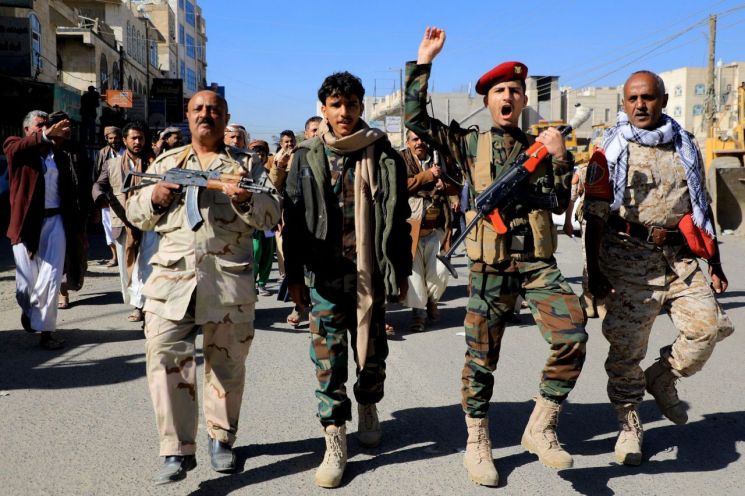
International oil prices soared to $90 per barrel in September last year before falling to around $70 per barrel recently. This was due to China's demand slowdown and increased production by non-OPEC countries. However, the impact of the war between Israel and the Palestinian armed group Hamas has spread to the Red Sea, a key hub for oil production and logistics, causing oil prices to stir recently. According to the UK BBC, the UK Treasury expects crude oil prices to rise by more than $10 per barrel and natural gas prices to increase by 25% due to this impact. Bob McNally, CEO of consulting firm Rapidan Energy, warned that oil prices could rise to $90 per barrel.
Depending on how far and how long the Middle East risk spreads, there is a possibility that oil prices could surge to the $80?90 per barrel range. If this happens, the impact on domestic prices is expected to be significant. The government has declared its commitment to maintaining price stability through the 2024 'Economic Policy Direction.' Additionally, ahead of the Lunar New Year, the government and ruling party have agreed to postpone electricity rate hikes for 3.65 million vulnerable households, focus on supplying 16 essential goods, and increase the government's discount support rate from 20% to 30%, making every effort to control prices. However, price increases due to rising international oil prices are difficult for the government to control.
The government maintains that the $70?80 per barrel range is within the expected price range. In a briefing on the 'Recent Economic Trends (Green Book),' Lee Seung-han, Director of the Comprehensive Policy Division at the Ministry of Economy and Finance, responded to the question, "If oil prices rise to $80 per barrel, won't there be an impact on prices?" by saying, "The $70?80 per barrel range is the government's forecast and an expected level."
The problem arises if prices rise beyond this level. There are concerns that if international oil prices exceed $80 per barrel, pressure to raise public utility rates will intensify further. Professor Kang Sung-jin of Korea University’s Department of Economics stated, "The assumption that prices will stabilize in the low 2% range is based on oil prices at around $80 per barrel. If prices go higher, control becomes impossible. Our country has kept electricity and water rates low, which helped keep inflation down, but this was offset by the debts of Korea Electric Power Corporation and Korea Gas Corporation, and KEPCO is now reaching its limit."
The government has also responded swiftly to the fluctuating international oil prices. On the 14th, Choi Nam-ho, Vice Minister of the Ministry of Trade, Industry and Energy, held an emergency situation review meeting with Korea National Oil Corporation, Korea Gas Corporation, and the four major refining companies to check the domestic oil and gas supply status and the impact of oil prices in the Middle East region, confirming the stockpiling status of domestic oil and gas.
© The Asia Business Daily(www.asiae.co.kr). All rights reserved.

















