Middle East Oil Price Issues Resurface Amid Rising Tensions in the Red Sea and Strait of Hormuz
Concerns Over Exports to Europe as Sea Routes Are Blocked
Low Risk of Escalation, Seen as Short-Term Factor
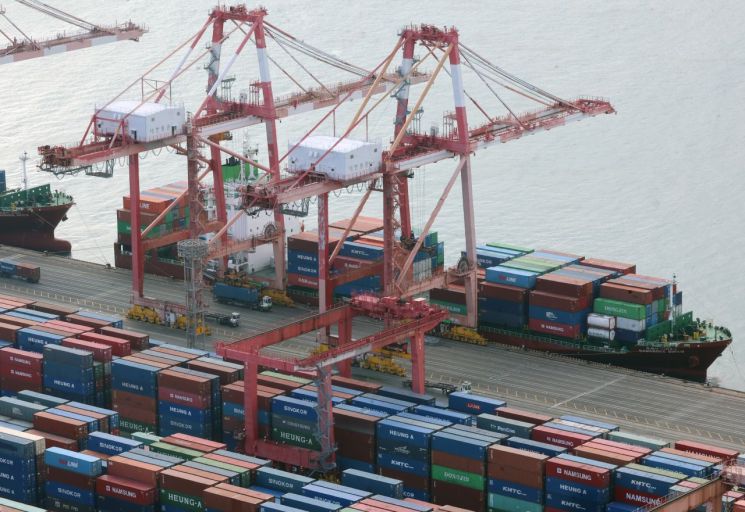
The 'Middle East risk' is resurfacing due to consecutive armed conflicts in the Red Sea and the Strait of Hormuz. International oil prices, which had stabilized in the second half of last year easing import prices, are becoming unstable again, emerging as a wild card. There are concerns that the blockade of sea routes could even threaten exports. Although domestic fuel prices have been declining for 14 consecutive weeks, if international oil prices rise beyond the government's expectations, not only will fuel prices increase, but pressure to raise gas and electricity rates could intensify, potentially undermining the price stability policy.
Following the outbreak of war last year between Israel and the Palestinian armed faction Hamas, international oil prices, which had been under upward pressure due to production cuts, stabilized later due to decisions by non-OPEC (Organization of the Petroleum Exporting Countries) countries to increase production. Lee Chang-yong, Governor of the Bank of Korea, also cited the easing of factors such as the Hamas incident, which had been pushing oil prices up, and external economic uncertainties as reasons for the reduced need for further interest rate hikes at the first Monetary Policy Committee press conference of the new year.
However, since the Yemeni Houthi rebels attacked commercial vessels passing through the Red Sea at the end of last year and the United States responded militarily, concerns have continued to grow. As uncertainty expanded, on the 12th, West Texas Intermediate (WTI) crude oil on the New York Mercantile Exchange briefly rose more than 4% during the session, surpassing the $75 mark. Yoon Jae-sung, an analyst at Hana Securities, explained, "Because 8% of global LNG shipments pass through the Suez Canal (the gateway to the Red Sea), recent geopolitical issues like this could destabilize not only oil prices but also global natural gas prices." According to the British BBC, the UK Treasury expects crude oil prices to rise by more than $10 per barrel and natural gas prices to increase by 25% as a result. Bob McNally, CEO of consulting firm Rapidan Energy, warned that oil prices could rise to $90 per barrel.
In particular, tensions escalated over the weekend as the United States and the United Kingdom launched additional attacks on the Yemeni Houthi rebels. This was a retaliatory operation following the seizure of a US tanker by the Iranian navy in the Strait of Hormuz on the 11th (local time). The Strait of Hormuz is a major maritime route for oil-producing countries, with over 70% of South Korea's crude oil imports passing through it.
Amid rising tensions related to energy supply, the Ministry of Trade, Industry and Energy urgently began checking supply and demand conditions on the 14th. The ministry held an emergency situation review meeting attended by the Korea National Oil Corporation, Korea Gas Corporation, and refiners to inspect the status of oil and gas reserves and emergency response manuals. According to the ministry, there have been no disruptions so far in the import process of crude oil and LNG, and all Korean tankers and carriers passing through the Middle East are operating normally.
For the time being, oil prices are expected to remain sensitive to instability in the Middle East region. Shim Soo-bin, a researcher at Kiwoom Securities' Investment Strategy Team, said, "Last year, Iran's increase in crude oil production and exports somewhat offset OPEC's production cuts, but if related issues cause changes in Iran's oil supply, supply instability in the oil market is likely to expand again." He added, "It will be necessary to review future oil market prospects through the monthly reports from OPEC and the International Energy Agency (IEA) released during the week."
Red Light for Trade with Europe Accounting for 10% of Last Year's Exports
The Red Sea is a passage for 15% of global maritime trade, so there are forecasts that it could negatively impact South Korea's exports beyond just international oil prices.
In particular, there is a possibility of disruption to exports to the European Union (EU), which emerged as a 'cash cow' last year. According to the Ministry of Trade, Industry and Energy, last year's exports to the EU reached about $68.3 billion (approximately 89.6 trillion KRW), marking a record high and accounting for more than 10% of South Korea's annual export volume. However, since automobiles and machinery, which mainly rely on shipping, were the main export items, the highlighted risk of navigation crises could dampen exports to Europe.
Already, the water level of the Panama Canal, which connects the Pacific and Atlantic Oceans, has dropped due to drought, causing difficulties for ship passage. Meanwhile, the Red Sea route connecting Europe, the Middle East, and Asia is not functioning properly, leading major shipping companies to suspend Red Sea operations and take a longer detour around the southern tip of Africa. As a result, the Shanghai Containerized Freight Index (SCFI), a global shipping freight indicator, rose 16.3% compared to the previous week, reaching 2206.03 as of the 12th. The extended transportation time and increased logistics costs could act as obstacles to the recovering exports.
"Short-term Volatility... Positive for Transport Balance"
However, there are also forecasts that the series of clashes will remain short-term impacts, as the possibility of escalation into a full-scale war in the Middle East is low. Yoo Seung-min, head of the Geopolitical Analysis Team at Samsung Securities, analyzed, "Since the US unilaterally withdrew from the Iran nuclear deal (JCPOA) in 2017, Iran's economic situation has deteriorated due to sanctions, and the current regime's internal support is weak, making it difficult to conduct a large-scale war." He added, "The possibility of the clashes escalating into a full-scale war in the Middle East is low."
Considering the overall international environment, the likelihood of oil price increases triggering systemic risks also appears low. Yoo explained, "Structural supply increases such as the expansion of the US share in the oil market and sluggish global demand are playing a more important role." This also explains why last week's WTI price, despite rising to $75, was capped and closed in the high $70s. As of 9:20 a.m. on the 15th, WTI is still trading around $72.
Kang In-soo, professor of economics at Sookmyung Women's University, also predicted, "It is difficult to see international demand for oil this year as higher than usual, and with global vigilance against inflation significantly heightened, it is unlikely that oil prices will skyrocket." He added, "Prices are unlikely to rise to worrying levels such as exceeding $100."
Regarding exports, there is also a view that the impact on the trade balance will not be significant, and from the current account perspective, it could even have a positive effect on the transport balance. A Bank of Korea official explained, "There are currently no issues hindering imports and exports," adding, "Freight rates are rising, which could actually help the transport balance."
© The Asia Business Daily(www.asiae.co.kr). All rights reserved.

















