For the Convenience of Charles III, Who Mainly Uses Electric Cars
Academics Warn "Archaeological Sites May Be Damaged"
The British archaeological community has expressed concerns over the royal plan to install electric vehicle charging stations at Windsor Castle, the residence of the British royal family. On the 13th (local time), the British daily The Telegraph reported that the British royal family submitted a plan to local authorities to install six electric vehicle charging stations within the 950-year-old Windsor Castle grounds. Four stations are planned around Home Park behind Windsor Castle, and two stations next to the castle.
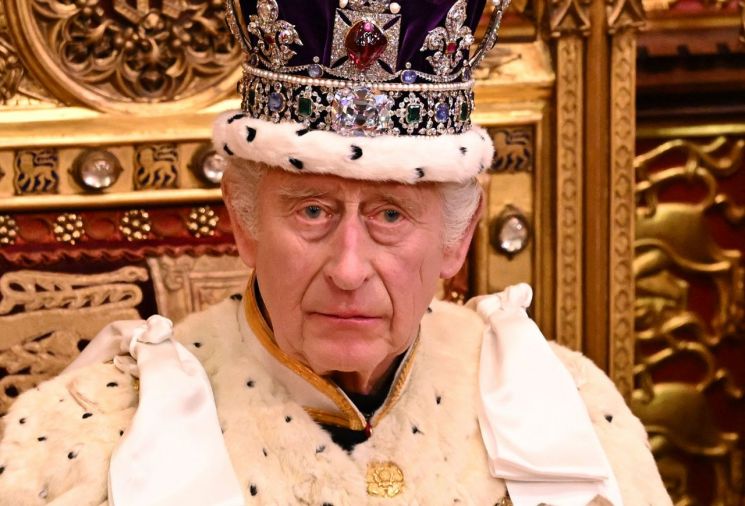 The reason for installing an electric charging station at Windsor Castle is that King Charles III, who is highly concerned about the climate crisis, is increasingly using electric vehicles. King Charles III owns three electric cars. In 2018, he purchased a Jaguar I-Pace worth 60,000 pounds (about 100 million won), and in 2021, he rented a Tesla for six months.
 [Photo by AFP·Yonhap News]
The reason for installing electric charging stations at Windsor Castle is that King Charles III, who is highly concerned about the climate crisis, is increasingly using electric vehicles. King Charles III owns three electric cars. In 2018, he purchased a Jaguar I-Pace worth ?60,000 (about 100 million KRW), and in 2021, he rented a Tesla for six months. Last year, he bought an Audi Q8 worth ?80,000 (about 130 million KRW), which can travel 333 miles (about 535 km) on a single charge.
Moreover, King Charles III even modified an Aston Martin DB6, which he received as a 21st birthday gift from his mother, Queen Elizabeth II, to run on bioethanol made from surplus wine. Archaeologists have expressed concerns about such royal plans and urged an assessment of the impact that installing electric vehicle charging stations might have on the heritage site.
Edwin Wood of Berkshire Archaeology, an archaeological advisory body, stated in a submission to the Windsor and Maidenhead Royal Borough Council, "The proposed site is directly adjacent to Windsor Castle and within its grounds," expressing concern that "if the ground is disturbed by this development, archaeological remains could be damaged."
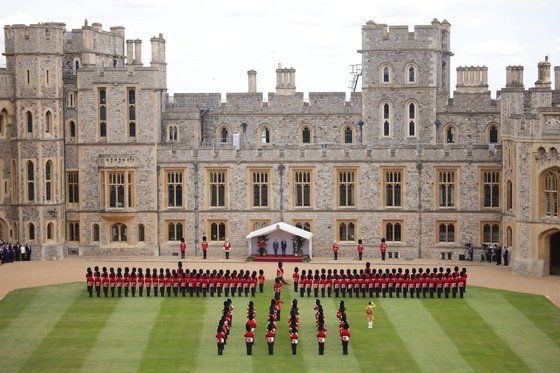 Windsor Castle, located along the Thames River in Dunstable, was built in the 11th century by William I for war defense purposes. Construction began in 1070 and was completed in 1086. It is one of the official residences of the British royal family, and beneath St. George's Chapel inside the castle, past monarchs including Elizabeth II are buried.
 [Photo by Reuters·Yonhap News]
However, the royal side stated that no work would be carried out on the existing building structures. A Buckingham Palace spokesperson explained, "Work is underway to install electric vehicle charging stations at official royal residences to promote the use of electric vehicles," adding, "The royal family is always exploring various ways to reduce environmental impact."
Meanwhile, Windsor Castle, located along the River Thames in London, was built in the 11th century by William I for war defense purposes. Construction began in 1070 and was completed in 1086. It is one of the official residences of the British royal family, and beneath St. George's Chapel inside the castle lie the tombs of past monarchs, including Queen Elizabeth II.
© The Asia Business Daily(www.asiae.co.kr). All rights reserved.
![User Who Sold Erroneously Deposited Bitcoins to Repay Debt and Fund Entertainment... What Did the Supreme Court Decide in 2021? [Legal Issue Check]](https://cwcontent.asiae.co.kr/asiaresize/183/2026020910431234020_1770601391.png)

















