Thanks to the cumulative effects of monetary tightening, the U.S. consumer price inflation rate, which had been showing a disinflation trend, rebounded to the mid-3% range in December last year. Due to still high housing costs and other factors, there are forecasts that the Federal Reserve's (Fed) first rate cut may be delayed beyond market expectations. A prominent hawkish (monetary tightening preference) figure within the Fed also dismissed expectations of a rate cut in March.

U.S. CPI Rises 3.4%... Highest in 3 Months
According to the U.S. Department of Labor on the 11th (local time), the U.S. Consumer Price Index (CPI) in December last year rose 3.4% compared to the same month the previous year. This exceeded both the previous month's increase (3.1%) and Wall Street's forecast (3.2%). It is also the highest figure in three months. The December CPI also rose 0.3% month-over-month, surpassing Wall Street's forecast of 0.2%. The core CPI, which excludes the volatile energy and food sectors, rose 3.9% year-over-year and 0.3% month-over-month, continuing the slowing trend.
The rebound in December CPI was largely due to housing costs. The Department of Labor explained that housing costs, which account for 35% of the CPI weighting, rose 0.5% month-over-month, contributing half of the CPI increase. Housing costs also rose 6.2% year-over-year. Energy prices increased 0.4% over the month, contributing to inflation. Auto insurance premiums and used car prices also rose 1.5% and 0.5%, respectively. The average real hourly wage in December rose 0.2% month-over-month and 0.8% year-over-year, maintaining the same level as in November.
Anna Wong, an economist at Bloomberg Economics, evaluated, "The surprisingly strong December CPI shows that returning to the 2% inflation target will be challenging and that the last mile could be difficult." Quincy Crosby, chief strategist at LPL Financial, diagnosed, "This suggests that the Fed's first rate cut may be later than the market expects."
Will the Rate Cut Timing Be Delayed? Mester Says "March Is Too Early"
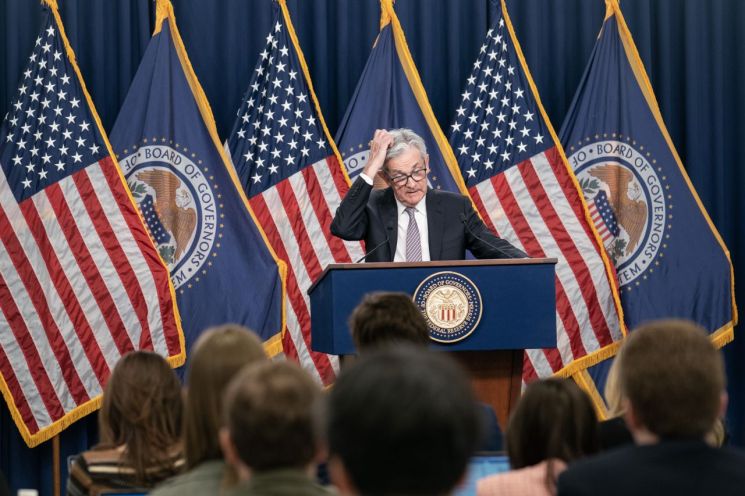
This is expected to affect the pace of policy easing by the Fed, which suggested the possibility of three rate cuts this year through its dot plot. Loretta Mester, president of the Federal Reserve Bank of Cleveland and a prominent hawkish figure within the Fed, dismissed market expectations that the first rate cut could be made in March during an interview with Bloomberg TV immediately after the CPI release.
President Mester said, "March is probably too early to expect a rate cut," adding, "We need to see more evidence (of inflation easing, etc.)." Mester, who holds voting rights at this year's FOMC, has consistently advocated for the possibility of additional rate hikes over the past two years. She said, "The December CPI report showed that there is more work to be done," adding, "This will be a restrictive monetary policy." Furthermore, she noted that more disinflation progress in housing costs needs to be confirmed, and wage growth also needs to slow down.
On the same day, Thomas Barkin, president of the Richmond Fed, assessed that the December CPI was "about as expected." He noted that while goods inflation has eased, service inflation remains sticky. He said, "There is still a disconnect between goods and services," and that broader improvements are needed to be confident that inflation is moving toward the 2% target. Regarding the possibility of a rate cut in March, he refrained from making a premature judgment.
The Market Still Favors a March Rate Cut
The unemployment data released on the same day also reaffirmed a still robust labor market. According to the Department of Labor, new unemployment claims for the week of December 31 to January 6 totaled 202,000, down 1,000 from the previous week. This was below Wall Street's forecast of 210,000.
However, the personal consumption expenditures (PCE) price index, an inflation indicator that the Fed considers more important than the CPI, continued its slowing trend at 2.6% as of November last year, supporting expectations for an early rate cut.
The market still favors a rate cut scenario in March. According to the Chicago Mercantile Exchange (CME) FedWatch, the interest rate futures market currently reflects more than a 70% probability that the Fed will cut rates by at least 0.25 percentage points in March. Earlier, after the December FOMC, the Fed indicated through a new dot plot that the median forecast for the year-end policy rate is 4.6%, suggesting that three rate cuts could occur within the year. The current rate stands at 5.25?5.5%.
© The Asia Business Daily(www.asiae.co.kr). All rights reserved.

![A Woman with 50 Million Won Debt Clutches a Stolen Dior Bag and Jumps... A Monster Is Born [Slate]](https://cwcontent.asiae.co.kr/asiaresize/183/2026021902243444107_1771435474.jpg)
















