Changing the Purpose of NVIDIA GPUs for AI Training
Over 4,000 Units Disassembled Last Month at a Factory in China
Performance Drops and Costs Remain High, but No Immediate Alternatives Available
After the United States imposed restrictions on the export of advanced semiconductors to China, Chinese companies, facing difficulties in obtaining AI chips, have been temporarily modifying Nvidia's gaming graphics processing units (GPUs) for their use.
On the 10th (local time), major foreign media outlets reported this, citing sources from the Chinese AI chip industry.
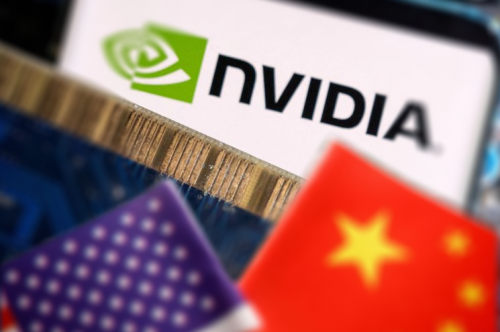
Nvidia's graphics cards are originally used by general consumers to enhance game graphics on PCs or for cryptocurrency mining. However, industry experts evaluate that disassembling graphics cards and repurposing GPUs could be a way to address the AI chip shortage.
In particular, since the Biden administration further tightened export controls on advanced semiconductors in October last year, demand for GPUs sourced from Nvidia's gaming graphics cards in China has surged. Nvidia is estimated to hold a 90% share of the global AI chip market. It is not an exaggeration to say that AI training is impossible without Nvidia chips. Some factories reportedly disassembled more than 4,000 Nvidia graphics cards in December last year alone, according to foreign media.
However, simply repurposing them has limitations for AI training. Nvidia's gaming GPUs have raw computing power but lack the high-precision calculation capabilities required to train large language models (LLMs) with massive datasets. Additionally, there are speed limitations in chip-to-chip connections, so merely grouping more chips into a computing cluster does not easily overcome the problem. Charlie Chai, an analyst at 86Research, described this as "a desperate move by Chinese companies under export control conditions," adding, "While it is possible, like creating art with a kitchen knife, it is only a second-best option."
Furthermore, the industry raises intellectual property infringement concerns regarding the repurposing of Nvidia chips to circumvent regulations. There are also suggestions that high-performance gaming graphics cards could be banned from sale in China. Nvidia's top-tier gaming graphics card, the GeForce RTX 4090, was banned from sale in China last year due to additional export controls.
Nvidia has been modifying and releasing products for China, such as the RTX 4090D, which is about 5% slower than the RTX 4090. It also plans to produce China-specific AI chips H20, L20, and L2 with downgraded performance. However, the RTX 4090D is evaluated as insufficient for LLM training due to a larger performance gap in actual use. According to semiconductor consulting firm SemiAnalysis, the H20, L20, and L2 include most of the latest features for AI tasks but have reduced computing performance compared to before.
Chinese companies are reluctantly adopting Nvidia's gaming GPUs. It is known that there is internal resistance within China to Nvidia's China-specific chips. Although performance is lower, the price is comparable to the top-tier products sold before export controls. While Chinese companies like Huawei have launched their Ascend 910B chips and started developing their own AI chips, it remains difficult to replace Nvidia in the short term. One company that purchased Nvidia chips stated, "We do not know if this repurposing will succeed, but we hope to be able to use them in the short term."
© The Asia Business Daily(www.asiae.co.kr). All rights reserved.
!["The Woman Who Threw Herself into the Water Clutching a Stolen Dior Bag"...A Grotesque Success Story That Shakes the Korean Psyche [Slate]](https://cwcontent.asiae.co.kr/asiaresize/183/2026021902243444107_1771435474.jpg)
















