2024 Global Risk Report
Especially This Year is the 'Super Election Year'
Election Misuse and Amplified Chaos Inevitable
The World Economic Forum (WEF) identified the spread of false information based on artificial intelligence (AI) as the most immediate risk ahead of its annual meeting (Davos Forum), which gathers prominent figures from politics, business, and academia worldwide. With at least 65 countries, including the United States, preparing for elections this year, there are concerns that such false information could not only exacerbate social polarization and anxiety but also pose a threat to the overall economy. Climate anomalies were pointed out as the long-term risk over the next decade.
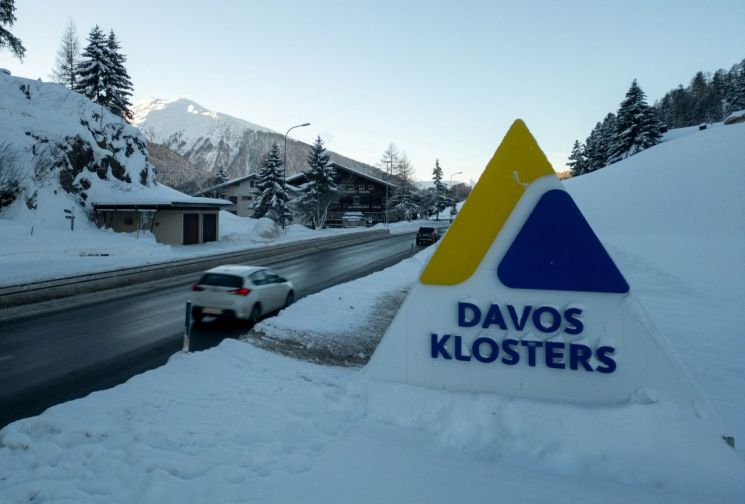
On the 10th (local time), WEF announced this in its "2024 Global Risks Report." The WEF, which organizes the Davos Forum, annually presents risk factors affecting the global economy based on surveys of about 1,500 experts from various fields conducted just before the forum in January. This year marks the 19th edition. Saadia Zahidi, Managing Director of WEF, said, "Amid global suffering from climate and conflict crises, we selected risks against the backdrop of rapidly accelerating technological changes and economic uncertainties," urging joint responses by adding, "It is a more critical time to prepare for global risks."
The greatest risks over the next two years were identified as misinformation and disinformation based on AI and other technologies. With the recent spread of generative AI, represented by ChatGPT, the social impact of such false information is expected to be greater than that of climate change, war, inflation, and economic recession. The report warned, "Due to increasingly sophisticated technology, the destructive power of false information is rapidly growing," adding, "Over the next two years, various fake content could manipulate individuals in diverse ways, harm the economy, and destroy society. New types of crimes such as deepfake pornography and stock market manipulation will also surge."
Especially this year is called the "super election year," with more than 3 billion people voting in multiple countries including the Taiwan presidential election on the 13th, the United States, India, Indonesia, Pakistan, Venezuela, and the European Union (EU). It is anticipated that the flood of false information during this process will inevitably amplify social chaos. Carolina Klint of Marsh McLennan, the consulting firm that compiled the report, said, "AI can build models that influence many voters in ways we have never seen before," adding, "It can also be used to cast doubt on the legitimacy of elected governments. Ultimately, social polarization will deepen."
Alongside this, risks facing the world over the next two years include climate anomalies, social polarization, cyber insecurity, interstate armed conflicts, lack of economic opportunities, inflation, involuntary migration, economic recession, and pollution. Notably, interstate armed conflict appeared in the top 10 risks for the first time this year. With the worsening war situations in Ukraine and the Gaza Strip, WEF expects that the world's major powers will likely focus on the Ukraine war, Gaza conflict, and tensions surrounding Taiwan over the next two years. It also expressed concern that if any of these fronts expand, global supply chains, financial markets, and political stability could be shaken.
Climate anomalies, ranked second among short-term risks, also topped the list of long-term risks facing the world. Among the top 10 long-term risks over the next decade, five are climate-related: climate anomalies, significant changes to the Earth system, biodiversity loss and ecosystem collapse, natural resource shortages, and pollution. The report warned, "We may pass irreversible climate change tipping points within the next 10 years." Other long-term risks mentioned include misinformation and disinformation, side effects of AI technology, involuntary migration, cyber insecurity, and social polarization.
This year's Davos Forum will be held from the 15th to the 19th in Davos, Switzerland, under the theme of "rebuilding trust." AI, identified by WEF as the greatest risk over the next two years, is expected to be a major topic at the forum. Key figures leading AI technology competition, including Sam Altman, CEO of OpenAI, known as the "father of ChatGPT," and Satya Nadella, CEO of Microsoft (MS), along with scholars, will attend in large numbers to discuss the future AI will bring. Leaders from various countries, including Ursula von der Leyen, President of the European Commission, and Emmanuel Macron, President of France, will also participate. They are expected to brainstorm solutions to end the wars in Ukraine and the Gaza Strip. Ukrainian President Volodymyr Zelensky will also deliver a speech during the forum. However, the leaders of the G2 countries, the United States and China, will both be absent.
© The Asia Business Daily(www.asiae.co.kr). All rights reserved.

















