Offline Market Share 70% Olive Young
KFTC Last Month: "Competition Landscape Includes Online"
"Not a Dominant Operator" Judgment
The government is pushing for the enactment of the 'Platform Fair Competition Promotion Act (tentative name),' which designates online platform companies as dominant businesses in advance and prohibits unfair practices, sparking controversy over reverse discrimination against offline companies. The intention is to prevent so-called 'gapjil'?abusive practices?by platform companies leveraging their monopolistic positions, but so far, measures against unfair practices by offline distribution companies have been lenient.
According to the distribution industry on the 11th, if the Platform Act promoted by the Fair Trade Commission is enacted, domestic companies such as Naver, Kakao, Coupang, and Baedal Minjok are expected to be regulated as dominant businesses.
The core of this bill is to pre-designate key platform operators with monopoly power that controls the market and strengthen monitoring to prevent abuse of market dominance. The Fair Trade Commission is considering imposing fines of up to 10% of sales if unfair practices such as preferential treatment of their own company, tying sales, multi-homing (restricting users of their platform from using competing platforms), and demands for most-favored-nation treatment are detected.

The industry impact is inevitable. Various points, discount coupons, and free shipping services provided when continuously using certain services could be targeted, and exclusive discount and accumulation services such as Coupang Wow Membership or Coupang Pay are likely to be seen as preferential treatment. Some platform companies that have expanded their scale while enduring losses are expected to face significant damage threatening their survival.
If this law is enacted, platform companies will not be able to avoid fines reaching up to trillions of won. Although the Fair Trade Commission has not yet disclosed specific criteria, it is strongly expected that platforms with an average annual sales of over 3 trillion won and more than 10 million monthly users will be subject to regulation. For example, Coupang, which has recently grown rapidly, had annual sales of $18.4 billion (about 24.3064 trillion won) in 2022, and last year is expected to surpass 30 trillion won, meaning it could face fines of up to about 3 trillion won.
"The Olive Young Case Shows the Contradictory Nature of the Bill"
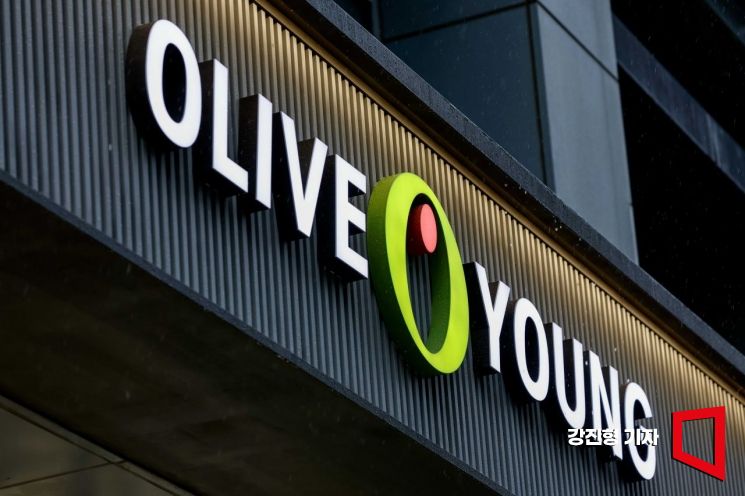
This contrasts with the recent decision by the Fair Trade Commission to defer judgment on CJ Olive Young's abuse of market dominance. Previously, in December last year, the Fair Trade Commission judged that Olive Young forced suppliers not to participate in competitors' promotional events while conducting a promotional event displaying certain products on highly visible shelves, and imposed a fine of 1.9 billion won. At that time, the Fair Trade Commission viewed Olive Young as engaging in 'exclusive dealing' under the Large-Scale Distribution Business Act by blocking transactions of certain products with other channels.
However, the Fair Trade Commission judged that Olive Young's actions did not constitute 'abuse of market dominance.' This is why Olive Young received a relatively light penalty of 1.9 billion won, contrary to initial expectations. If the violation had been applied as abuse of market dominance under the Fair Trade Act rather than a violation of the Large-Scale Distribution Business Act, the fine would have reached hundreds of billions of won, according to dominant views at the time.
The reason the Fair Trade Commission deferred judgment on whether Olive Young abused its market dominance is as follows. Although Olive Young's offline market share exceeds 70%, the competitive landscape includes online channels, so it was judged not to be a dominant business. The Fair Trade Commission's decision regarding Olive Young has led the industry to argue, "Since online also competes with offline through various services, why should only platforms pay astronomical fines when the same supplier competition interference occurs?"
Concerns Over Consumer Harm Beyond Platforms
In the legal community, there is a strong view that Olive Young's detected behavior corresponds to prohibited acts under the Platform Act, such as multi-homing restrictions or demands for most-favored-nation treatment. A lawyer from a major law firm said, "From the perspective of obstructing competitors' supplies or forcing transactions under favorable conditions only for themselves, it is no different from multi-homing or demands for most-favored-nation treatment," adding, "Companies suffer opportunity cost losses because certain products can only be sold through specific channels."
Experts express concerns that the promotion of the Platform Act could cause harm not only to domestic companies but also to consumers and tenant sellers. Globally, only the European Union (EU) and Germany operate laws similar to the Platform Act promoted by the Fair Trade Commission, and they regulate foreign companies rather than domestic ones. However, the Platform Act promoted by the Fair Trade Commission targets domestic companies such as Naver, Kakao, and Coupang, which is a key difference. Professor Kang Hyung-gu of Hanyang University's Department of Finance and Management said, "They are clumsily copying European big tech regulations and pressuring domestic platform companies that need to grow," adding, "Especially since the e-commerce market cannot be monopolized and is growing through fierce online and offline competition, regulation is premature."
© The Asia Business Daily(www.asiae.co.kr). All rights reserved.


















