US Researchers Publish Paper... Hundreds of Thousands in 1ℓ Bottle
"90% Are Nanoplastics... Risks Unconfirmed"
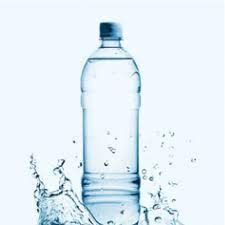
A study has found that bottled water sold on the market contains hundreds of thousands of invisible tiny nano plastics.
Researchers from Columbia University in the United States announced on the 8th (local time) in a paper published in the Proceedings of the National Academy of Sciences (PNAS) that 240,000 plastic particles were found in seven types of 1ℓ bottled water, and 90% of these were nano plastics.
Microplastics refer to plastic particles sized between 5 mm and 1 μm (micrometer; 1 μm is one-millionth of a meter), while nano plastics are smaller than 1 μm. They are less than one-hundredth the thickness of a human hair.
The research team sampled five bottles each from three bottled water brands sold at Walmart in the United States. Using a new method that observes molecular resonance by firing lasers from two directions at the samples, they confirmed seven types of plastic particles in three brands of bottled water.
Among the discovered plastic particles were polyethylene terephthalate (PET) and polyamide particles, known as synthetic fiber nylon, suggesting that plastic enters the water during bottling and filtration processes.
Sherri Mason and her team from Pennsylvania State University (Berks College) stated, "By revealing the amount of nano plastics, which had been an unknown area until now, we have provided a starting point for assessing health impacts and opened a new window to the world."

Previous studies mainly focused on detecting microplastics generated from the breakdown of plastic waste. In 2018, a study reported finding 325 microplastic particles in a single bottle of water.
CNN reported, "This study is significant in confirming the amount of nano plastics contained in bottled water." On the other hand, The Washington Post stated, "It is still not precisely known how dangerous plastic particles of such small size are."
The World Health Organization (WHO) stated in 2019 that further research is urgently needed, but there is currently insufficient evidence on the health effects of microplastics in water.
© The Asia Business Daily(www.asiae.co.kr). All rights reserved.

















