Passage of 'National Land Planning Act' to Introduce Urban Innovation Zones Including Industrial Area Regulation Relief
Rep. Heo Jong-sik: "Railway Sites to Create Public Spaces... Expect Revitalization of Old Industrial Areas"
Legal grounds for the undergrounding of the Gyeongin Railway and the resolution of industrial area regulations, as well as the introduction of urban innovation zones, have been established respectively, paving the way for the full-scale promotion of residential environment innovation in the old downtown area of Incheon.
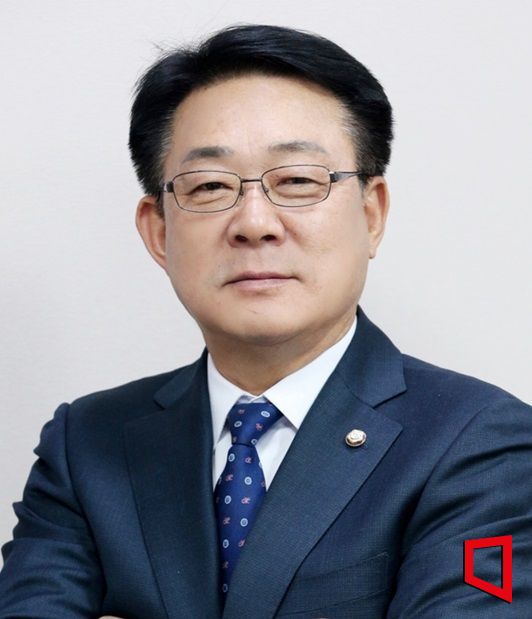
On the 9th, the 'Special Act on Undergrounding Railways and Support' and the 'Partial Amendment to the National Land Planning and Utilization Act,' both of which were jointly proposed by Heo Jong-sik, a member of the National Assembly's Land, Infrastructure and Transport Committee from the Democratic Party of Korea representing Incheon Dong-gu and Michuhol-gu Gap, were passed at the plenary session of the National Assembly.
The Special Act on Undergrounding Railways includes provisions for undergrounding aboveground railways and allowing the development of railway sites and surrounding areas secured through this process, including the investment of national property.
The undergrounding of the Gyeongin Railway had been stalled due to the enormous project cost burden and securing economic feasibility (B/C). In response, last September, Representative Heo proposed a special law that allows issuing bonds secured by railway sites to secure initial project funds and provides incentives when promoting development projects.
With the passage of the special law at the plenary session on this day, the Gyeongin Railway undergrounding project is expected to accelerate. The government plans to start a comprehensive planning service this year, establish basic plans for each route including the Gyeongin Railway undergrounding, and proceed with the project.
Earlier, in July last year, Representative Heo also proposed the 'National Land Planning Act,' which introduces ▲ Urban Innovation Zones ▲ Mixed-Use Zones ▲ Three-Dimensional Complex Zones into the urban planning system to enable complex and three-dimensional spatial utilization, thereby providing flexibility to the zoning system.
Existing industrial areas faced limitations due to current urban planning regulations, despite the need to transform into knowledge industry complexes such as high-tech industries, ventures, and startups, and to arrange residential, cultural, and artistic facilities for youth due to changes in the industrial structure. With the passage of the amendment, changes are expected in Dong-gu, Incheon, where industrial areas account for 52% of the total area.
The amendment also emphasizes the authority of local governments by stipulating that the Incheon City Urban Planning Committee must review spatial restructuring plans such as urban innovation zones.
Representative Heo said, "We have been able to establish the legal basis for the long-awaited 'Gyeongin Railway undergrounding' project in Incheon," adding, "The passage of the Special Act on Undergrounding Railways is significant in that railway facilities can develop from simple transportation means into spaces created for citizens."
He continued, "With the passage of the National Land Planning Act, urban innovation zones can be introduced in industrial complexes in Michuhol-gu and industrial areas in Dong-gu, and accordingly, industrial areas are expected to transform into citizen-friendly spaces."
© The Asia Business Daily(www.asiae.co.kr). All rights reserved.

















