Over 13,000 Places from January to November Last Year
Clear Decline in Seoul and Surrounding Metropolitan Areas
More Closures Than Openings for 16 Consecutive Months
Due to high interest rates and the impact of an economic recession, the real estate transaction cliff has deepened, leading to the highest number of closures of certified real estate agencies nationwide in the past four years last year. Moreover, the outlook for the real estate market this year is not optimistic, and there are uncertain responses as to whether openings will increase after the winter, which is a seasonal off-season.
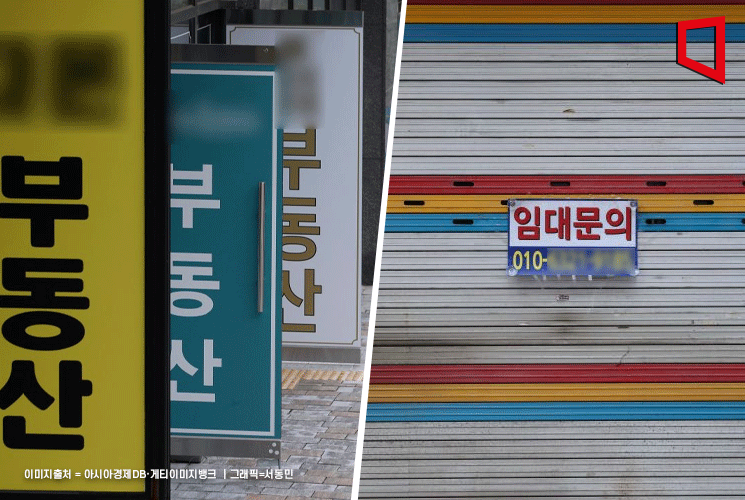
According to the Korea Association of Certified Real Estate Agents on the 5th, the number of certified real estate agencies that closed nationwide from January to November last year was 12,938, the highest in the past four years even excluding December statistics which have not yet been compiled. By year, closures were ▲12,773 in 2020 ▲11,707 in 2021 ▲12,207 in 2022.
Openings are on a declining trend. New certified real estate agencies recorded over 1,000 per month from January to May last year, but dropped to 968 in June and remained around 800 per month from August onward. The cumulative total from January to November was 11,312, marking the first time since 2015 that the number of closures exceeded openings.
Regionally, the decline was clear in the Seoul metropolitan area, including Seoul and Gyeonggi Province. In November last year, 293 certified real estate agencies in Seoul closed and 25 temporarily suspended operations. In contrast, only 193 opened, resulting in closures and suspensions outnumbering openings for 16 consecutive months. In Gyeonggi Province, 349 agencies closed or suspended operations in November alone.
This phenomenon stems from a cautious stance on sales and the deepening transaction cliff. According to the Seoul Real Estate Information Plaza, the number of apartment transactions in Seoul last year (based on reports) was 1,413 in January, gradually increased, but declined again from September. Subsequently, the numbers continued to decrease with 2,337 in October, 1,838 in November, and 1,167 in December.
Buyer sentiment is also worsening. According to the Korea Real Estate Board, the Seoul apartment sales supply-demand index for the fourth week of December last year (as of the 25th) was 82.9, down 0.5 points from the previous week (83.4), marking a decline for 10 consecutive weeks. The sales supply-demand index indicates that the lower it is below the baseline of 100, the more sellers there are compared to buyers.
The industry expects the real estate transaction cliff to be prolonged. A representative from the association said, "Generally, contracts increase from February to March after the winter, which is the off-season for transactions, so the number of certified real estate agency openings usually exceeds closures and suspensions at the beginning of the year. However, the economic situation is uncertain this early in the year, so it is unclear how it will turn out."
They added, "Although there are forecasts that the United States will lower interest rates starting this year, which could improve the situation in Korea compared to now, the prevailing view is that improvement will not happen in the short term."
© The Asia Business Daily(www.asiae.co.kr). All rights reserved.

















