The Bank of Korea has forecasted that China's economic growth rate this year will remain in the mid-4% range, lower than last year. The reasons cited for the expected economic slowdown compared to this year include a real estate slump and weak exports and imports.
In its report titled "2024 China Economic Outlook and Key Issues," released on the 4th by the Bank of Korea's Beijing office, it stated, "Due to the continued sluggishness in the real estate market and the disappearance of the COVID-19 base effect, the growth rate is expected to decline." The Bank of Korea explained, "China's economy is inevitably facing a downturn for the time being as the real estate market is affected by both cyclical and structural factors," adding, "It is also confronted with various short- and medium-term challenges such as a lack of confidence among economic agents and accelerated aging."
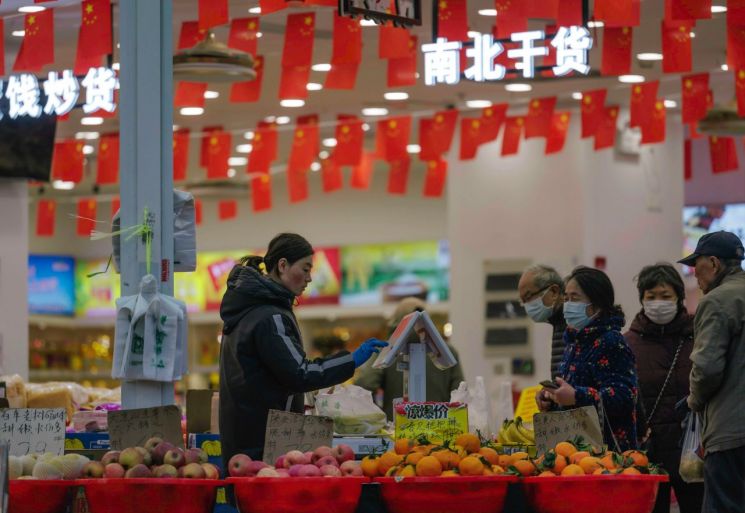
China's consumption sector, which drove economic growth last year, is expected to see a somewhat slower increase this year. It is anticipated that only part of the estimated 'excess savings' of 5 to 7 trillion yuan (approximately 916 trillion to 1,282 trillion won) from last year will be spent, and that there may continue to be reluctance toward high-priced consumption items such as durable goods.
As the economic situation shows little improvement due to poor employment rates and slowing income growth, it is expected that authorities will focus on consumption promotion policies such as income increases and tax and subsidy benefits.
Furthermore, real estate investment and exports and imports in China are expected to continue their sluggish trends this year. The Bank of Korea pointed out, "Housing demand is showing a declining trend due to low birth rates and aging, and recent declines in housing prices have reduced the motivation to purchase homes, so real estate development investment is expected to continue its sluggishness from the previous year (2023)." It also noted, "The sharp drop in new housing starts and the still high housing inventory are factors hindering a rapid recovery in real estate investment."
However, the Bank of Korea explained that major first-tier cities such as Beijing and Shanghai have announced easing of housing purchase restrictions, and large-scale projects such as redevelopment of underdeveloped urban areas and downtown redevelopment are planned, stating, "The sluggishness in real estate investment is expected to gradually ease." Additionally, it explained that U.S.-China conflicts, geopolitical risks, and slowing growth in major export destination countries such as the United States will limit export improvements.
Moreover, while imports of related intermediate goods are expected to increase due to a recovery in the information technology (IT) sector, the Bank of Korea anticipates that China's overall imports will find it difficult to escape sluggishness this year. Consumer prices are expected to remain negative until the first half of this year due to real estate sluggishness and overproduction, but are forecasted to record an annual increase of just over 1% influenced by domestic demand trends. Regarding China's chronic fiscal risk, local government debt is expected to be managed by the central government expanding the scope of local special bonds.
As for major monetary policies, additional cuts in the reserve requirement ratio (RRR) to supply long-term liquidity to the real economy such as small and medium-sized enterprises, flexible increases in re-lending limits, policy interest rate cuts, and demands for interest rate reductions by frontline banks to stimulate real estate demand are anticipated.
© The Asia Business Daily(www.asiae.co.kr). All rights reserved.
![Clutching a Stolen Dior Bag, Saying "I Hate Being Poor but Real"... The Grotesque Con of a "Human Knockoff" [Slate]](https://cwcontent.asiae.co.kr/asiaresize/183/2026021902243444107_1771435474.jpg)
















