MZ Generation Divided Between M and Z Fighting
84% of Korean Workers Say "More Young Kkondae"
US Managers Prefer Working with M Over Z
Japan: "30s Rogai, Acting Like Kkondae Without Experience"
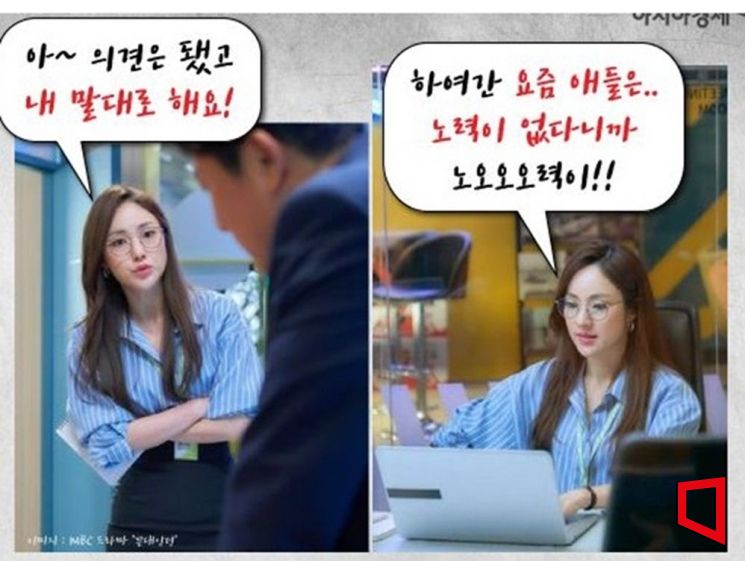
Workplace conflicts between the Millennial generation (M generation: born 1981?1996) and Generation Z (born 1997?2012), collectively referred to as the MZ generation in South Korea, have become a global issue. In South Korea, conflicts mainly arise between junior M generation managers, often called 'young kkondae,' and Gen Z new employees, showing similar patterns across many countries, causing growing concerns for companies.
The main issues causing clashes between the M and Z generations include ▲work styles such as remote work and commuting ▲working hours ▲work intensity ▲collaboration and motivation, all related to actual job tasks. As Gen Z enters the workforce more actively, workplace conflicts between the M and Z generations are expected to intensify.
46% of Korean Workers Say "Young Kkondae Are More Difficult"

According to a survey on perceptions of 'kkondae' conducted by market research firm Embrain Trend Monitor on the 9th of last month, targeting 1,000 men and women aged 19 to 59 nationwide, 84.6% of respondents said there are many 'young kkondae.' Moreover, 46.2% felt that young kkondae are even more severe than older kkondae.
Especially in major corporations like Samsung Electronics, the number of M generation employees in their 30s and 40s being promoted to executive positions has significantly increased, leading to a rise in young kkondae as well. In the personnel announcement by Samsung Electronics last November, one 30-something director and eleven 40-something vice presidents were promoted, while the previous year saw three 30-something directors and seventeen 40-something vice presidents join the executive ranks.
M generation managers are known to frequently clash with Gen Z across various work aspects. Although Gen Z, with generally higher education levels and digital device proficiency, excels in learning job skills, their values differ greatly from older generations, and they have lower organizational adaptability, leading to frequent conflicts. Companies also complain that Gen Z lacks collaboration, communication skills, and affinity with colleagues, making hiring and task delegation difficult.
According to a hiring summary survey conducted last month by the recruitment platform Saramin on 317 domestic companies, 80.4% of companies that hired staff recruited fewer people than initially planned at the beginning of the year. Among them, 26.8% of companies said they hired less than half of the needed workforce. This is because Gen Z employees have low organizational adaptability and high turnover rates, making recruitment challenging.
US Managers Say "I Can't Deal with Gen Z"... Most Prefer M Generation

Workplace conflicts between the M and Z generations are not unique to Korea but have become a major issue for companies worldwide. According to a survey conducted in April last year by the US recruitment platform Resumebuilder, targeting 1,344 corporate managers and business leaders in the US, 74% of managers said it is very difficult to work with Gen Z employees.
Managers felt that Gen Z employees generally lack job-related skills, effort, and motivation. Among managers who said working with Gen Z is difficult, 59% reported having recently fired a Gen Z employee, and 20% said they fired one within a week of hiring.
Conversely, 34% of managers who found working with Gen Z difficult said they prefer working with the M generation. They evaluated M generation employees as honest, productive, and competent, unlike Gen Z. The M generation is more compliant with traditional corporate culture, collaborates well, and has superior job skills compared to Gen Z.
Gen Z employees push back, saying they have had relatively fewer opportunities to gain job experience compared to the M generation. Forbes, a US economic media outlet, pointed out, "During COVID-19, hiring activities were almost halted for nearly three years, leaving Gen Z with few chances to submit resumes or gain proper job experience, and even when they did, they mostly received online remote education, making them unfamiliar with office attendance and collaboration."
Japan: "30-something 'Rogai' Cause Trouble Without Experience or Knowledge"
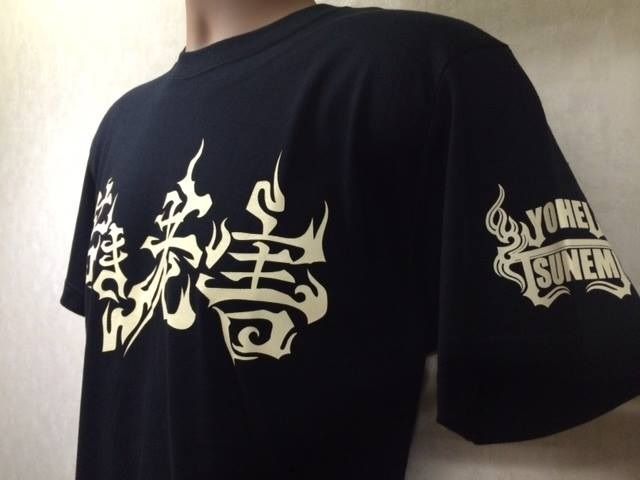 Japan's "Young Kkondae (Old Harm)" T-shirt. Designed and sold by Japanese labor sociologist Tsunemi Yohei. [Image source=Official website of Tsunemi Yohei]
In Japan, M generation supervisors in their 30s are called '30-sai Rogai (老害),' literally meaning 'harm caused by age.' In the same context as Korea's 'young kkondae,' they are also referred to as 'Wakaki Rogai (若き老害),' meaning 'young rogai.'
Japanese online media IT Media Business reported that Gen Z employees have many complaints about the 30-something rogai M generation supervisors. Gen Z employees negatively evaluate rogai as follows: ▲pretending to be conscious by quoting famous sayings or proverbs from figures like Steve Jobs ▲despite being young startup CEOs, constantly talking about the company's vision to employees at all times ▲claiming they performed excellently when they were juniors ▲frequently using phrases like 'back in my day' to talk about their rookie years ▲being unusually harsh on juniors regarding how to write proposals or PowerPoint presentations.
IT Media Business pointed out, "From Gen Z's perspective, 30-something rogai lack work experience, have high pride, and maintain a need for recognition by giving advice or lectures to younger employees. They are not central figures of power within the company, nor do they handle major tasks, so they have little career achievements to boast about, which leads them to act more authoritatively toward subordinates."
Recently in Japan, T-shirts related to rogai have become popular. Japanese labor sociologist Tsunemi Yohei released a black T-shirt with 'Wakaki Rogai' written on it, gaining popularity. Dr. Yohei criticized, "They are old-fashioned in thinking for their age but pretend to be doing something new."
© The Asia Business Daily(www.asiae.co.kr). All rights reserved.
![Clutching a Stolen Dior Bag, Saying "I Hate Being Poor but Real"... The Grotesque Con of a "Human Knockoff" [Slate]](https://cwcontent.asiae.co.kr/asiaresize/183/2026021902243444107_1771435474.jpg)


















