19 Bankruptcies Last Year... Highest in 3 Years
Taeyoung Construction PF Default Crisis Spreads
Survival Strategy Beyond Housing Business to New Ventures
The construction industry is inevitably facing a contraction this year due to the housing market downturn, increased construction production costs leading to reduced profitability, and a financing crisis all occurring simultaneously. In response, construction companies are busy preparing new survival strategies that break away from the housing projects they have focused on so far.
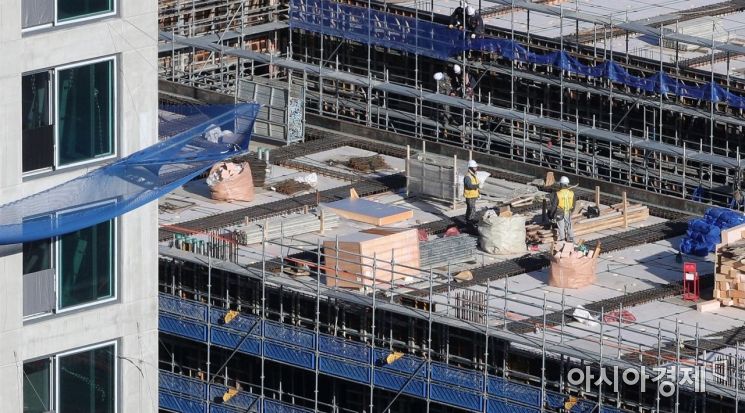
On the 3rd, the Construction Industry Research Institute released the 'Construction Trend Briefing,' analyzing that the management conditions of construction companies are rapidly deteriorating due to rising construction production costs and the housing market slump. In fact, the number of construction companies that went bankrupt last year totaled 19, marking the highest figure in three years. Closures are also increasing. According to the Construction Industry Knowledge Information System, the total number of general construction companies that issued closure notices (including corrections and withdrawals) reached 509, the highest since 2012.
This year, the construction industry situation is even more challenging. In particular, with Taeyoung Construction's workout application, the risk of real estate project financing (PF) defaults has become a reality, intensifying financial pressure on the construction sector. As of the end of September last year, the PF guarantee scale of construction companies reached 28.3 trillion won. With the growing risk of PF refinancing, liquidity pressure on construction companies is worsening. The Construction Industry Research Institute analyzed, "Until now, liquidity risks were significant mainly for small and medium-sized construction companies exposed to unpaid construction payments in local housing projects and contingent liabilities from PF, but as the real estate market downturn shows signs of prolonging, even large construction companies are now at risk."
Due to increased contingent liabilities and worsening construction conditions delaying new project commencements, credit rating agencies have downgraded the credit ratings of construction companies. In November last year, Korea Ratings changed the outlook for Shinsegae Construction's unsecured bonds to 'negative.' If the overall funding squeeze in the construction industry deepens, the burden on financial institutions will increase, and if the risk burden is passed on to construction companies, the number of bankruptcies will rise, potentially pushing subcontractors into management crises as well.
There are also calls for timely support measures for the construction industry. The Construction Industry Research Institute pointed out, "Comprehensive measures are needed, including additional market safety measures for the smooth landing of the real estate PF crisis and short-term funding market tightening, support for construction companies' self-help efforts, regulatory easing to revive the housing market, and early expansion of public construction orders to secure volume for construction companies."
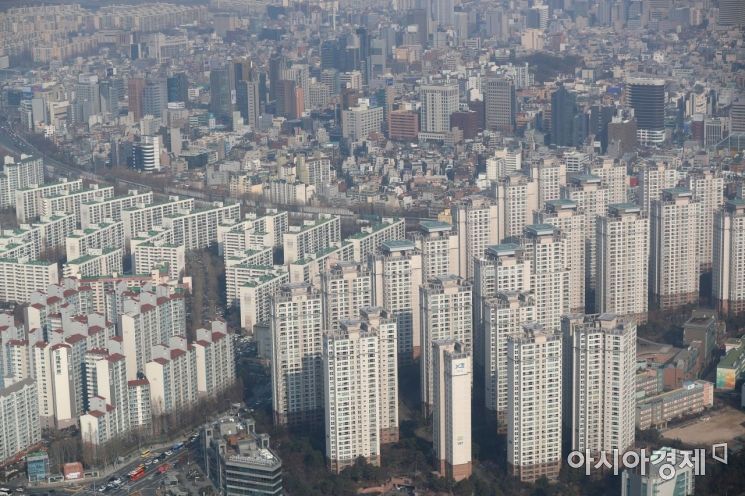
Construction companies are desperate to establish survival strategies. This is also evident in the New Year's messages from the CEOs of each construction company. Although the content varies by company, common themes include 'crisis,' 'profitability enhancement,' and 'new business.'
First, Yoon Young-jun, CEO of Hyundai Engineering & Construction, urged, "Let's strategically focus on future technology development such as large nuclear power plants, small modular reactors (SMR), hydrogen, and CCUS (carbon capture, utilization, and storage)," calling for the consolidation of overseas business capabilities. Kim Jong-hoon, Chairman of HanmiGlobal, mentioned the significant growth potential in the Middle East market and emphasized, "Based on the long-standing trust built in the Middle East, we must not miss this once-in-a-lifetime opportunity and use it as a stepping stone for a leap forward."
Heo Yoon-hong, CEO of GS Engineering & Construction, said, "Let's pursue selective orders considering profitability and execution capability and lay the foundation for mid- to long-term projects." Yoon Jin-oh, CEO of Dongbu Construction, stated, "In the recession, let's secure profitability through sound management and strengthen crisis response capabilities."
© The Asia Business Daily(www.asiae.co.kr). All rights reserved.
![Clutching a Stolen Dior Bag, Saying "I Hate Being Poor but Real"... The Grotesque Con of a "Human Knockoff" [Slate]](https://cwcontent.asiae.co.kr/asiaresize/183/2026021902243444107_1771435474.jpg)

















