As 4% range fixed deposit products disappear from the banking sector, idle funds in the market are increasing. Although the balance of fixed deposits at major banks is sharply decreasing, demand deposits such as passbook savings accounts, also known as parking accounts, which are called 'investment standby funds,' and investor deposits in the stock market are showing a clear upward trend.
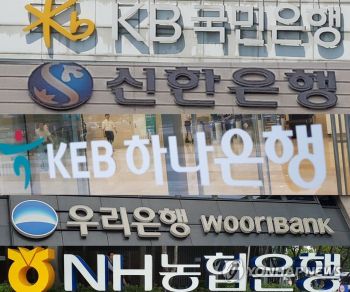
According to the financial sector on the 3rd, the balance of demand deposits at the five major commercial banks (KB, Shinhan, Hana, Woori, NH Nonghyup) as of the end of last month was 616.748 trillion won. This is an increase of 18.0439 trillion won (3.01%) compared to the end of the previous month (598.7041 trillion won).
Demand deposits refer to funds such as regular savings accounts or parking accounts in the banking sector, which have lower interest rates compared to fixed deposits but allow depositors to make deposits and withdrawals at any time. Because deposits and withdrawals are free, when market interest rates rise, funds move to fixed deposits, and when they fall, funds move to investment asset markets such as securities and real estate, thus being classified as so-called 'investment standby funds.'
The increase in these demand deposits is attributed to the possibility of interest rate cuts by the U.S. Federal Reserve (Fed). The Fed hinted at the possibility of multiple rate cuts within this year during the Federal Open Market Committee (FOMC) meeting in November last year. As market expectations reflected the Fed's change in stance, market interest rates have also shown a clear downward trend. The one-year bank bond yield, used as a benchmark for one-year fixed deposit rates, fell nearly 45 basis points (1bp=0.01%) from 4.151% in early November last year to 3.706% yesterday.
Deposit interest rates at commercial banks and savings banks are also below 4%. As of this day, the one-year fixed deposit rates at the five major commercial banks (KB, Shinhan, Hana, Woori, NH Nonghyup) ranged from 3.70% to 3.75%, all below 4%. The average interest rate at savings banks was also 3.96%, falling short of the 4% mark. Due to this, the balance of fixed deposits at the five major banks last month was 849.2957 trillion won, down 19.4412 trillion won (2.24%) from the previous month.

Idle funds also show signs of moving to the stock market. Amid growing expectations of interest rate cuts, the real estate market, which has been the core of the investment market, is facing concerns over real estate project financing (PF) defaults, such as the recent workout application by Taeyoung Construction, and the outlook for house prices is increasingly leaning towards decline or stagnation rather than rise.
According to the Korea Financial Investment Association, investor deposits, which had dropped to around 44.6 trillion won in early November last year, increased to 56.46 trillion won by December 27, growing by over 10 trillion won. During the same period, the KOSPI index rose about 10.4%, from 2368.34 to 2613.50. A financial sector official explained, "The recent decrease in fixed deposits is interpreted as being due to the decline in deposit interest rates and some companies repaying loans for year-end financial statement management."
© The Asia Business Daily(www.asiae.co.kr). All rights reserved.


















