Zimbabwe's Base Interest Rate at 200% Last Year
US Interest Rate Expected to Decrease as Early as March
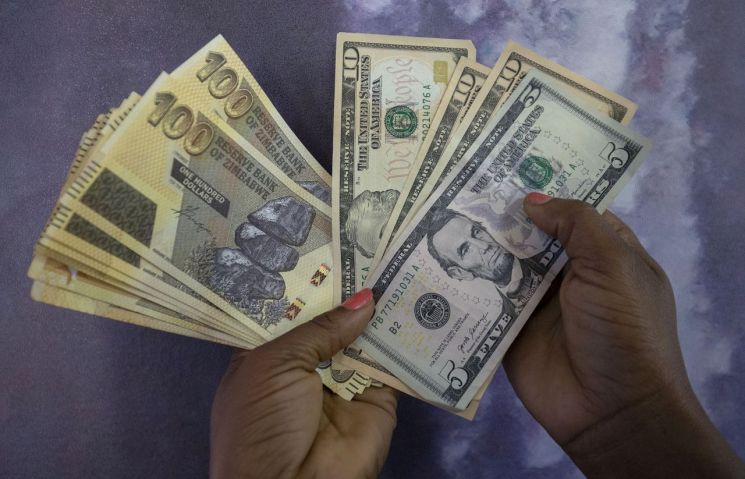
Last month, with Argentina lowering its benchmark interest rate, the country with the highest benchmark interest rate in the world changed from Argentina to Zimbabwe. Despite these countries recently cutting rates significantly, their benchmark interest rates remain at ultra-high levels above 100%. This rate level, far exceeding returns on coins, stocks, and funds, has attracted international attention.
However, these countries' high interest rates are aimed at curbing inflation rates that far exceed the interest rates themselves, resulting in real interest rates reportedly being negative. With expectations that the United States may begin cutting rates as early as March, if ultra-high interest rate countries also sharply lower their rates accordingly, significant turmoil is anticipated in emerging market economies.
High Interest Rate Countries Concentrated in Africa and Latin America... Impact of Hyperinflation

According to Bloomberg on the 2nd (local time), on the 18th of last month, the Central Bank of Argentina lowered its benchmark interest rate from 133% to 100%, making Zimbabwe (130%) the country with the highest benchmark interest rate worldwide. Initially, Zimbabwe had raised its benchmark interest rate to 200% in June last year, making it the country with the highest benchmark interest rate globally, but by October last year, it had lowered the rate by 70 percentage points to 130%, temporarily ceding the top spot to Argentina.
The benchmark interest rates in these countries are comparable to the annual return of Bitcoin, known as the leading cryptocurrency, last year. According to CNBC, Bitcoin's annual return last year reached around 150%. Since the benchmark interest rates exceeded 100%, it means that the returns on most savings deposits or installment savings products were comparable to Bitcoin's returns.
However, depositors in these countries have actually suffered significant losses. This is because the inflation rates that caused these ultra-high interest rates are extremely high. Zimbabwe's inflation rate has risen by 176% year-on-year since June last year, and Argentina's has exceeded 160%. Both countries have recently steeply lowered interest rates to reduce national debt, pushing real interest rates into negative territory.
According to data compiled by the Organisation for Economic Co-operation and Development (OECD), the current ranking of countries by benchmark interest rate is Zimbabwe (130%), Argentina (100%), Venezuela (56.27%), T?rkiye (42.5%), and Ghana (30%). Most of these countries are located in Latin America or Africa and are suffering from so-called 'hyperinflation,' where prices rise extremely rapidly.
US May Cut Rates as Early as March... Will Global Rates Fall?
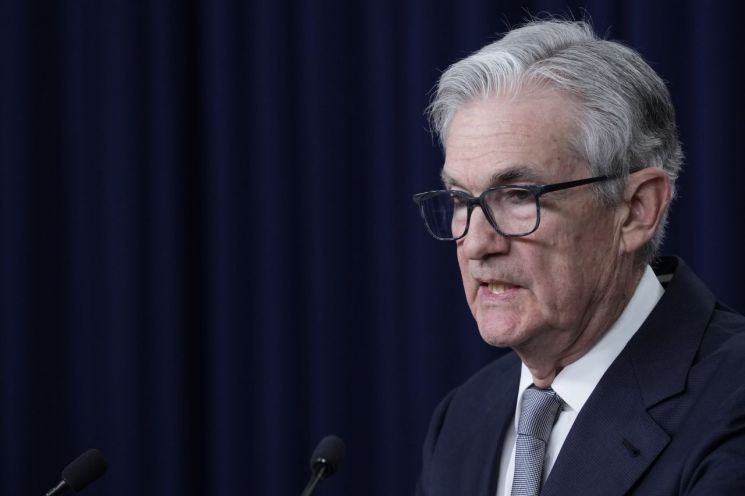
Not only these ultra-high interest rate countries but also major countries worldwide, including South Korea where rates are between 3% and 5%, are closely watching the US's potential rate cut moves in the new year.
According to CNBC, US investors expect at least three, possibly more than four, rate cuts throughout 2024. Earlier, on the 13th of last month, Jerome Powell, Chair of the US Federal Reserve (Fed), stated at a press conference following the Federal Open Market Committee (FOMC) meeting that interest rates are expected to be "4.6% by the end of 2024, 3.6% by the end of 2025, and 2.9%" thereafter, but added, "These projections are subject to appropriate adjustments to policy direction to promote maximum employment and price stability if the economy does not develop as expected."
However, with the prolonged Ukraine war and the Israel-Hamas conflict, and concerns about potential escalation, there remain risks that inflation rates could fluctuate depending on future geopolitical issues. Bloomberg Economics (BE) warned in a report on global economic risk factors that "while inflation is expected to ease this year, there remains a possibility that production activity could decline more than this baseline scenario and inflation could worsen."
© The Asia Business Daily(www.asiae.co.kr). All rights reserved.



















