Despite Increasing Need Due to Heinous Crimes
Budget and Procedures Delay Implementation
"Absurd to Prepare Equipment at One's Own Expense"
Amid ongoing heinous crimes and malicious complaints, the use of body cameras (mobile video information processing devices) has become essential among on-site police officers. However, dissatisfaction is growing as the formal introduction of equipment is delayed and only regulations for managing privately purchased devices have been established. Experts point out that the urgent formal adoption of body cameras is necessary to protect police officers and prevent abuse of public authority.
On the 3rd, a National Police Agency official stated, “We are preparing a budget request for the introduction of body cameras by gathering internal opinions,” adding, “The specific scale and schedule are under review.”
The National Police Agency conducted a pilot operation of 100 'wearable police cams' attached to officers' bodies from November 2015 to August 2021. According to a police survey at the time, 73% responded that they would use body cameras for legitimate law enforcement. However, due to insufficient legal grounds and the limited service life (the period the device can be used), all units have since been discarded.
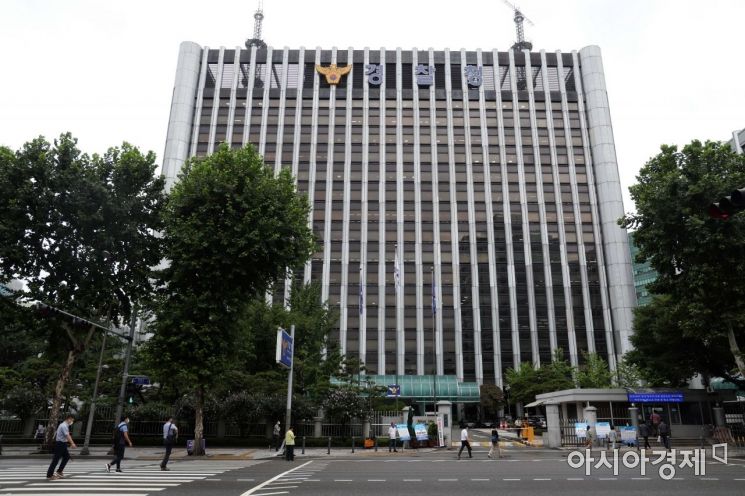
Currently, all body cameras used by police officers are purchased at their own expense. Sergeant A, who works at a police substation in Seoul, said, “I bought a body camera costing around 200,000 won,” criticizing, “It is absurd that we have to spend our own money on equipment.” Another Sergeant B said, “I wear it for self-defense because you never know when something might happen,” adding, “If formal equipment introduction is difficult, I hope at least subsidies are provided.”
With the enforcement of the revised Personal Information Protection Act in September last year, regulations for mobile video information processing devices were established, specifying usage requirements and notification obligations. Accordingly, while police officers previously used privately purchased body cameras autonomously, management has now shifted to the level of substations and police boxes.
In the National Assembly, a bill to add ‘police-worn recording devices’ to police equipment under the law passed the Administrative and Security Committee but is currently pending in the Legislation and Judiciary Committee. The bill includes provisions on usage requirements, notification methods during use, video management methods, and the establishment of an information management system.
In advanced countries, the introduction of police body cameras has long been implemented. This is because fair video evidence recording leads both police and citizens to make rational judgments, reducing obstruction of official duties and abuse of authority. According to the National Assembly Legislative Research Office, the United States introduced body cameras in major cities from August 2016 to prevent police overreaction, and Germany introduced them to protect police officers.
Experts see the need for formal equipment adoption of body cameras. Professor Oh Yoon-sung of the Department of Police Administration at Soonchunhyang University said, “The introduction of body cameras can protect complainants and play a decisive role in apprehending criminals,” adding, “As long as video storage and management are properly handled.”
Professor Lee Woong-hyuk of the Department of Police Science at Konkuk University said, “It is appropriate to introduce body cameras if the police use public authority according to legal regulations and are confident in doing so. Naturally, those who unjustly challenge public authority will disappear,” adding, “The effect of formal introduction is like two sides of a coin. It serves as a means to protect police officers and can also be evidence of abuse of authority.”
© The Asia Business Daily(www.asiae.co.kr). All rights reserved.
![Clutching a Stolen Dior Bag, Saying "I Hate Being Poor but Real"... The Grotesque Con of a "Human Knockoff" [Slate]](https://cwcontent.asiae.co.kr/asiaresize/183/2026021902243444107_1771435474.jpg)
















