MFDS Announces Last Year's Import Volume
Experts Say "Risk Is Not Significant"
The Ministry of Food and Drug Safety announced that there were no cases of radioactive contamination detected in seafood imported from Japan last year. Experts stated that this is evidence that the Fukushima contaminated water is being discharged after being scientifically treated safely, and they forecast that the risk will not be significant in the future.
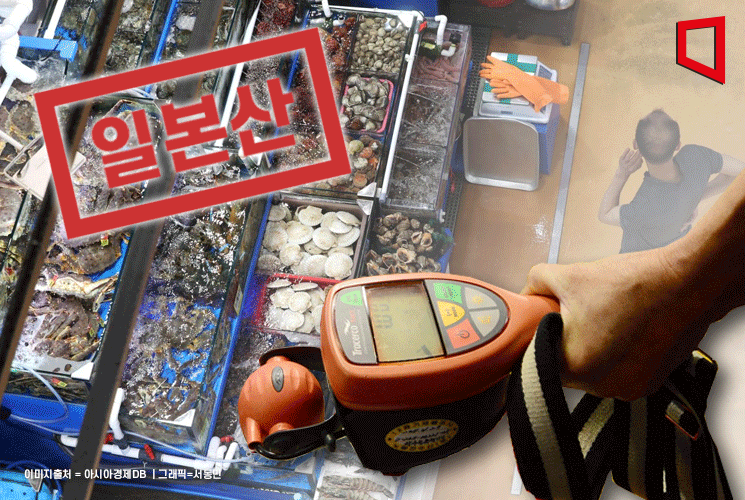
According to the Ministry of Food and Drug Safety on the 3rd, among approximately 24,679 tons of seafood imported from Japan throughout last year, including imports after the discharge on August 24, there were no cases of radioactive contamination detected. Even when expanding the scope to all Japanese food products, only 4 tons of processed foods, not agricultural, livestock, or seafood products, showed trace amounts of radioactivity, and all were returned.
Concerns about radioactive contamination of Japanese seafood arose last August when the discharge of contaminated water from the Fukushima Daiichi Nuclear Power Plant began. Tokyo Electric Power Company (TEPCO), the operator of the Fukushima nuclear plant, started releasing the contaminated water stored in tanks two days after the Japanese government decided on August 22 last year to discharge it, following preliminary preparations. Before the discharge began, the tritium concentration in the diluted contaminated water stored in the tanks was measured at 43 to 63 becquerels (Bq) per liter, which TEPCO explained is far below their own standard of 1,500 Bq. The discharge started two years and four months after then-Prime Minister Yoshihide Suga decided in April 2021 to dispose of the contaminated water by ocean discharge, and about twelve and a half years after the Fukushima nuclear accident caused by the Great East Japan Earthquake on March 11, 2011.
Along with the discharge, concerns about seafood contamination were raised. For example, a seafood stockpiling phenomenon occurred. On the day before the discharge, total seafood sales at a major domestic supermarket increased by about 35% compared to the same day the previous year. The industry analyzed that consumer anxiety about seafood safety after the contaminated water discharge led to a tendency to stockpile in advance.
However, this was only a temporary phenomenon, and there was no decline in seafood consumption sentiment. Former Minister of Oceans and Fisheries Cho Seung-hwan said in early last month before his retirement, "When comparing 11 weeks before and after the discharge, retail sales at the Noryangjin Fisheries Wholesale Market in Seoul actually increased by 63.5%, and no visible damage has appeared yet. The third discharge has already taken place, but tritium concentrations and other measures all meet the standards." There was also no concern about radiation exposure in domestic seafood. Former Minister Cho added, "Since 2011, about 89,000 radiation tests have been conducted at production and distribution stages for our seafood, and there has not been a single case of non-compliance."
Professor Jeong Beom-jin of the Department of Nuclear Engineering at Kyung Hee University said, "The amount of contaminated water currently stored in Fukushima is about one-thousandth of the amount discharged at the time of the 2011 accident, and the Japanese government is managing and discharging it at levels that pose no health problems to its citizens." He added, "The Ministry of Food and Drug Safety's recent announcement is evidence that the Fukushima contaminated water discharge was conducted after safety was verified. Scientifically, the likelihood of safety issues arising in the future is extremely low."
Professor Kang Geon-wook of the Department of Nuclear Medicine at Seoul National University also said, "Even just 10 km away from the discharge point, the seawater returns to normal levels. It is natural that it does not affect marine life." He added, "As long as management continues steadily, there is no need to worry about seafood safety in the future."
© The Asia Business Daily(www.asiae.co.kr). All rights reserved.
![Clutching a Stolen Dior Bag, Saying "I Hate Being Poor but Real"... The Grotesque Con of a "Human Knockoff" [Slate]](https://cwcontent.asiae.co.kr/asiaresize/183/2026021902243444107_1771435474.jpg)
















