Record High, 17.6 Billion KRW Increase Compared to Previous Year
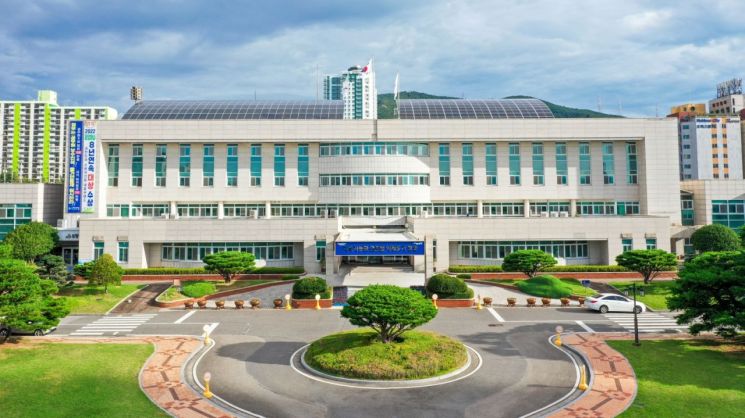
Gwangyang City in Jeollanam-do announced on the 2nd that it secured the largest-ever national and provincial funding of 574.9 billion KRW related to Gwangyang City in the 2024 government and Jeollanam-do budgets.
This amount exceeds the previous record of 557.3 billion KRW in 2023 by 17.6 billion KRW (an increase of 3.2%), despite the government's sound fiscal policy and ultra-tight fiscal conditions caused by decreased tax revenue, making it a much-needed achievement like rain in a drought.
In particular, although not initially reflected in the government budget proposal, an additional 5.8 billion KRW for three projects was secured during the National Assembly budget review process. These projects include ▲the construction of the public Gwangyang Specialized Science Museum with 2.5 billion KRW (total project cost 40 billion KRW), ▲the restoration project of Seonghwang-Jungma urban ecological axis with 2.4 billion KRW (total project cost 8 billion KRW), and ▲the second phase of the arterial road in Sepung Industrial Complex with 900 million KRW (total project cost 29.8 billion KRW). This achievement was made possible through the persistent efforts of Mayor Jeong In-hwa of Gwangyang and related officials, embodying the spirit of Yujikyungseong (有志竟成, "where there is a will, there is a way").
Additionally, over the past several months, Mayor Jeong In-hwa and related officials have continuously visited central government departments and the National Assembly to explain and persuade for securing every possible won of national and provincial funding.
Major new projects reflected in the 2024 government and Jeollanam-do budgets include ▲Geumiji District drainage improvement project with 200 million KRW (total project cost 12 billion KRW), ▲Artcation tourism stay expansion with 380 million KRW (total project cost 14.4 billion KRW), ▲Jeonnam-type regional growth strategic project (Phase II) with 200 million KRW (total project cost 13 billion KRW), ▲Central and Jinwol sewage pipe maintenance project with 200 million KRW (total project cost 6.65 billion KRW), ▲Gwangyang-eup media art landmark project with 190 million KRW (total project cost 5.9 billion KRW), and ▲Gubongsan tourist complex access road construction with 100 million KRW (total project cost 8.1 billion KRW).
Major continuing projects include ▲installation of buffer retention facilities in Gwangyang National Industrial Complex with 4.16 billion KRW (total project cost 42.4 billion KRW), ▲comprehensive maintenance project for flood damage living zones in Okgok Shingeum District with 3.08 billion KRW (total project cost 49.8 billion KRW), ▲hydrogen city creation project with 5.2 billion KRW (total project cost 40 billion KRW), ▲access road construction project for Sepung Industrial Complex with 5.6 billion KRW (total project cost 38 billion KRW), ▲Okgokcheon ecological stream restoration project (Phase II) with 3.85 billion KRW (total project cost 34.2 billion KRW), ▲old water supply network maintenance project (Phase I) with 2.89 billion KRW (total project cost 23.7 billion KRW), ▲construction of a technology demonstration support center for carbon-neutral conversion and recycling of industrial by-products with 100 million KRW (total project cost 42.65 billion KRW), and ▲construction of a knowledge industry center for materials and components in the Gwangyang Bay area with 2.1 billion KRW (total project cost 21.65 billion KRW).
Mayor Jeong In-hwa of Gwangyang said, “I would like to express my deep gratitude to everyone who helped, including Seo Sam-seok, the chairman of the Budget and Accounts Committee, Seo Dong-yong, the local member of the National Assembly from the Democratic Party, Kang Hoon-sik, Lee Gae-ho, Jin Sung-jun, Do Jong-hwan, Min Hyung-bae, Jeong Pil-mo, Lee Jeong-moon, and members of the People Power Party such as Lee Yong-ho, Jo Su-jin, Song Seok-jun, as well as Park Chang-hwan, the Deputy Governor for Political Affairs of Jeonnam Provincial Government.”
He added, “Despite the difficult fiscal environment, since this precious national and provincial funding was secured through the concerted efforts of all Gwangyang City employees, we will strive to invest these resources appropriately without any leakage to ensure sustainable city development and improve the quality of life for the 160,000 citizens of Gwangyang.”
Asia Economy Honam Reporting Headquarters, Reporter Heo Seon-sik hss79@asiae.co.kr
© The Asia Business Daily(www.asiae.co.kr). All rights reserved.

















