False Rescue Requests Aimed at Views
Japanese Authorities Urge Calm Response Including Source Verification
As the damage from the magnitude 7.6 earthquake that struck Ishikawa Prefecture, Japan, on the first day of the new year 2024 continues to expand, various fake news and conspiracy theories are spreading on social networking services (SNS) within Japan, exacerbating confusion. In particular, concerns are rising that anti-American sentiment in Japan may grow significantly as conspiracy theories claiming that this earthquake was artificially caused by the United States spread widely.
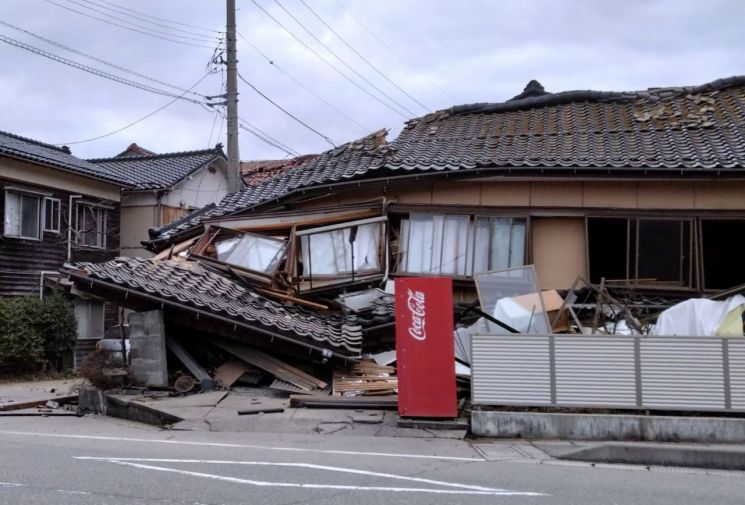
Artificial Earthquake Targeting Nuclear Power Plants by the US? ... Spread of Conspiracy Theories and Fake News
According to NHK on the 2nd (local time), various conspiracy theories related to this earthquake are spreading through social networking services (SNS) in Japan. Especially after the earthquake, conspiracy theories claiming that this major quake was an "artificial earthquake caused by the United States" have become popular mainly on YouTube, intensifying the controversy.
The conspiracy theory claims that the US military has a secret weapon called 'HAARP' capable of causing artificial earthquakes and hurricanes, and that the US military used it targeting the explosion of Japanese nuclear power plants, which caused this earthquake. Those spreading the conspiracy theory argue that this earthquake was not natural but artificial, and that the immediate news flashes and evacuation guidance from public broadcasters like NHK right after the earthquake seemed "as if they were pre-prepared," which they cite as evidence.
Fake news using past disaster videos such as the 2011 Great East Japan Earthquake also spread. On X, a video was posted claiming to show the current situation in Ishikawa Prefecture with a tsunami overtopping a breakwater, but it was identified as footage from the tsunami during the Great East Japan Earthquake. NHK warned, "Some fake tsunami videos have recorded over one million views," urging caution.
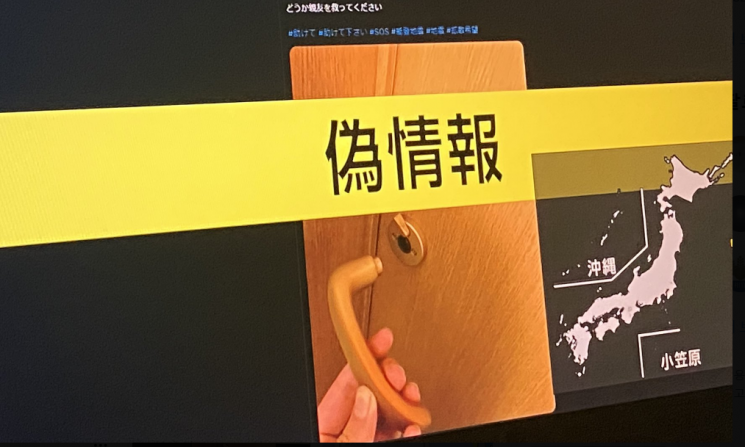 A rescue request post that NHK has identified as fake news. It is a post asking for help because the door knob is broken and cannot be opened. (Photo by NHK)
Trapped, Please Help... False Rescue Requests Spread for Views
"I am a resident of Nanao City, Ishikawa Prefecture. The door handle broke due to the earthquake, and I am trapped. I cannot get out. Please help."
From the 1st, posts requesting rescue with hashtags like 'Rescue Request,' 'SOS,' and 'Please Share' began appearing on X (formerly Twitter). Due to the flood of reports and life confirmation contacts from disaster areas, calls to fire stations could not get through, so people used SNS to inform others. Japanese netizens shared these posts and contacted fire stations on behalf of others, responding promptly.
However, while there were genuine rescue requests, fake news also spread alongside, increasing confusion among residents and fire authorities. NHK pointed out that analysis of posts on X related to this major earthquake revealed the spread of false rescue requests.
In particular, posts claiming people were trapped in rooms due to collapsed houses were found to have used photos that appear when searching for "how to open a door when the handle is broken."
Many cases involved using images unrelated to the actual situation or posting rescue requests with fake addresses. These acts appear to be attempts to increase SNS views and gain advertising revenue.
There were even accounts impersonating disaster victims, appealing for donations to their own bank accounts by saying, "My house collapsed, and I cannot continue living. Please send support funds for me."
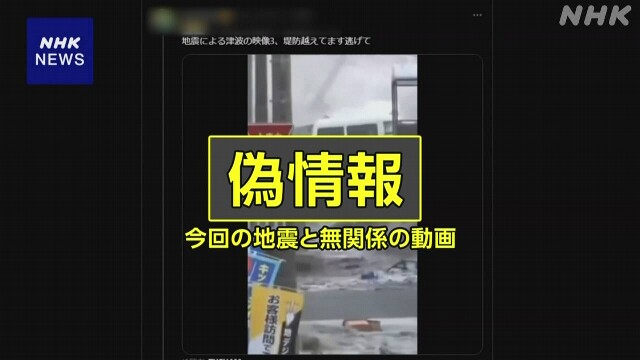 Tsunami video designated as fake news by NHK. It is footage from the Great East Japan Earthquake. (Photo by NHK)
Criticism Toward Elon Musk Over X Post Restrictions
Among X users, criticism was directed at Elon Musk, CEO of X, regarding the earthquake. Due to X's API restriction policy, users without paid accounts face limitations on posting and viewing posts, making it difficult for disaster area residents to access real-time information. On the 1st, the official account of the disaster prevention application NERV posted a notice that API restrictions made it difficult to post earthquake-related breaking news. However, after learning of this, X classified the account as a public interest account and lifted the restrictions.
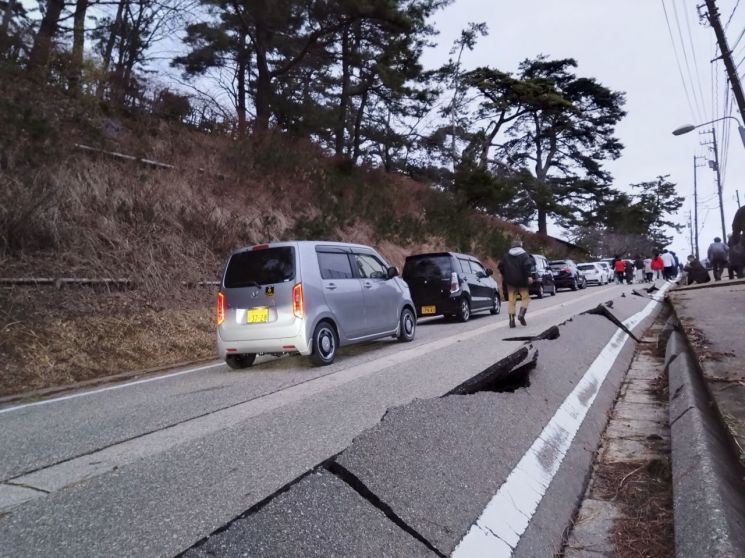
Amid nationwide confusion, the local situation is worsening. Aftershocks continue, and with rain forecasted, rescue operations and damage recovery are expected to face even greater difficulties.
NHK emphasized, "There are many posts spreading baseless information about the causes of the earthquake or fires," and added, "Information confusion in disaster areas can hinder rescue activities. Even when encountering emotionally stirring videos or information, it is necessary to respond calmly by verifying the sources."
© The Asia Business Daily(www.asiae.co.kr). All rights reserved.



















