Base Interest Rate Lowered from 133% to 100%
Inflation Rate Expected to Exceed 200%
In Argentina, where the central bank raised the benchmark interest rate to 100% to curb extreme inflation exceeding 160%, financial authorities are on high alert as depositors have increasingly been breaking their savings and time deposit products to withdraw money. Despite the benchmark interest rate reaching 100%, the real interest rate compared to inflation is actually lower, leading to concerns that economic turmoil is worsening.
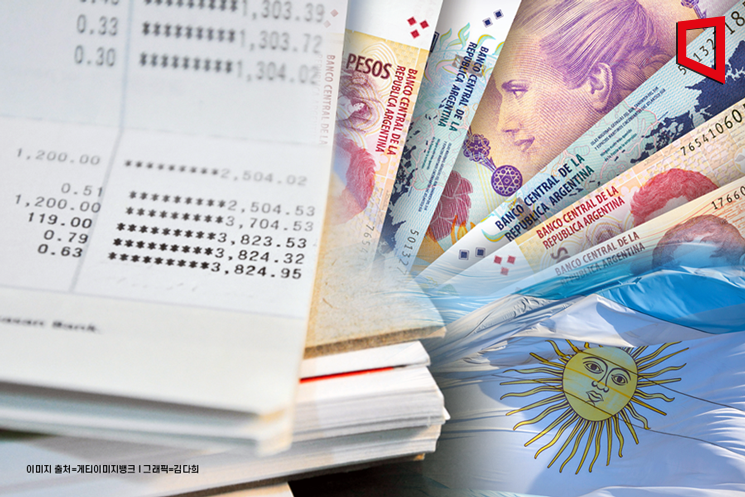
According to Bloomberg on the 1st (local time), the real deposit interest rate in Argentina last month, estimated by Argentine investment bank GMA Capital, was -77%. With the real interest rate?calculated by subtracting inflation from the nominal interest rate?turning negative, many depositors have been canceling their existing savings or time deposit products and withdrawing their funds.
On the 18th, when the Central Bank of Argentina lowered the benchmark interest rate from 133% to 100%, deposit interest rates also fell sharply, suddenly increasing losses caused by the decline in real interest rates. GMA Capital pointed out that the real interest rate fell to its lowest level in 33 years since 1990, making it difficult for many depositors to cope with inflation and losses.
Earlier, to combat extreme inflation, the Central Bank of Argentina implemented an ultra-tight monetary policy by raising the benchmark interest rate from 118% to 133% annually in October. However, as government debt rapidly increased, the newly inaugurated President Javier Milei and his administration led a reduction in the benchmark interest rate after the presidential election. Such rapid fluctuations in interest rates have further intensified market shocks.
However, inflation remains stubbornly high. Inflation, which exceeded 160% in November last year, is feared to surpass 200%. Although President Milei has implemented emergency measures since taking office, including a 50% devaluation of the national currency peso, cuts to energy and transportation subsidies, reduction of public works, and bold deregulation, these efforts are considered insufficient.
President Milei has demanded even stronger reform measures from the legislature, including ▲allowing registration of undeclared domestic and foreign assets without heavy taxation ▲abolishing the proportional representation electoral system ▲introducing a single-member district system ▲strengthening penalties for protesters obstructing road traffic ▲granting protest restriction authority to the security minister ▲temporarily transferring parliamentary powers related to taxes, pensions, energy, and security to the president until 2025.
However, strong opposition from opposition parties and large-scale protests by citizens angered by sudden measures such as subsidy cuts have further deepened political instability in Argentina.
© The Asia Business Daily(www.asiae.co.kr). All rights reserved.
![User Who Sold Erroneously Deposited Bitcoins to Repay Debt and Fund Entertainment... What Did the Supreme Court Decide in 2021? [Legal Issue Check]](https://cwcontent.asiae.co.kr/asiaresize/183/2026020910431234020_1770601391.png)
















