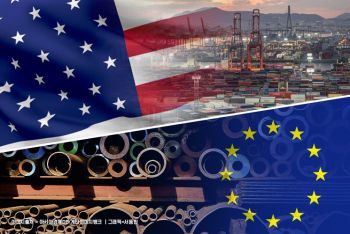
The Biden administration in the United States has decided to extend the tariff exemption on steel and aluminum products from the European Union (EU) for two more years. With the steel agreement between the two sides ultimately extending beyond the year, this mutual extension is seen as a temporary relief. However, with the U.S. presidential election scheduled for next year, challenges are expected in future tariff negotiations.
On the 28th (local time), President Biden announced in a statement that tariffs on designated quotas of steel and aluminum imported from Europe will be suspended until December 31, 2025. President Biden explained that the U.S. and the EU have made significant progress in steel negotiations, stating, "Considering the ongoing discussions and joint measures, the volume of steel and aluminum imported from the EU does not pose a risk to U.S. national security." Earlier, the European Commission also postponed the reapplication of tariffs on U.S. steel and aluminum products to March 31, 2025.
Both sides have been negotiating to ease the tariff measures introduced during the administration of former President Donald Trump. The Trump administration applied Section 232 of the Trade Expansion Act in March 2018, citing "national security threats," imposing tariffs of 25% on imported steel and 10% on aluminum. In response, the EU retaliated with tariffs on products such as Harley-Davidson motorcycles and bourbon whiskey.
Subsequently, after President Biden took office, the U.S. temporarily allowed duty-free imports of limited volumes of European steel and aluminum until the end of this year. Additionally, as the U.S. eased tariff applications, the EU also postponed its retaliatory tariffs until the end of March 2025.
Furthermore, during the tariff-free period, both sides have been discussing the conclusion of the "Sustainable Global Steel and Aluminum Agreement" (GSA) to address overproduction issues and reduce carbon emissions. The plan was to end the exhausting steel dispute between allies and establish a new order imposing tariffs on third-country products, such as those from China, produced in excess through non-market practices. However, it is known that during the consultation process, the U.S. side did not accept the EU's demand for the complete abolition of the tariff quota system, and disagreements continued over the method of applying tariffs to third countries.
With the U.S. following the EU in extending the exemption, the immediate crisis is considered to have been averted. However, the outlook for next year's negotiations is not optimistic. With the European Parliament elections scheduled for June and the U.S. presidential election in November, a prolonged deadlock is inevitable. If a Republican figure such as former President Trump is elected instead of President Biden’s reelection, discussions to ease tariffs are expected to be overturned.
The European Commission stated, "We will continue constructive cooperation with the U.S. side to permanently abolish the Section 232 tariffs on European exports."
© The Asia Business Daily(www.asiae.co.kr). All rights reserved.

















