Resolving Risks of 'Ilgam Molaeju' and 'Bunsik Accounting'
2030 Sales Target: 12 Trillion KRW
Big Pharma Leap with 5 Trillion KRW New Drugs and 7 Trillion KRW Similars as Dual Engines
The first step in the integration of the three listed companies under the Celltrion Group, the 'Integrated Celltrion,' will be launched on the 28th. Chairman Seo Jung-jin of Celltrion Group presented the ambitious goal of "12 trillion KRW in annual sales by 2030," with the achievement of next year's target of 3.5 trillion KRW in sales being regarded as the first critical hurdle for the success of the integration.
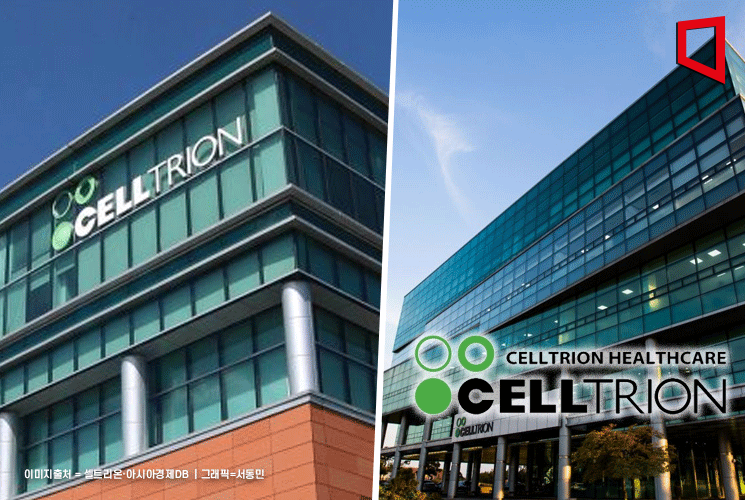
On the 28th, Celltrion will hold a board meeting to absorb and merge Celltrion Healthcare and launch as Integrated Celltrion. Then, on the 12th of next month, the new shares from the merger will be listed, completing all merger procedures. Integrated Celltrion will proceed with the remaining merger of Celltrion Pharm during next year.
The push for the Celltrion merger stems from controversies such as 'internal transactions' and 'accounting fraud.' Currently, the two companies operate under a division of labor structure where Celltrion develops and manufactures drugs, and Celltrion Healthcare handles overseas distribution. At the moment the drugs move from Celltrion to Celltrion Healthcare, Celltrion records sales, but conversely, Celltrion Healthcare incurs inventory assets. If they were the same company, this would be an internal asset transfer, but since they are separate companies, it was recorded as separate sales. This is close to internal transactions, and there have been ongoing criticisms that Celltrion Healthcare does not properly reflect the depreciation of inventory assets in its financial statements. Last year, the Financial Services Commission judged that "there was a violation of accounting standards but no intentional wrongdoing," yet the controversy remains.
Celltrion aims to resolve this controversy through the merger and leap forward as a 'global big pharma.' Celltrion has set a sales target of 3.5 trillion KRW for next year, which is 1.3 trillion KRW more than last year's annual sales of 2.284 trillion KRW. The plan is to expand sales to 12 trillion KRW by 2030.
First, leading with 'Zimpenetra' (an autoimmune disease treatment), which recently received new drug approval from the U.S. Food and Drug Administration (FDA), the company has set a goal of achieving cumulative sales of 5 trillion KRW in the new drug sector by 2030. Chairman Seo emphasized that Zimpenetra "can sell more than 3 trillion KRW in the U.S. market within three years," highlighting the convenience of subcutaneous injection as a key driver for growth. The company believes that with the addition of new platform drugs under development, such as oral antibody treatments and antibody-drug conjugates (ADC), the goal is achievable. Additionally, in the biosimilar sector, the target is to secure 22 blockbuster biosimilars by 2030 and achieve cumulative sales of 7 trillion KRW.

Chairman Seo described this as a "conservative goal," but concerns have been raised in the market that the target is excessively high. Researcher Seo Geun-hee of Samsung Securities predicted that "the merged entity's performance will be sluggish," estimating next year's sales at 2.8286 trillion KRW. This forecast is more than 600 billion KRW lower than Celltrion's outlook for new product sales including Zimpenetra. Seo added, "However, the corporate value of the merged entity has room to increase depending on the level of U.S. sales of Zimpenetra next year."
Integrated Celltrion will reveal detailed management strategies at the JP Morgan Healthcare Conference (JPMHC) held next month in San Francisco, USA. Celltrion has been officially invited as a 'main track' presenting company on the global big pharma stage, and Chairman Seo will present the post-merger blueprint to global investors.
© The Asia Business Daily(www.asiae.co.kr). All rights reserved.


















