Kim Yeo-sa Special Prosecutor: Ruling Party "Election Law Abuse" vs Opposition "Must Accept"
The ruling and opposition parties will clash over the special prosecutor introduction bill at the last plenary session of the National Assembly this year, scheduled for the 28th.
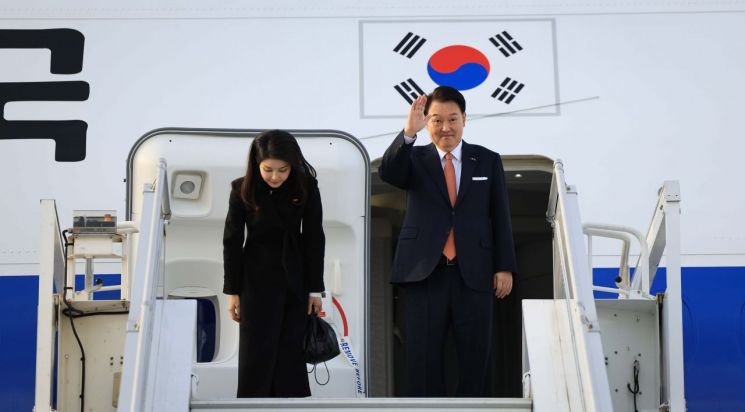
The Democratic Party of Korea, which holds a majority of seats in the National Assembly, plans to push through two special prosecutor bills at the plenary session: one concerning allegations of stock manipulation involving Kim Geon-hee, wife of President Yoon Seok-yeol, related to Deutsche Motors, and another regarding the Daejang-dong 5 billion Club scandal. Meanwhile, the ruling People Power Party has vowed to fiercely block these bills.
This will be the first plenary session since the electoral lineups of both parties have effectively solidified under the Han Dong-hoon and Lee Jae-myung leaderships, marking the start of a full-scale power struggle between the ruling and opposition parties in the election season.
The People Power Party holds an absolute stance against these special prosecutor bills. They view the move to bring up issues that had no problems despite long-term investigations by the previous administration's prosecution as an attempt to attack the president's spouse ahead of the general election. The current leadership believes that even if the opposition passes the bills unilaterally, it is essential to recommend the president exercise the 'reconsideration request right (veto).'
They particularly argue that excluding the ruling party from the special prosecutor nomination rights and allowing the investigation status to be disclosed to the media are poison clauses. They believe that if the special prosecutor investigation proceeds, the investigation details of Mrs. Kim will be broadcast live frequently before the election, potentially harming the election outcome.
Attention is also focused on how Han Dong-hoon, the appointed emergency committee chairman, will handle this. On the 19th, Han criticized the special prosecutor bill concerning Mrs. Kim, saying, "There are no exceptions before the law," but also called it "a malicious law created with a specific timing to facilitate the Democratic Party's propaganda and agitation in the next general election."
The Democratic Party continues to pressure the ruling party to accept the 'Mrs. Kim special prosecutor.' Democratic Party spokesperson Kang Sun-woo said at a National Assembly briefing the day before, "It is time to put into practice Han Dong-hoon's words that 'there should be no exceptions before the law, and the people should see and feel that as well,'" urging, "Accept the special prosecutor bill." Regarding the possibility of conditional acceptance based on "starting the investigation after the general election," Kang pointed out, "If the People Power Party had not opposed it, there would have been no need to pass the special prosecutor bill right before the election."
The so-called 'double special prosecutor bill,' introduced in March, was agreed to be fast-tracked by the Democratic Party and the Justice Party despite opposition from the People Power Party, which holds the chairmanship of the National Assembly's Legislation and Judiciary Committee. It was designated as a fast-track bill led by the opposition in April. Eventually, the bill was submitted to the plenary session on October 24 after the 180-day fast-track review period elapsed. If the bill is not brought to the plenary session within 60 days after submission, it will be automatically scheduled for the next session, allowing it to be voted on and passed at the plenary session on the 28th.
The Democratic Party plans to launch a large-scale offensive if the ruling party and Han refuse to accept the special prosecutor or if the president's veto situation recurs.
In addition to the special prosecutor bills, the ruling and opposition parties are also engaged in a tug-of-war over the Itaewon disaster special law, which the Democratic Party announced it would handle at the plenary session on the 28th. This bill, which centers on establishing a special investigation committee, was designated as a fast-track bill led by the opposition on June 30 and submitted to the plenary session on the 29th of last month.
The People Power Party introduced a special law in mid-month to strengthen support and compensation for bereaved families and prevent large-scale disasters from recurring, arguing that the focus should be on victim support and prevention rather than fact-finding investigations.
Speaker Kim Jin-pyo proposed a mediation plan that removes the special prosecutor-related provisions from the Democratic Party's bill and stipulates that the law be implemented after next year's general election. However, the Democratic Party has warned that if the People Power Party does not accept the operation of the special investigation committee, it will pass the bill unilaterally at the plenary session on the 28th.
© The Asia Business Daily(www.asiae.co.kr). All rights reserved.












