Byunghwan Kim, 1st Vice Minister of Strategy and Finance
Presiding over the Emergency Economic Vice Ministers' Meeting and the Price-Related Vice Ministers' Meeting
The government will reduce tariffs on food and feed raw materials worth 320 billion won next year and provide discount support for agricultural, livestock, and fishery products worth 241.8 billion won.
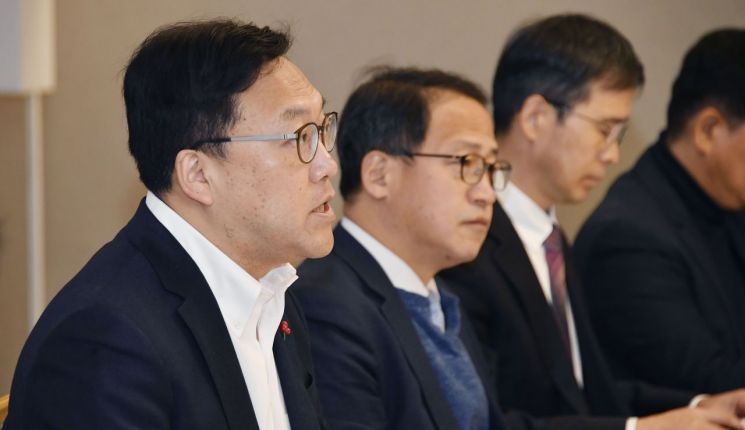
Kim Byung-hwan, First Vice Minister of the Ministry of Economy and Finance, chaired the "35th Emergency Economic Vice Ministers' Meeting and 6th Price-Related Vice Ministers' Meeting" at the Government Seoul Office on the 22nd, stating, "Although prices of petroleum products and agricultural products have recently been declining, there are concerns about increased uncertainties such as disruptions in the Suez Canal passage and cold waves."
Vice Minister Kim mentioned the industry's participation in price stabilization by further lowering the price of compound feed and said, "The government will also reduce tariffs on 11 types of food raw materials and 12 types of feed raw materials and invest 241.8 billion won in discount support for agricultural, livestock, and fishery products to continue efforts to stabilize prices."
Efforts to institutionalize shrinkflation (reducing product volume while keeping prices the same) will also accelerate. Starting from the 27th, the government plans to begin administrative notice of the revised ordinance mandating disclosure of information on product volume changes and aims to complete it in the first quarter of next year. Additionally, in January next year, the Consumer Agency will sign agreements with manufacturers to monitor the implementation status of price stabilization measures.
There will also be focused inspections on service price trends. Vice Minister Kim said, "We will focus on inspecting prices of academy fees and lodging services, which often undergo price adjustments at the end and beginning of the year, and discuss necessary measures." For squid, whose prices have been unstable recently, up to 1,000 tons of imported squid will be purchased and supplied promptly. For fruits, which face price surge concerns due to poor harvests, small-sized fruits will be secured as much as possible and supplied at low prices. The government is also considering expanding imports not only of fresh fruits but also frozen and processed fruits.
© The Asia Business Daily(www.asiae.co.kr). All rights reserved.

















