Mitsubishi Heavy Industries and Nippon Steel Recognized Liability for Compensation
Compensation of 100 Million to 150 Million KRW per Victim Acknowledged
The Supreme Court has finally recognized the liability of Japanese companies in the 'second damage compensation lawsuit' filed by victims and their families of forced labor under Japanese colonial rule against Japanese companies.
On the 21st, the Supreme Court's 2nd Division (Presiding Justice Lee Dong-won) upheld the appellate court's partial ruling in favor of the plaintiffs in the damage compensation claim filed by victims and their families of forced labor against Mitsubishi Heavy Industries, ordering compensation of 100 million to 150 million KRW each to the victims.
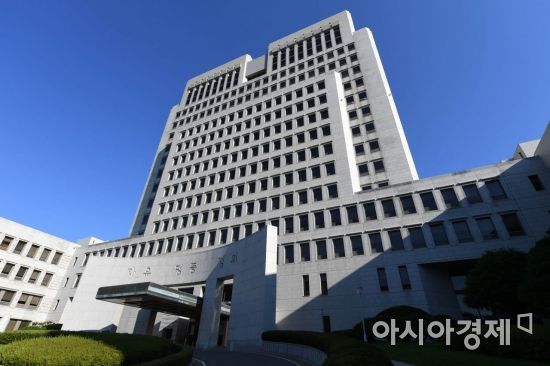
On the same day, the Supreme Court's 2nd Division also upheld the appellate court's partial ruling in favor of the plaintiffs in the damage compensation claim filed by other victims and their families of forced labor against Nippon Steel, ordering 100 million KRW each to the plaintiffs.
Regarding jurisdiction, the court stated, "The Republic of Korea has substantial relevance to the parties and the dispute in this case, so the Korean courts have international jurisdiction over this case, and there is no error in the appellate court's ruling on international jurisdiction that affected the judgment."
Furthermore, the court stated, "The plaintiffs' right to claim damages is a claim for consolation money against Japanese companies based on the inhumane illegal acts of Japanese companies directly related to the illegal colonial rule and aggressive war conducted by the Japanese government on the Korean Peninsula, and thus cannot be considered subject to the Korea-Japan Claims Agreement. There is no error in the appellate court's ruling on the scope and effect of the Claims Agreement that affected the judgment."
Regarding the statute of limitations claim by the Japanese companies, which was the main issue in this case, the Supreme Court judged that there was a reason preventing the exercise of rights in fact, so the Japanese side's statute of limitations defense constitutes an abuse of rights.
The court stated, "Until the 2018 plenary decision was rendered regarding the damage claims of victims of forced labor against Japanese companies, the plaintiffs objectively had a reason preventing them from exercising their rights against the defendants."
The court noted, "In the May 24, 2012 ruling, the Supreme Court judged that the damage claims for illegal acts by Japanese companies against victims forcibly mobilized during the Japanese colonial period were not extinguished on the grounds that they were not subject to the Claims Agreement."
It continued, "However, even after the 2012 ruling, controversy continued domestically and internationally over whether damage claims for illegal acts by Japanese companies against forced labor victims were included in the scope of the Claims Agreement. The Japanese government, a party to the Claims Agreement, maintained the position that damage claims arising from inhumane illegal acts or illegal acts directly related to colonial rule by the past Japanese government or Japanese companies were extinguished under the Claims Agreement. Japanese companies, including the defendants, agreed and refused compensation. In this situation, the Korean government did not make any official statements other than observing the remaining judicial procedures."
The court added, "The 2012 ruling was a remand ruling and did not definitively recognize the rights of the parties involved. Also, the binding effect of the remand ruling might not apply depending on new claims and evidence submitted in the retrial. Under these circumstances, victims like the plaintiffs could still have doubts about whether they could receive substantial relief through individual lawsuits against Japanese companies after the 2012 ruling."
The court stated, "In the 2018 plenary decision on the retrial of case 2009Da68620, the Supreme Court ruled that the consolation money claims of forced labor victims against Japanese companies were not subject to the Claims Agreement and dismissed the appeal, maintaining the appellate court's ruling after remand. Thus, the Supreme Court clearly and finally clarified the legal view that the consolation money claims of forced labor victims against Japanese companies based on inhumane illegal acts directly related to the illegal colonial rule and aggressive war by the Japanese government on the Korean Peninsula are not subject to the Claims Agreement."
It concluded, "Ultimately, the 2018 plenary decision made it certain that forced labor victims could seek judicial relief in Korea. Considering this, it is reasonable to conclude that the plaintiffs, as forced labor victims or their heirs, had a reason preventing them from objectively exercising their rights against the defendants until the 2018 plenary decision was rendered."
A Supreme Court official said, "This ruling explicitly states for the first time that forced labor victims had a reason preventing them from objectively exercising their rights against Japanese companies until the 2018 plenary decision and rejected the statute of limitations defense based on this."
In other words, although the Supreme Court ruled on May 24, 2012, that the claims of forced labor victims were not extinguished by the Korea-Japan Claims Agreement, controversy persisted domestically and internationally, and the Japanese government did not accept the Supreme Court ruling. Therefore, the right to claim consolation money was recognized in this lawsuit filed in March 2013 and February 2014, as the plaintiffs' ability to exercise their rights was unclear.
The Supreme Court official added, "This ruling is based on the reason that 'there was a reason preventing the objective exercise of rights,' and thus 'the defendant's statute of limitations defense constitutes an abuse of rights and cannot be allowed.' It does not judge whether the statute of limitations has expired."
The lawsuit against Mitsubishi Heavy Industries was filed in February 2014 by three forced labor victims who worked at Mitsubishi Heavy Industries' Nagoya Aircraft Manufacturing Plant in 1944-1945 and a family member named Oh.
The first and second trials ordered compensation of 100 million to 150 million KRW each to them, but Mitsubishi appealed, and the Supreme Court ruling was awaited for over five years.
In the trial, Mitsubishi argued that the plaintiffs' damage claims were extinguished under the Korea-Japan Claims Agreement and subsequent measures, and even if not, the statute of limitations had expired, but these arguments were rejected.
The second trial court judged, "The Supreme Court, as the highest court with final authority on the interpretation and application of laws, confirmed the damage claims of forced labor victims against Japanese companies and clarified the interpretation of the Claims Agreement through the 2018 plenary decision. Only then was it reasonable to consider that the reason preventing forced labor victims like the plaintiffs from objectively exercising their rights related to the Claims Agreement was resolved in Korea."
The lawsuit against Nippon Steel was filed in March 2013 by seven plaintiffs including Gwak, who were forcibly mobilized to work at Nippon Steel's Kamaishi Steelworks (Iwate Prefecture) and Yahata Steelworks (Fukuoka Prefecture) from 1942 to 1945.
The first and second trials ordered 100 million KRW each in compensation, but Nippon Steel appealed, and the Supreme Court ruling was awaited for over four years. All seven plaintiffs passed away during the trial process.
The Supreme Court had already confirmed rulings recognizing the liability of Japanese companies in past forced labor lawsuits with similar legal issues to this case.
In October 2018, the Supreme Court plenary session ruled, "Even though some compensation and reparation were made between the two countries under the 1965 Korea-Japan Claims Agreement, individual damage claims and the responsibility of Japanese companies do not disappear," siding with the victims.
The victorious victims proceeded with compulsory disposition procedures against the domestic assets of Japanese companies that refused to pay damages, but the Japanese side delayed the process through appeals and re-appeals, leaving the case pending at the Supreme Court.
This year, as the government sought to improve relations with Japan, it proposed a 'third-party payment plan' where the Korean government and companies would pay the judgment amount on behalf of Japan, but some victims, including grandmother Yang Geum-deok, refused to accept the compensation.
This lawsuit is called the 'second lawsuit' because it was filed by other victims who gained courage after the Supreme Court first recognized the right to claim damages in the 2012 lawsuit against Nippon Steel.
© The Asia Business Daily(www.asiae.co.kr). All rights reserved.
![Clutching a Stolen Dior Bag, Saying "I Hate Being Poor but Real"... The Grotesque Con of a "Human Knockoff" [Slate]](https://cwcontent.asiae.co.kr/asiaresize/183/2026021902243444107_1771435474.jpg)











