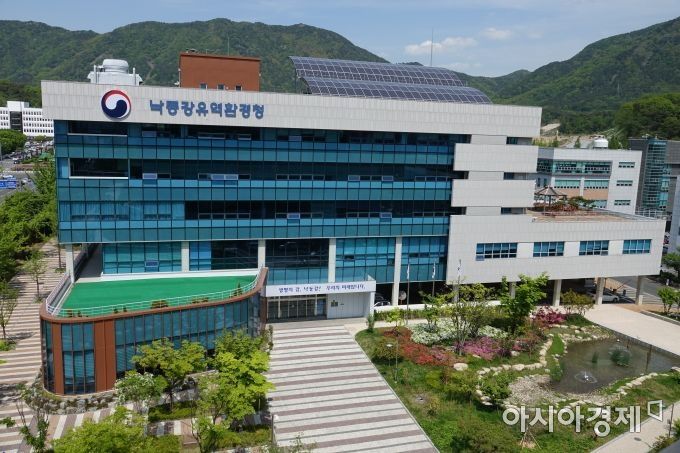
The Nakdong River Basin Environmental Office announced on the 21st that it conducted air pollutant monitoring four times a month on a regular basis in the Ulsan area’s national industrial complexes using advanced equipment (solar-tracking spectroscopic vehicle, SOF).
The Ulsan area is home to petroleum industries and chemical manufacturers, resulting in large emissions of VOCs, which are precursors to fine dust, necessitating efficient management.
In 2023, for the first time in Korea, a solar-tracking spectroscopic vehicle was introduced to industrial sites in the Ulsan area, targeting the Onsan and Mipo National Industrial Complexes. From February to September, monitoring was conducted while moving along the boundaries of business sites to identify the types of air pollutants and suspicious emission sources.
For three business sites in the Onsan National Industrial Complex and two in the Mipo National Industrial Complex with large pollutant emissions, intensive monitoring was conducted around and inside the sites.
As a result, chemical manufacturers and petroleum refining manufacturers emitted NO2, SO2, BTEX, and alkane compounds from raw material tanks and production processes. Metal manufacturers were mainly confirmed to emit NO2 and SO2.
These substances are precursors to fine dust and cause high concentrations of fine dust through photochemical reactions. Therefore, it is necessary to establish a scientific surveillance system using advanced equipment for continuous monitoring.
The monitoring results will be reported to the Environmental Office, Ulsan Metropolitan City’s fine dust task force, and the Environmental Corporation to be used for pollutant emission enforcement and surveillance during the fine dust seasonal management period.
Measuring air pollutants using advanced equipment allows for surface-level monitoring of pollutant emissions released into the atmosphere, rather than point-level measurements at emission outlets.
This will provide important data for understanding the characteristics of pollutants by industrial complex and predicting pollutant movement according to seasonal wind directions.
Director Choi Jong-won stated, “We will conduct periodic monitoring of air pollution within the Ulsan National Industrial Complex using mobile advanced measurement equipment to reduce fine dust and strengthen surveillance and supervision so that nearby residents can live in a comfortable environment.”
© The Asia Business Daily(www.asiae.co.kr). All rights reserved.
![User Who Sold Erroneously Deposited Bitcoins to Repay Debt and Fund Entertainment... What Did the Supreme Court Decide in 2021? [Legal Issue Check]](https://cwcontent.asiae.co.kr/asiaresize/183/2026020910431234020_1770601391.png)
















