China Generates 1.8 Million Tons of Plastic Delivery Waste Annually, Exceeding 10 Million Tons Including Paper
"Free Provision of Single-Use Plastic Products in Hotels Also Banned"
In China, where annual courier volumes have exceeded 100 billion for three consecutive years, the authorities have decided to implement a decarbonization campaign targeting the mountain of accumulated courier packaging waste.
According to the South China Morning Post (SCMP) on the 20th, the National Development and Reform Commission, the National Postal Administration, and six other departments, which oversee China's economic planning, recently announced a joint implementation plan aiming to establish a standard system for green courier packaging by 2025. They also plan to ban the use of packaging materials containing harmful substances. This plan was announced following China's 12·12 shopping festival last week.
Chinese Consumers Order Nearly 100 Items Per Person... 1.8 Million Tons of Plastic
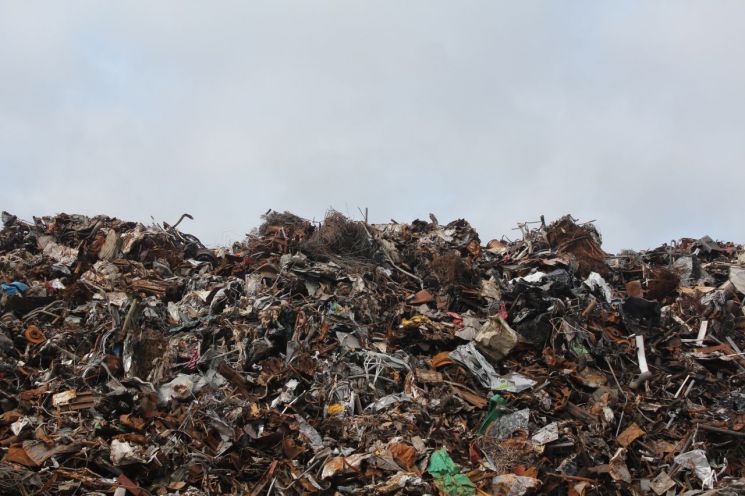
According to data released by these departments in 2020, the annual courier packaging waste generated in China amounts to approximately 10.8 million tons, including about 9 million tons of paper and 1.8 million tons of plastic. Furthermore, according to the Supreme People's Procuratorate of China, the country's annual courier volume has exceeded 100 billion for three consecutive years since 2021.
This year, the annual courier volume surpassed 120 billion for the first time on the 4th of this month. This means that China's population of 1.4 billion ordered nearly 100 items per person.
In response, China, which has been stigmatized as the "world's largest plastic waste emitter," has established a five-year plan to be implemented by 2025, including banning the production and use of non-degradable and single-use packaging materials, prohibiting free provision of single-use plastic products in hotels, and banning plastic packaging by delivery companies.
Additionally, e-commerce and delivery companies have been instructed to take the lead in reducing excessive packaging and promoting the use of recyclable packaging materials. Accordingly, by 2025, these companies must use recyclable packaging materials for at least 10% of parcels delivered within the same city.
Chinese President Xi Jinping Declares Carbon Neutrality by 2060... Some Point Out "Difficult to Achieve"
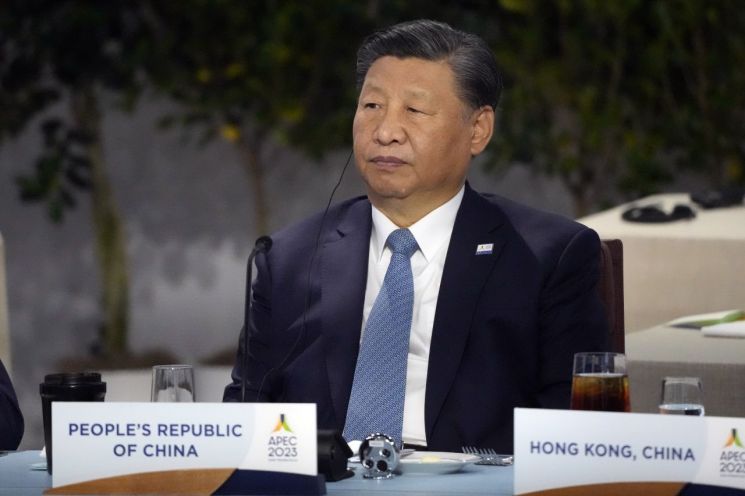 Chinese President Xi Jinping is attending the Asia-Pacific Economic Cooperation (APEC) summit held in San Francisco, California, USA, on the 16th of last month (local time). [Image source=AP Yonhap News]
Meanwhile, Chinese President Xi Jinping has pledged to achieve carbon neutrality by 2060.
In a virtual speech at the United Nations General Assembly held at the UN Headquarters in New York on September 22, 2020, President Xi declared, "We will ensure that carbon emissions peak before 2030 and achieve carbon neutrality before 2060." Carbon neutrality means reducing net carbon emissions to zero. This was the first time China, the world's worst emitter in terms of annual emissions, promised "zero carbon emissions."
However, foreign media have pointed out that this goal is realistically unattainable. The British weekly magazine The Economist noted, "To achieve carbon neutrality, China must completely decarbonize power generation, which currently relies on fossil fuels for over 60%. Yet, China is still building coal-fired power plants at a faster pace than any other country."
© The Asia Business Daily(www.asiae.co.kr). All rights reserved.


















