3.2% Increase Compared to 2023 Marks the Opening of the '1 Trillion Won Budget Era'... Proactive Response to Fiscal Crisis Through Preemptive Prevention of Budget Waste and Efforts to Increase Revenue
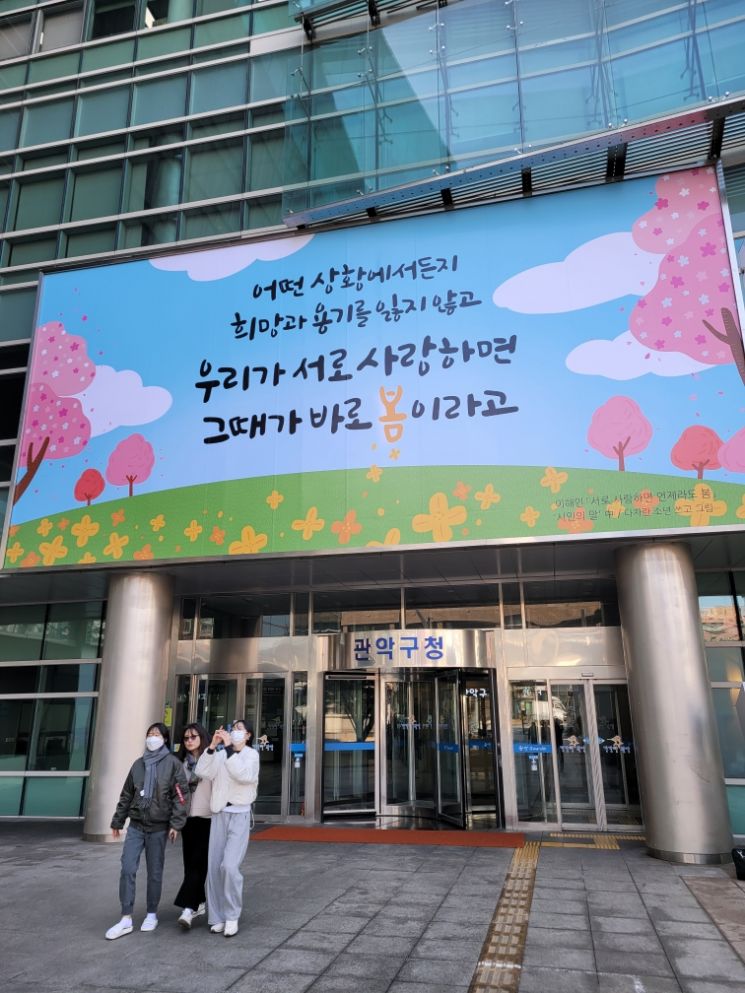
Gwanak-gu (District Mayor Park Jun-hee) finalized the 2024 main budget at 1.03 trillion KRW following approval by the Gwanak-gu Council on the 18th. This represents an increase of 31.5 billion KRW, or 3.2%, compared to this year, with 990.2 billion KRW allocated to the general account and 12.8 billion KRW to the special account.
Amid expected revenue declines next year due to reduced real estate transactions and falling official land prices, the district thoroughly reviewed all projects to preempt budget waste and strengthened delinquent tax collection activities to increase revenue, making multifaceted efforts to overcome difficult financial conditions.
As a result, the district allocated next year’s budget in a balanced and appropriate manner, focusing especially on three key investment areas: ▲ Recovery of the livelihood economy ▲ Implementation of welfare without blind spots for the vulnerable ▲ Creating a safe Gwanak 365 days a year.
First, to realize the district administration goal of the 8th elected term, “Together Economy,” the district will focus on “supporting the recovery of the livelihood economy.”
Leading the innovation economy is the promotion of Gwanak S-Valley 2.0, including ▲ operation of Gwanak S-Valley startup spaces (1.4 billion KRW) ▲ support for growth of venture startups and investment attraction (400 million KRW). Public jobs such as Seoul Donghaeng Jobs (3.6 billion KRW), ▲ Artterior (600 million KRW), ▲ issuance of Gwanak Love Gift Certificates (1.8 billion KRW), and ▲ Renaissance of Byeolbit Sinsari commercial district (700 million KRW) are budgeted to overcome employment crises for vulnerable groups, revitalize neighborhood economies, and strengthen small business competitiveness, aiming for a win-win economy.
The sector with the largest budget increase next year is social welfare. Welfare benefits increased by 67 billion KRW (4.9%) compared to the previous year due to the rise in median income standards and expansion of parental benefits.
This reflects the district’s strong commitment to “implementing welfare for the vulnerable without blind spots” despite difficult financial conditions.
Budgets totaling 620 billion KRW, accounting for 62% of the total, were allocated to ▲ construction of Gwanak Cultural Welfare Town (2.2 billion KRW), ▲ basic pension (193.9 billion KRW), ▲ support for senior social activities (18.2 billion KRW), ▲ livelihood and housing benefits (145.3 billion KRW), ▲ parental benefits (23.6 billion KRW), ▲ childcare fee support (28.5 billion KRW), and ▲ child allowance (14.2 billion KRW).
Additionally, the district is proactively responding to national challenges such as the climate crisis and social disasters by working to create a “safe Gwanak 365 days a year.”
The district is investing 5.7 billion KRW from the disaster management fund to enhance disaster prevention capabilities through systematic natural disaster responses such as ▲ sewer pipeline improvements and ▲ installation of flood prevention facilities in underground housing.
To alleviate residents’ anxiety caused by abnormal motive crimes, the district is expanding on-site patrols through autonomous crime prevention squads, forest path safety keepers, and resident center safety guards, and is focusing investments on crime prevention and disaster response capabilities through ▲ support for autonomous disaster prevention groups (60 million KRW), ▲ new installation of intelligent CCTVs (1.5 billion KRW), and ▲ operation of the smart integrated control center (700 million KRW).
Beyond the three key investment areas, the district also strived to meet diverse resident demands.
Budgets were allocated for ▲ creation of a loess road suitable for barefoot walking (900 million KRW), ▲ establishment of a unique-themed water playground in the Sillim Valley area of Gwanaksan Mountain (1.3 billion KRW), and ▲ development of a park golf course (1.4 billion KRW) to expand the base of everyday sports activities where residents can easily enjoy leisure activities.
Park Jun-hee, Mayor of Gwanak-gu, stated, “Despite the more challenging financial conditions than ever due to worsening domestic and international economic circumstances, we prioritized residents’ happiness and safety in budgeting. Through efficient financial management, we will continuously pursue major ongoing projects and actively invest in projects desired by residents to become an even better city where residents can truly feel the improvements.”
© The Asia Business Daily(www.asiae.co.kr). All rights reserved.

















