Repeated Attacks by Yemen's Houthi Rebels
Red Sea Crisis, European and Asian Oil Supply Threatened
US Develops Security Plan with Allies
After Russia invaded Ukraine last year, oil shipments through the Red Sea increased by 140%. As attacks by Yemen's Houthi rebels targeting oil tankers and cargo ships have increased, the crisis in the Red Sea is likely to become a supply crisis for oil in Europe and Asia.
According to tanker tracking data analyzed by Bloomberg on the 19th (local time), oil shipments passing through the Red Sea over the past six months averaged 3.8 million barrels per day, a 140% increase compared to January-February last year before Russia invaded Ukraine.
There is also analysis that the aftermath of the Ukraine war, combined with the Israel-Hamas conflict, has further accelerated this trend.
During this period, oil transported by Russia from its western ports through the Red Sea to Asian markets increased from 120,000 barrels per day to about 1.7 million barrels per day, approximately 14 times higher. Oil from the Middle East passing through the Red Sea to Europe increased from 870,000 barrels per day to 1.3 million barrels per day.
According to logistics company Kepler, oil shipments passing through the Suez Canal connecting the Red Sea and the Mediterranean increased from 1.7 million barrels per day to 3.5 million barrels per day during the same period.
This is interpreted as a result of logistical changes caused by the sanctions imposed by the United States and Europe on Russian energy trade following Russia's invasion of Ukraine.
The European Union (EU) and the Group of Seven (G7) implemented a price cap on Russian crude oil at $60 per barrel on December 5 last year, and from February extended the price cap to refined petroleum products from Russia. The EU especially banned imports of Russian oil by sea on its own.
Accordingly, the Middle East increased export volumes to Europe, and Russia also sought new markets in Asian countries such as China and India, increasing its oil exports.
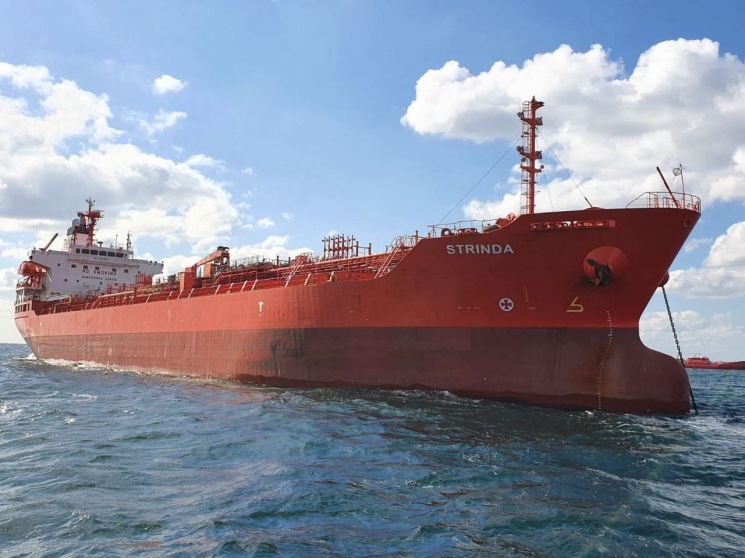 The Houthi rebels in Yemen attacked the Strinda ship with a missile on the 12th (local time) while it was passing through the Bab al-Mandeb Strait, the entrance to the Red Sea. [Image source=Yonhap News]
The crisis in the Red Sea is expected to pose a greater threat than before to both Europe and Asia, which import oil.
Since the Houthi rebels receive support from Iran, it is unlikely they would attack Russia, which is also supported by Iran, in relation to the Ukraine conflict.
However, the possibility of accidental attacks on Russia cannot be ruled out. In particular, Russian oil-carrying tankers often obscure their owners and insurers to evade Western sanctions, raising concerns that in the event of tanker attacks, maritime pollution accidents and damage to ships and cargo could be uninsured.
In response, the United States announced the establishment of 'Operation Prosperity Guardian,' a multinational security plan with allied countries to protect civilian vessels navigating the Red Sea.
© The Asia Business Daily(www.asiae.co.kr). All rights reserved.

















