US Oil Production Increase vs Red Sea Tanker Attack
Price Dips Below $60 Then Recovers Above $70
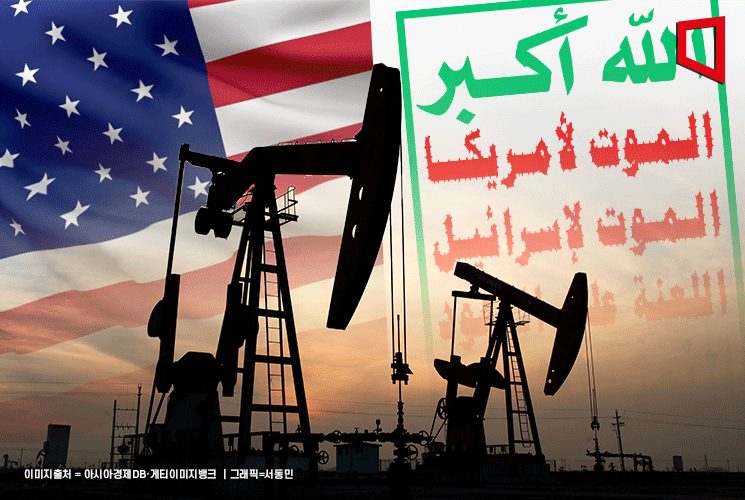
International oil prices, which had recently fallen to the $60 level, have risen back to around $70 following news of a Red Sea vessel attack by Yemen's Houthi rebels. The fluctuations are driven by a combination of increased U.S. shale oil production and security concerns in the Red Sea. There are growing concerns that if the instability in the Middle East continues and the conflict between Israel and the Palestinian armed group Hamas prolongs, supply crises could emerge, causing international oil prices to become even more volatile.
According to CNBC on the 18th (local time), January delivery West Texas Intermediate (WTI) crude oil futures on the New York Mercantile Exchange (NYMEX) closed at $72.46 per barrel, up 1.44% from the previous session. Brent crude oil on the London ICE exchange ended the day at $77.95 per barrel, up 1.83% from the previous day.
On this day, international oil prices rose sharply following reports that a Norwegian-flagged vessel was attacked by Yemen's Houthi rebels in the Red Sea, a major oil transportation route in the Middle East. The Houthi rebels have been indiscriminately attacking oil tankers and commercial ships around the Bab el-Mandeb Strait, a key maritime route leading from the Red Sea to the Gulf of Aden, through which 15% of global shipping volume passes. More than ten trade vessels have been attacked just this month. As the Red Sea trade route faces threats and supply concerns grow, international oil prices have rebounded.
As a result, WTI prices, which had fallen to the $68 level on the 12th, rebounded to around $70. Previously, WTI prices had dropped to the $69 level on the 7th following news of increased U.S. shale oil production and had shown a generally weak trend since then. Despite the OPEC+ oil-producing countries announcing an additional daily production cut of 2.2 million barrels at the end of last month, the downward trend continued.
Earlier, the U.S. Energy Information Administration (EIA) stated in its short-term outlook report that U.S. oil production in the fourth quarter of this year is expected to average 13.26 million barrels per day. This is more than 700,000 barrels higher than the 12.51 million barrels per day forecasted by the EIA at the end of last year for the fourth quarter of 2023.
In particular, the rapid increase in production by small and medium-sized unlisted U.S. shale oil companies is analyzed to have significantly exceeded expectations, driving down international oil prices. According to Bloomberg News, among the top 10 U.S. shale oil producers that have increased production the most since the COVID-19 pandemic, seven are unlisted companies. Bloomberg reported that the production increases by small and medium unlisted shale oil companies such as Mubon Oil and Endeavor Energy Resources have surpassed the production increase of ExxonMobil, the largest energy company in the U.S.
With the increase in U.S. shale oil production acting as a downward pressure on overall international oil prices, combined with the security instability in the Red Sea, oil prices are expected to remain volatile for some time. Analysts suggest that if the conflict between Israel and Hamas prolongs and the Houthi rebels continue to block Red Sea trade routes, concerns over oil supply will intensify, potentially leading to further price increases.
Fawad Razakzada, an analyst at global financial services firm StoneX, told major foreign media, "Considering today's rally and last week's positive movements, oil prices may have bottomed out."
© The Asia Business Daily(www.asiae.co.kr). All rights reserved.

















