Two New ISOCELL Vision Products Delivered to Sample Customers
Aiming to Expand Food Sector with Next-Generation Image Sensors
Samsung Electronics has launched new image sensor products to be used in advanced content platforms such as mobile, robotics, and extended reality (XR). The company plans to secure leadership in the next-generation image sensor market through a diverse lineup of image sensor products for future advanced industries.
On the 19th, Samsung Electronics unveiled two next-generation products in its image sensor lineup called 'ISOCELL Vizion.' They introduced the 'ISOCELL Vizion 63D,' an indirect time-of-flight sensor (iToF) specialized for applications requiring high resolution and precision, and the 'ISOCELL Vizion 931,' which exposes all pixels to light simultaneously like the human eye for capturing images.
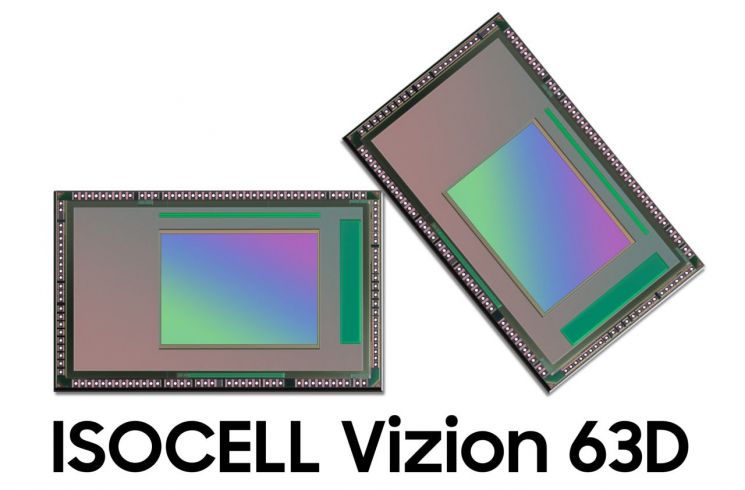
One-chip iToF Sensor... Measurement Distance Doubled
The ISOCELL Vizion 63D measures distance based on a principle similar to how bats use echolocation to detect their surroundings. Instead of sound waves, it calculates distance quickly and accurately by measuring the phase difference between emitted light wavelengths and those reflected back from objects, enabling the acquisition of 3D spatial information of objects.
This product is the industry's first one-chip iToF sensor. It features an embedded Image Signal Processor (ISP) optimized for depth calculation, allowing depth map imaging (images containing distance-related information from the viewpoint) without support from an application processor (AP).
Additionally, it processes images at QVGA resolution (320x240 pixels), optimized for iToF sensor functionality, at 60 frames per second. Using backscatter technology that enhances pixel light absorption, it minimizes motion blur and provides clear images.
It simultaneously supports a high-resolution area light mode and a point light mode for long-distance measurement, doubling the maximum measurable distance from 5 meters in the previous model to 10 meters. This is essential for autonomous driving and service robots that need to quickly and accurately recognize their surroundings.
Compared to its predecessor (ISOCELL Vizion 33D), system power consumption has been reduced by up to 40%. It also applies industry-leading small 3.5-micrometer (㎛) pixels, optimizing it for compact devices. It is expected to be used in various advanced applications such as serving and logistics robots, XR devices, and facial authentication.
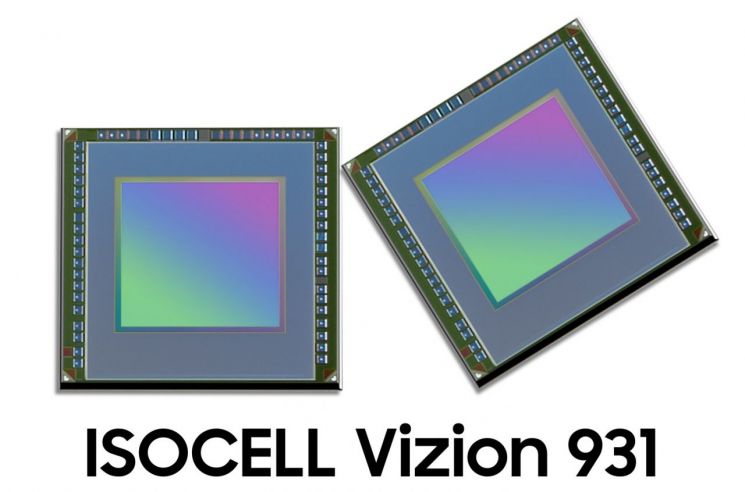
Samsung Electronics: "We Will Lead the Next-Generation Image Sensor Market"
The ISOCELL Vizion 931, designed for use in XR, motion-tracking games, robotics, drones, and other fields, incorporates global shutter technology. Conventional image sensors use a rolling shutter method that exposes pixels sequentially to light. In contrast, the global shutter exposes all pixels to light simultaneously, like the human eye, enabling clear capture of fast-moving objects.
This product supports a 1:1 aspect ratio resolution (640 x 640), making it highly applicable for head-mounted display devices such as XR equipment. It is optimized not only for iris recognition but also for gaze tracking, and for recognizing subtle movements such as facial expressions and hand gestures.
Furthermore, by applying backscatter technology, it achieves an industry-leading quantum efficiency of 60% at 850 nanometers (㎚; 1㎚ = one billionth of a meter) infrared wavelength. It also includes a feature that allows up to four cameras to be connected simultaneously on a single data line transmitting the captured images, enabling device manufacturers to design products more easily.
Lee Hae-chang, Vice President of the Next-Generation Sensor Development Team at Samsung Electronics’ System LSI Business Division, said, "The ISOCELL Vizion 63D and ISOCELL Vizion 931 embody Samsung Electronics' differentiated next-generation image sensor technology and expertise," adding, "We plan to lead the next-generation image sensor market through the ISOCELL Vizion lineup." The company is currently providing samples of both products to customers.
Meanwhile, according to Taiwanese market research firm Isaiah Research, the adoption rate of 3D cameras in the robotics sector is expected to grow at an average annual rate of 44.3% from last year through 2028. It is anticipated that the ToF method, one type of 3D camera, will see increased use in various applications within the robotics field.
© The Asia Business Daily(www.asiae.co.kr). All rights reserved.


















