Major Stock Price Manipulation Shakes Stock Market... Criminal Trials Begin 'Ongoing'
Financial Authorities Uphold 'Zero Tolerance' Policy... Strengthening Punishments with Forced Investigations and Fines
This year, the domestic stock market in Korea was shaken by a series of large-scale stock manipulation incidents. Representative cases include the 'Soci?t? G?n?rale (SG) Securities Incident,' the 'Five Stocks Limit-Down Incident,' and the 'Youngpoong Paper Incident.' The stock manipulation groups engaged in practices such as 'matched orders,' where buyers and sellers prearranged prices and times to trade stocks, artificially inflating stock prices to gain illicit profits. Retail investors suffered significant losses due to price fluctuations of the targeted stocks and trading suspension measures imposed by financial authorities. Currently, criminal trials for judicial processing of each case are underway, and financial authorities have begun preparing measures to prevent recurrence.
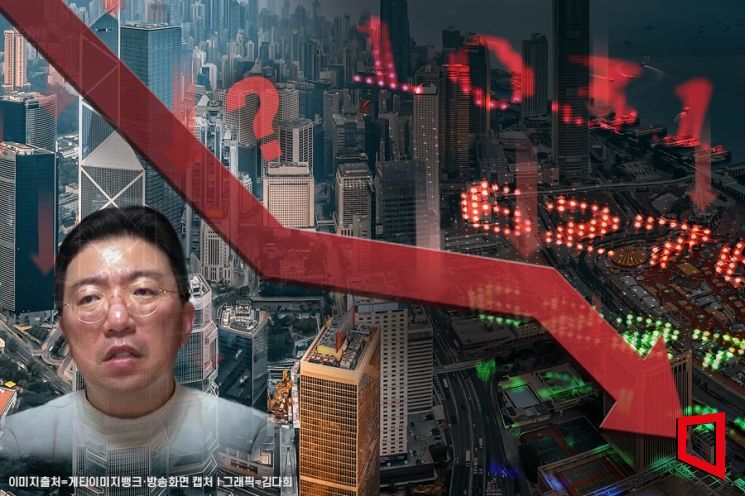 La Deok-yeon, CEO of Hoan Investment Consulting, accused of leading market manipulation related to the 'Societe Generale (SG) Securities incident'
Stock Manipulation That Shocked the Market... Investigation and Trials Ongoing
The SG Securities Incident opened the floodgates for this year's stock manipulation scandals. On April 24, within less than 30 minutes after the market opened, eight stocks including Samchully, Dow Data, Harim Holdings, Daesung Holdings, Sebang, Seonkwang, Seoul Gas, and Daol Investment & Securities consecutively hit their lower price limits, wiping out 8 trillion KRW in market capitalization within four days. Particularly, heavy selling pressure came from SG Securities' trading desks, which led to the incident being named after SG Securities.
Behind the scenes, Ra Deok-yeon, CEO of Hoan Investment Consulting, was identified as the mastermind. While past stock manipulators sought short-term profits, Ra and his group were found to have gradually raised stock prices over a long period through matched trading. It was also characterized by a 'multi-level marketing' style operation, where a portion of profits was shared with those who brought in new investors. As a result, many individuals including golfers, entertainers, doctors, and entrepreneurs were involved.
The prosecution indicted Ra, Byun Mo, CEO of Hoan FG (40), former professional golfer Ahn Mo (33), and eight others on charges of earning approximately 730.5 billion KRW in illicit profits and managing clients' Contract for Difference (CFD) accounts on consignment, gaining about 194.4 billion KRW in illicit gains. CFDs are over-the-counter derivatives that settle only the price difference without owning the underlying asset. The group exploited the fact that investor identities were not revealed and high leverage could be used. They also face charges of tax evasion amounting to about 71.8 billion KRW.
The case is currently in the first trial phase under the jurisdiction of the 11th Criminal Division of the Seoul Southern District Court (Presiding Judge Jeong Doseong). Ra's defense claims, "Although there were stock purchases that could be misunderstood, there was no intention to manipulate prices, nor was any manipulation conducted," denying most charges. So far, 11 hearings have been held, with the next scheduled for the 21st.

In June, the Five Stocks Limit-Down Incident occurred. Five stocks?Dongil Industry, Manho Steel, Daehan Textile, Dongil Metal, and Banglim?hit their lower price limits around the same time. This time, heavy selling pressure came from domestic securities firms such as Shinhan Investment Corp., Kiwoom Securities, and KB Securities. The prosecution viewed this as involving stock manipulation groups. They focused on the fact that these stocks were consistently recommended on the stock investment cafe 'Bareun Investment Research Institute.'
The prosecution indicted the cafe owner Kang Ki-hyuk (52) and cafe members Son Mo (36), Park Mo (49), and Seo Mo (50). They are accused of conducting matched trading and price manipulation on four stocks (excluding Banglim) thousands of times from January 2020 to June this year using dozens of accounts. The estimated illicit gains amount to 36.1 billion KRW.
Kang and others deny the charges. The first trial is ongoing under the 13th Criminal Division of the Seoul Southern District Court (Presiding Judge Myung Jaegwon), with eight hearings held so far. The next hearing is scheduled for the 19th of next month. Kang, who has advocated for small shareholder movements, was previously sentenced to probation and fined 400 million KRW for price manipulation in 2014-2015.
The Youngpoong Paper Incident occurred in October. The stock prices of Youngpoong Paper, a KOSPI-listed company that rose up to 730% this year, and its largest shareholder Daeyang Metal suddenly hit their lower price limits simultaneously. Kiwoom Securities, where accounts were heavily used, faced a risk of losses due to 400 billion KRW in unpaid balances. The prosecution believes that the stock manipulation group manipulated about 35.97 million shares of Youngpoong Paper from October last year, earning illicit profits of 278.9 billion KRW. So far, eight members of the group have been indicted in custody, but the whereabouts of the ringleader Lee Mo remain unknown.
Financial Authorities Propose Improvements... Strict Response with 'Tougher Punishments'
There was strong criticism that the market surveillance system did not function properly in these stock manipulation incidents. In response, financial authorities declared a 'zero tolerance policy' and strengthened their investigation and enforcement capabilities against illegal activities in the capital market. The Financial Services Commission announced the 'Capital Market Unfair Trading Response System Improvement Plan' and stated that it would more actively utilize compulsory investigation rights in unfair trading investigations. This includes expanding the use of search and seizure powers, which are typically exercised once or twice a year.

The amendment to the Capital Market Act, which imposes fines up to twice the amount of illicit gains from unfair trading, passed the National Assembly in June and is set to take effect on January 19 next year. The amendment legislates the method for calculating illicit gains for swift administrative sanctions and introduces fines as penalties. Recently, amendments to the Enforcement Decree and operational regulations of the Capital Market Act to improve the whistleblower reward system for unfair trading were also announced for public comment. Accordingly, the reward cap will increase from 2 billion KRW to 3 billion KRW. The amendments also include reflecting the scale of 'illicit gains' discovered during investigations after reports as a basis for calculating rewards.
Meanwhile, CFDs, which Ra's group exploited, were suspended from service in June and have undergone improvement work. Financial authorities strengthened regulations to ensure that stock trading performance is reflected in exchange systems according to actual investor types (individual, institutional, foreign). Previously, there was an issue where domestic investors' stock orders were counted as foreign orders. Additionally, restrictions such as disclosure of total and stock-specific CFD balances and setting limits on individual trading volumes were added.
After improvements, the service resumed on August 1, but many securities firms have yet to participate in the restart. Even among those that resumed, trading requirements were tightened, resulting in a reduced business scale compared to before. According to the Korea Financial Investment Association, as of the 14th, about 100 days after the service resumed, the CFD balance including margin was approximately 1.1949 trillion KRW. This is a 56.8% decrease compared to the 2.7697 trillion KRW CFD balance at the end of March before the SG Securities Incident.
© The Asia Business Daily(www.asiae.co.kr). All rights reserved.
![Clutching a Stolen Dior Bag, Saying "I Hate Being Poor but Real"... The Grotesque Con of a "Human Knockoff" [Slate]](https://cwcontent.asiae.co.kr/asiaresize/183/2026021902243444107_1771435474.jpg)


















